Ernst Klopp (1900 – 1964) – Part 9

County Court Duties in Dietfurt (Znin)

Please note that my thoughts on my father’s life appear in green print. What is shown in regular print is translated from my cousin’s book on the Klopp family.

At the time of my birth, my father as manager and inspector was in charge of the estates Silberberg, Oberhof and Gutfelde totalling an area of approximately 3000 ha. Although he must have been thankful to the authorities for landing him such challenging and prestigious position and therefore may have harboured a favourable disposition towards the Nazi regime, he always strove to keep his humanity in dealing with his fellow human beings, Germans and Poles alike. In particular, through his actions he distanced himself from the policy that forbade German citizens to fraternize with the defeated enemy. It is a great testimony to his moral independence from the dark and sinister sides of Nazi Germany that he allowed Polish men and women to live and work closely and cordially with the Klopp family at the Gutfelde residence and the agricultural headquarter for the region. He maintained an excellent working relationship with the former Polish estate manager Haluda, who after WW2 took over as director of the communist run state farm. From the stories I picked up from my mother I speculate that Father owed his survival to his reputation of treating fairly and equitably all the people who worked for the large estates under his directorship. Other inspectors notorious for their arrogance, cruelty and injustice in dealing with the Polish population were rounded up, lynched, hanged or shot in the closing months of the war. On a  Polish website with special focus on mansions, manors, and castles of Poland, I found an entire page devoted to Gutfelde – now an agricultural training center with orchards, wheat and corn under cultivation, 800 cows and 8000 pigs. The same page to my great surprise mentioned my father’s name as an administrator during WW2! The mansion-like imposing building was built around 1880 in the late-classical style and consisted of a body with a higher wing and ground floor extensions. It has not changed much in the last seventy years.
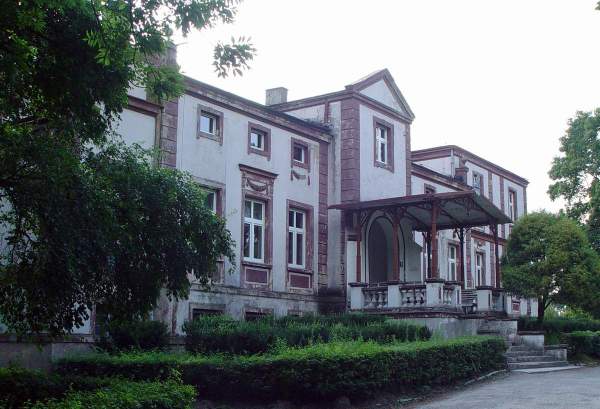
Gutfelde/Zlotniki 2012

The estate secretary was Czeslawa Pruszewicz. Due to Nazi marriage restrictions regarding Poles, she could not call herself Gromowska until much later. My late brother Karl (1929 – 2019) added in a footnote the following comment, “She maintained through correspondence with Erika Klopp regular contact for more than 40 years and died in Rogowo in 1986. Her granddaughter still keeps up the connection with the Karl Klopp family in Detmold to this very day (1997). Ernst Klopp did not tell much about his experiences as an estate administrator. However, it is safe to assume that the descendants of his former Polish estate personnel have kept him in a favourable light.
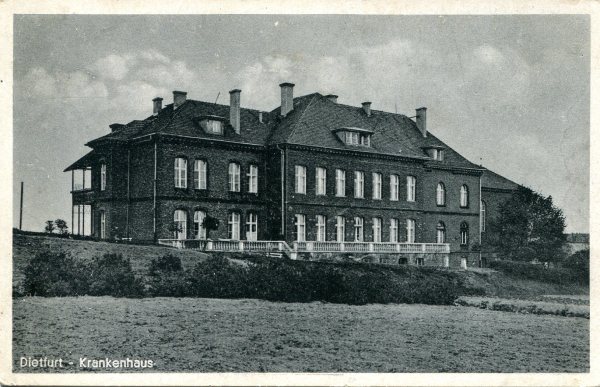
The Dietfurt Hospital, where Peter Klopp was born

In the Dietfurt county hospital the last child, son Peter, was born on March 24, 1942. Contrary to family tradition and in comparison to his four older siblings, Peter for the time being remained unbaptized. It seems reasonable to assume that in view of Ernst’s positive attitude toward the system a certain alienation from the church institution may have played a major role in that decision.
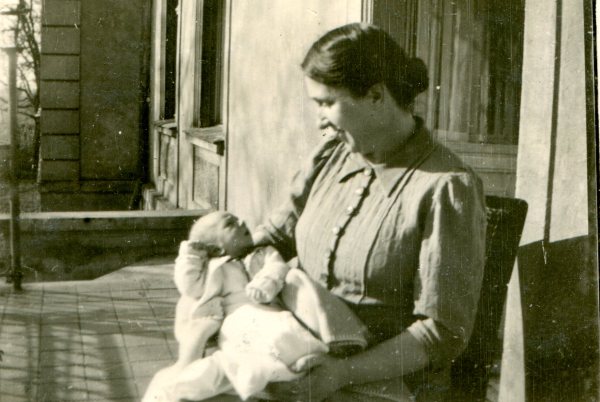
Little Peter in Gutfelde

Even though Ernst Klopp was not a lawyer, he functioned never-the-less as a semi-independent within the county court system. In a sort of pseudo-independence acting in an honorary unsalaried function, he dealt with complaints among Nazi members against each other as well as with charges from outside the Nazi hierarchy against such individuals. In some individual instances, Ernst also dealt with cases of complaints coming from the Polish population. He was not a civil servant but was authorized to sign and authenticate documents such as marriage, birth and death certificates. He held his honorary position with the Dietfurt county system not on the basis of NS Party Membership, which he did not have, but rather on his reputation as a capable estate manager.
Chapter 27 of the Peter and Gertrud Klopp Story – Part I

The Voyage

There is a tide in the affairs of men.
Which, taken at the flood, leads on to fortune;
Omitted, all the voyage of their life
Is bound in shallows and in miseries.
On such a full sea are we now afloat,
And we must take the current when it serves,
Or lose our ventures.

Shakespeare

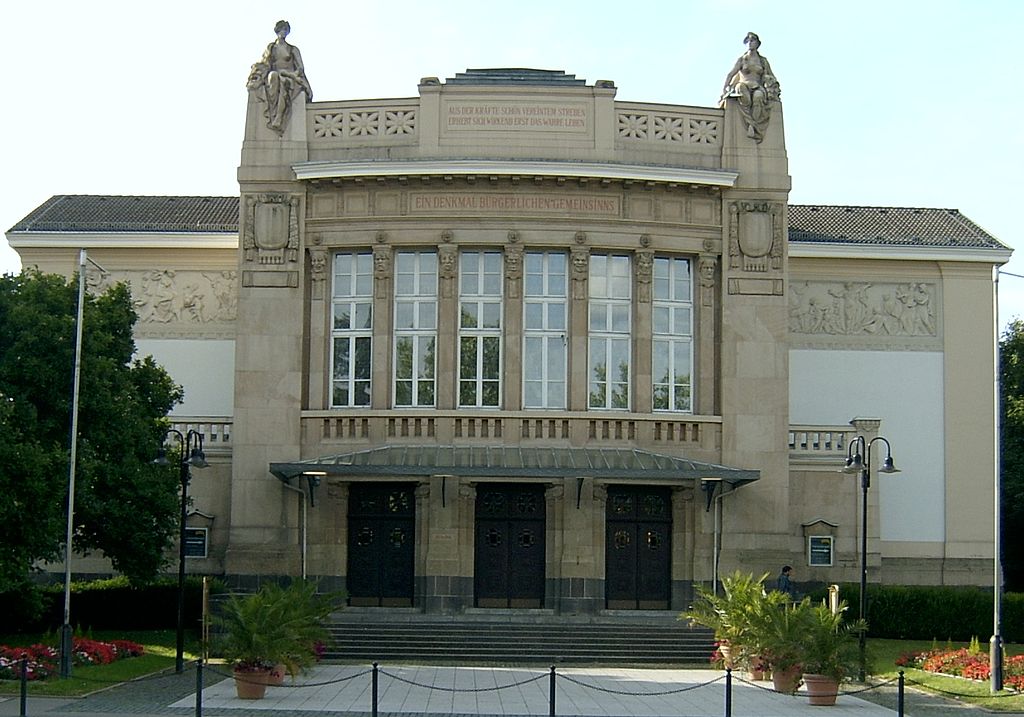
1024px-2005-08_Gießen_-_Theater

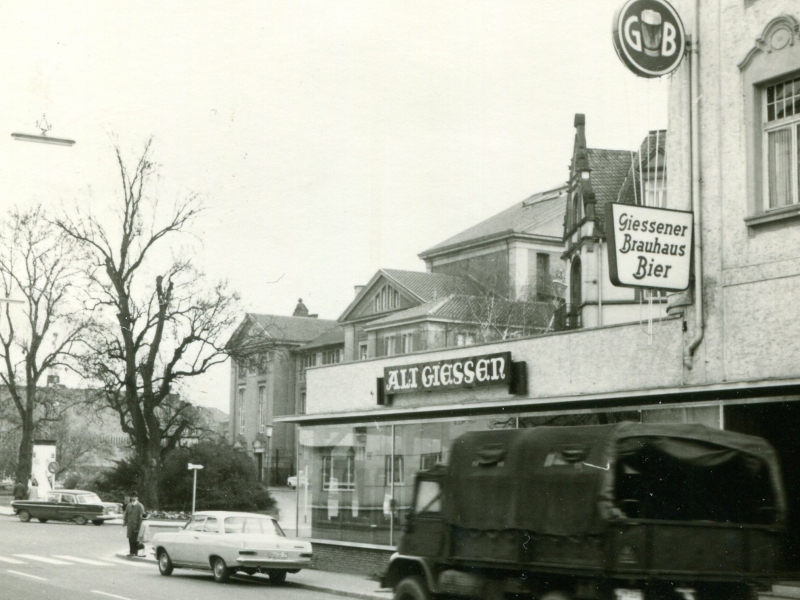
Giessen Theatre – Photo Credit: Wikipedia.org

Travel Preparations and a  Farewell Speech on a Vinyl Record

The day after Biene had returned home, Adolf took my sister Eka and me on a whirlwind tour to Berlin, where we saw for the last time Aunt Alma and her family. On the way back we dropped in at the apartment of our brother Karl in Braunschweig, where he had recently embarked on a banking career at a local bank. There in the beautiful apartment we spent a few days with our brother, his wife Ingrid and their little baby daughter Annekatrin.

93

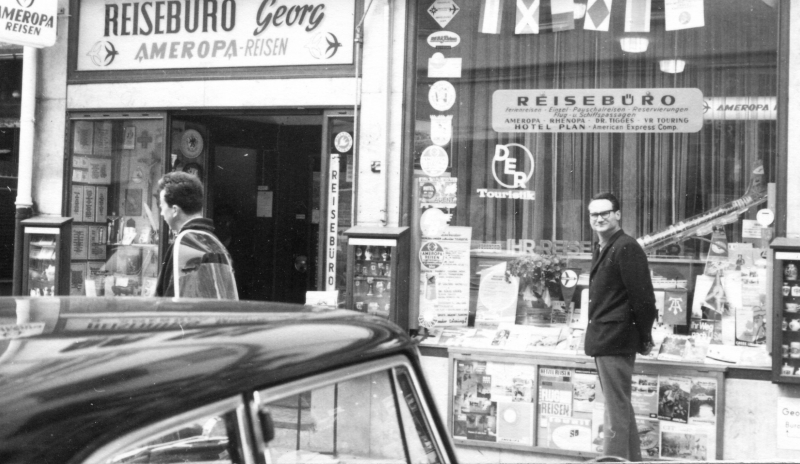
Adolf Standing in front of the Giessen Travel Agency

Back at home we directed our attention to the task of getting our belongings packed and ready. Our tickets for the voyage to Canada included the shipping charges for the wooden crates that contained all our personal effects. Almost too late we found out that we were responsible for moving them to the travel agency in Giessen. Almost instantly arose a heated argument among the hot-tempered siblings, myself included, as to whose fault it was for having overlooked such an obvious problem. Accusations were flying back and forth. It seemed that each one of us was on a faultfinding mission. Of course, no matter how hotly we debated the issue, the heat of the arguments would not move our big, heavy crates to Giessen.

94

Problems Worked out over a Mug of Beer

Fortunately our cousin Jürgen arrived just at the right time and helped diffuse a potentially explosive situation. He suggested a cooling-off period for the enraged brothers. In Giessen we dropped in at the ‘Vienna Forest, a popular restaurant, where they served us grilled chicken and beer. Tension and lingering hostility abated quickly at the same rate as our stomachs filled with delicious food and copious amounts of beer. Now we were ready to tackle the shipping in a more amiable environment. Jürgen had just made the acquaintance of a fellow student, who would be willing to provide his old and dilapidated VW bus for the crates. After a few more drinks at a roadside fast food outlet we were going to announce the good news at home. However, the pub, ‘The New Homeland’, was still open in Watzenborn. We thought a few more beers would not hurt and would definitely clear away the last little bit of rancour, before going home. So we finally arrived in a fairly boisterous mood. Everybody had already gone to bed. But this did not prevent us from loudly announcing to Eka that we had found a solution to the shipping problem. We all withdrew into the furnace room, which with its excellent sound-proofed walls offered a modicum of protection against the noise. Befuddled by all that beer I played the guitar rather poorly often missing the correct fret, while Adolf sang the song merrily out of tune with the chords I was playing. In the meantime  Jürgen and Eka had an animated discussion on the poor timing of our nocturnal arrival. Not receiving the appreciative reception that we were expecting, we decided to spend the night at Jürgen’s place in Giessen and slept for want of something more accommodating all three in one bed, but not before having a taste from the bottle of whiskey that happened to be there for this crazy occasion. Next morning (or was it noon?) Adolf and I, feeling somewhat remorseful for our rambunctious behaviour the night before, drove home quite willing to accept any criticism with a repentant heart and to make amends by getting the crates ready for shipment.

Record

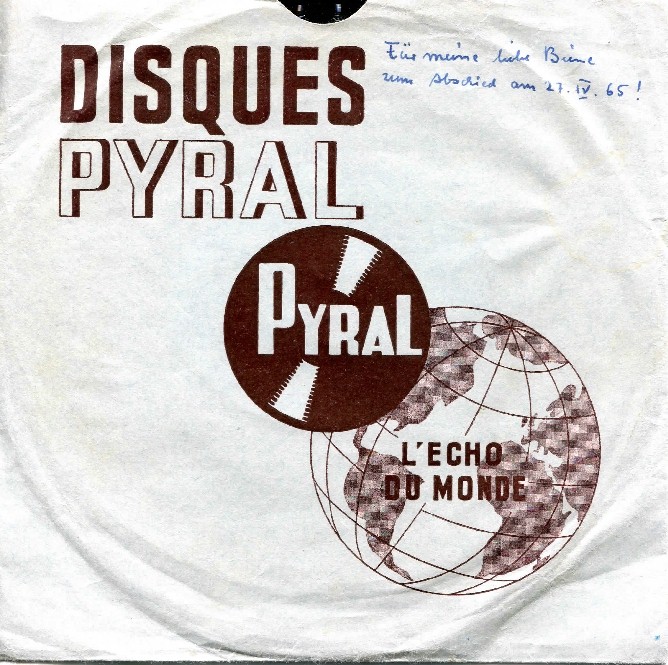
In the turmoil of the endless visits of well-meaning relatives and friends, who all came to say good-bye, I still managed to keep up the correspondence with Biene, although it was almost impossible to find a quiet corner in the house. I had  made a recording of a few simple classical guitar pieces that I felt were good enough for her to listen to. In addition, I recorded a farewell message on tape and mailed it together with the music to a company in France to have it pressed onto a vinyl record. A few days before our departure date the record arrived, which I embellished with some pretty labels and redirected it to Biene’s home address. It so happened that on the very day we boarded the Canada bound vessel, the ‘Ryndam’, she received my gift.

The recording sounds a bit scratchy. But what do you expect from a 50-year old vinyl record?

Friedrich Otto Karl Klopp (1878-1957) – Part V

Karl’s Many Stations during World War I

Part 2 (1917-1918)

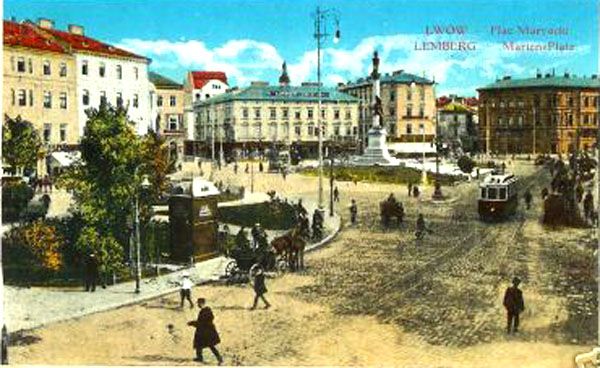
On July 20, 1916, Karl Klopp was sent as a soldier of the Infantry Battalion Passau to the Eastern Front. In Galicia, he immediately took part in the battles at the upper Stryj and Stochod south of Lemberg (Polish: Lwow) and subsequently participated in the battle of Kovel.

Lemberg1915 Mariyska (Lwow or Lviv)

Lemberg 1915 Mariyska (Lwow or Lviv)

From this point on his unit was being deployed in position battles again at Stochod. During the time of the armistice (Peace of Brest-Litowsk), he was stationed from December 1917 until the end of January 1918 in the battle zone of Mal Tovsk. Then until May, he soldiered in Sitowieze, Mielnika, Dubno, Buditschevo and Kosatin.

Finally, he was placed under the command of the First Army Corps in the region of Volhynia and then at the end of May 1918 under the First Infantry Regiment. Suddenly his problems with the knee joint began to bother him again. He received medical treatment and was granted leave at his hometown Hüttenhofen. Until General Armistice Day in November he spent time at the First Infantry Regiment (König) in Munich. In the process of demobilization of the German Army, he was released into civil life by order of the command post in Straubing on December 20, 1918.

Friedrich Otto Karl Klopp (1878-1957) – Part IV

Karl’s Many Stations during World War I

Part 1 (1914-1916)

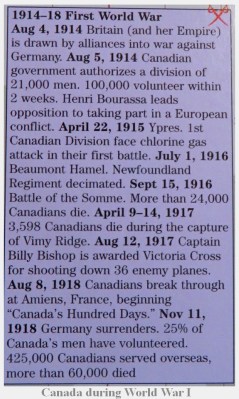
Into my historical posts I will insert from now on a fact sheet to show what made the news headlines during the same time period in Canada.

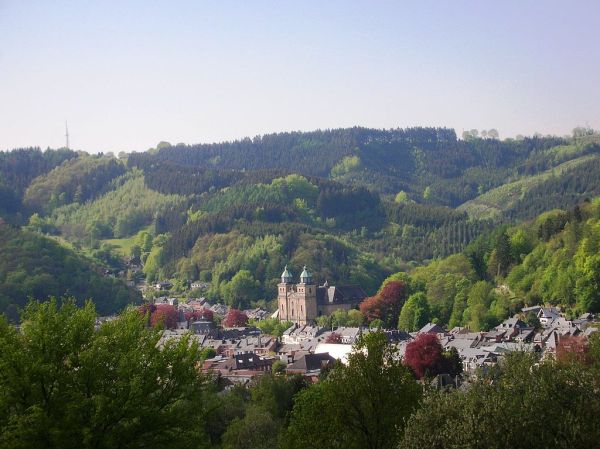
Malmedy, Belgium - Photo Credit: wikipedia.org

Picturesque Malmedy, Belgium – Photo Credit: wikipedia.org

Four weeks after the beginning of World War I Karl Klopp was drafted into the Second Reserve Infantry Regiment on September 1, 1914 and was sent to the front in Belgium on September 11, 1914. On the same day he was promoted to the rank of a sergeant. Two weeks later he had an accident during a bad fall and was placed into the care of the field hospital at Beaumont south of Malmedy. On October 2, 1914, a hospital WorldWarItrain brought him to Munich, where he recovered from his injury. Then in the middle of October he was reassigned to the infantry battalion at Passau as an officer’s substitute. There he remained until September 1915. Together with the 3rd battalion he was again shipped to the Western Front. In his personnel files we read in the reports that as part of a reconnoitering troupe he participated in position combat in the region near Sainte-Marie-aux-Mines in the Central Vosges Mountains. That was the operational area of the 81st Infantry Regiment ‘Schusterberg’.
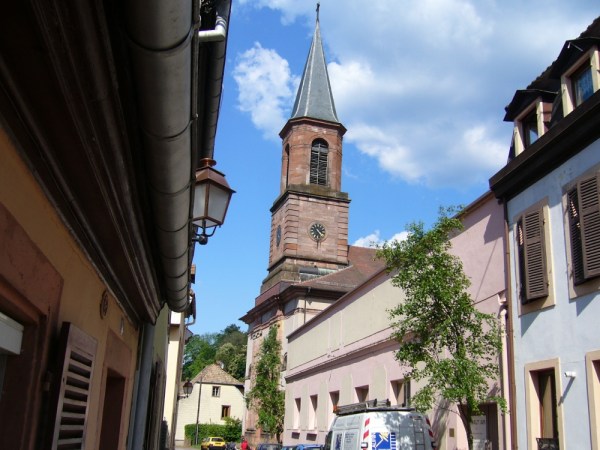
Sainte-Marie-aux-Mines - Photo Credit: wikipedia.org

Sainte-Marie-aux-Mines  (Vosges Mountains) – Photo Credit: wikipedia.org

From November 1915 until the end of January 1916 he served in the occupational forces of the fortress Strassburg. When his knee injury began to bother him again, he was given treatment at the field hospital at Saarburg, whence he was relocated again for duty to the infantry battalion at Passau. Here preparations were underway for deployment at the Eastern Front

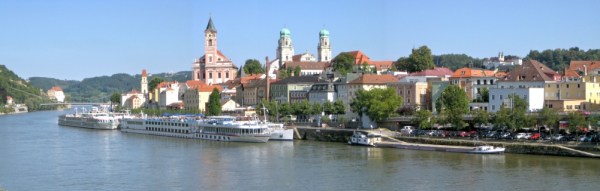
Passau Altstadt Panorama - Photo Credit: wikipedia.org

Panorama of Passau on the River Danube – Photo Credit: wikipedia.org

To be continued next week.

Friedrich Otto Karl Klopp (1878-1957) – Part III

Karl’s Professional Development

(Klopp Family Tree – Chart I – II)

To see the Klopp family tree, click here.

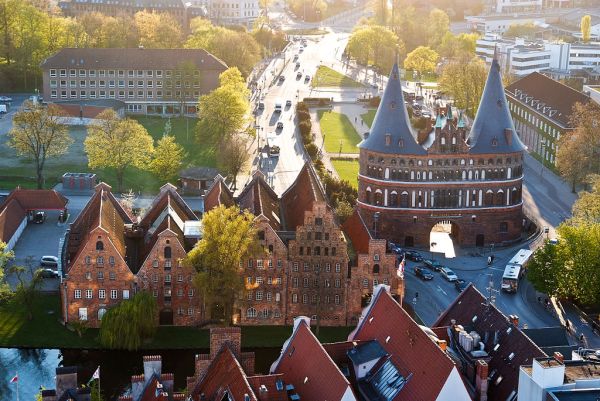
View of Lübeck - Photo Credit: wikipedia.org

View of modern-day Lübeck – Photo Credit: wikipedia.org

After his active service of ‘4 years, 11 months and 27 days’ Karl Klopp returned to civilian life. He attended a training course of the agricultural department at Greifswald, Pomerania, and then became adminstrator and manager of dairies and export companies, also construction foreman of the machine assembly plant H.G. Schröder in Lübeck.

Greifswald_-_Town_Hall

Town Hall of Greifswald – Photo Credit: wikipedia.org

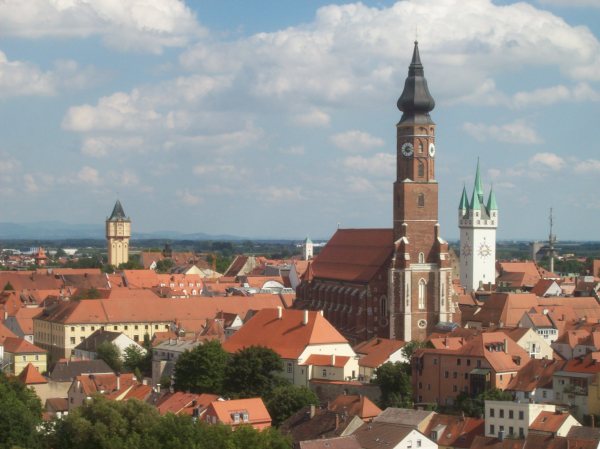
In 1905 he succeeded in getting a management position of the dairy in Hüttenkofen near Straubing, Bavaria. In 1907 Karl attended the dairy institute at Nortrup not far from Quakenbrück and obtained the certificate officially qualifying for a management position.

City View of Straubing, Germany - Photo Credit: wikipedia.org

City View of Straubing, Germany – Photo Credit: wikipedia.org

In the same year he married the teacher’s daughter Augusta (neé Hauer). Two daughters Luise (1907) and Auguste (1908) were born. In 1908 Karl bought the dairy of his former employer in Hüttenkofen and also became owner of a house at Radkofer Street 7 with a total assessed value of 29,000 marks. Karl Klopp, industrious and goal-oriented worked his way up into a respectable and wealthy Bavarian dairy owner.

To be continued next Thursday …

The P. and G. Klopp Story – Chapter IX Part II

Fun at the Fairgrounds and Breaking Bedtime Rules

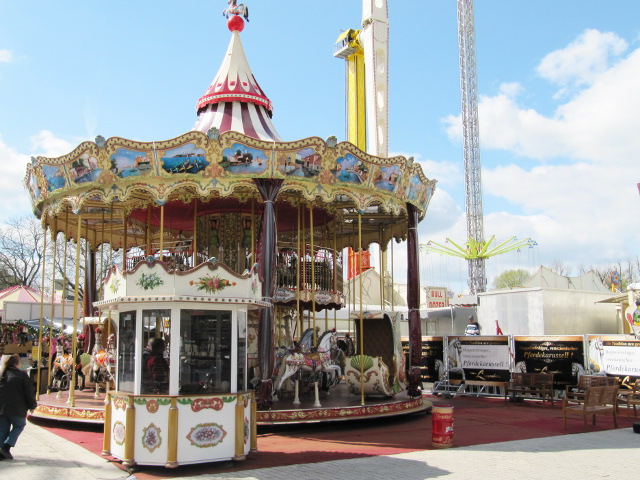
Many towns and villages in Germany had and still have an annual Kermesse, a sort of funfair that has its origins in the Middle Ages. When this highly popular event came to Messkirch, the colors and sounds of the fairgrounds attracted me. There were the noisy roller coasters, the gentler merry-go-rounds for little children and the giant Ferris wheel, the cacophony of music blaring from loudspeakers cranked up to full capacity, showmen at dozens of sideshows clamoring for the attention of hundreds of people milling through the narrow alleys, the tantalizing odors of frying Bratwursts, the games people played, such as target shooting with air rifles, throwing darts, knocking down pyramids of cans with tennis balls. Being part of a giant colorful human canvass in motion, I enjoyed just being there. I had no money to spend on a ride on the roller coaster, or on a paper cup filled with French fries topped with mayonnaise, or to pay for the fun of popping a balloon with a dart to win a prize.

Merri-go-round - Photo Credit: volksfestundkirmes.de

Merry-go-round – Photo Credit: volksfestundkirmes.de

When I returned to the Kermesse on the following afternoon, it so happened that one of the attendants of the merry-go-round had not yet shown up for work. The operator who had spotted me hanging around at the ticket booth approached me and asked, if I was interested in a little job in return for free rides. All I had to do was to take and tear up the tickets of the people sitting in the gondolas and waiting for the merry-go-round to start. That was very enjoyable except that it lasted only a few minutes. The tardy worker arrived and my job was done. But to my surprise the operator honored his promise. So I was taking rides for the remainder of the afternoon for free. Unfortunately I had not yet learned much about self-control and did yet comprehend that there is something we call too much of a good thing. Yes, I experienced the thrill of being twirled around in a sea of color and sound. But after the fifth or sixth ride the initial excitement gave way first to boredom, then to nausea. Stubbornly I kept taking one ride after another, until motion sickness forced me to quickly leave the fairgrounds feeling sick to the point of throwing up. Late, far too late I arrived at Schloßstraße 18 pale and exhausted. To make matters worse, Herr Stoll in his anger about my tardiness slapped me hard in the face with his powerful carpenter’s hand and sent me off to bed. Sick and hungry I spent a long time tossing around in my little bed before eventually falling asleep.

My eldest brother Karl attended the same high school in Messkirch. He had lost a couple of years of schooling due to the turmoil in the years immediately after the war. When he was finally reunited with our family in Rohrdorf, the school administration allowed the 18-year old Karl to participate in classroom instructions with students six or seven years younger. The first foreign language offered in all the schools of this part of  Germany was French. Hence Karl who had received no instruction in this language before had to start over again at the lowest high school level. However, in all other subjects he was clearly superior and so he could concentrate all his energies on French. As soon as he obtained the necessary language proficiency, he was allowed to jump to the next higher grade. He did this often several times in a single school year. It did not take very long for Karl to acquire a reputation for being a genius. Enveloped in an aura of success he became a legend, even before he left the school. Teachers and fellow students alike marveled at his exemplary accomplishments. At first I was pleased to hear so many good things about my brother. However, with the accolades heaped upon that miracle student also came high expectations, which I was unable to meet. Instead of doing my homework I spent the afternoons outdoors with friends, whose company Herr Stoll did not approve.

One evening, it was already getting dark and it was time for me to be in bed. Suddenly I remembered a math assignment that was due the next morning. Pretending to sleep, I waited quietly until Herr and Frau Stoll had gone out for their evening stroll. Then I switched on the light, knelt in front of the tiny night table to do my homework. I had barely finished the first exercise, when I heard the staircase creak and the thump-thump of heavy footsteps. In panic I switched off the lamp on my mini-desk and in doing so I knocked over the small ink pot. In the darkness I tripped over my shoes and hit the wooden floor headfirst with a thud. Hastily I got up and jumped into my bed. Too late! The door burst open and the bright light from the ceiling made me squint. I was dazed and unable to move. Herr Stoll walked up to me, and slapped me in the face. Without saying a single word he switched off the light, slammed the door behind him, barely concealing his uncontrollable anger. His wife was waiting for him at the bottom of the staircase. I overheard him saying, “That will teach him obeying bedtime rules.” Even though this time they were really going for their evening stroll, I did not dare to switch the night lamp back on. I crawled under my blanket and listened in horror, as the ink was dripping drop by drop onto the wooden floor.

Soon afterwards our homeroom teacher prepared letters to be taken home to warn parents, whose children were in danger of failing the grade. Fräulein Welte gave me one to be signed by my father. I guess I would have had to present the letter to Herr Stoll, even though it was addressed to Ernst Klopp. Fearful of severe punishments I forged my father’s signature, but was dumb enough to brag about it to my classmates. It did not take very long, before Fräulein Welte got wind of my offense and mailed a letter to my home address in Rohrdorf. Fortunately Father was preoccupied with his own problems and was too far away to deal effectively with mine at school.