A Wall Comes Tumbling Down
But love is much like a dam: if you allow a tiny crack to form through which only a trickle of water can pass, that trickle will quickly bring down the whole structure, and soon no one will be able to control the force of the current. For when those walls come down, then love takes over, and it no longer matters what is possible or impossible; it doesn’t even matter whether we can keep the loved one at our side. To love is to lose control. Paulo Coelho
Having a Good Time in Marburg
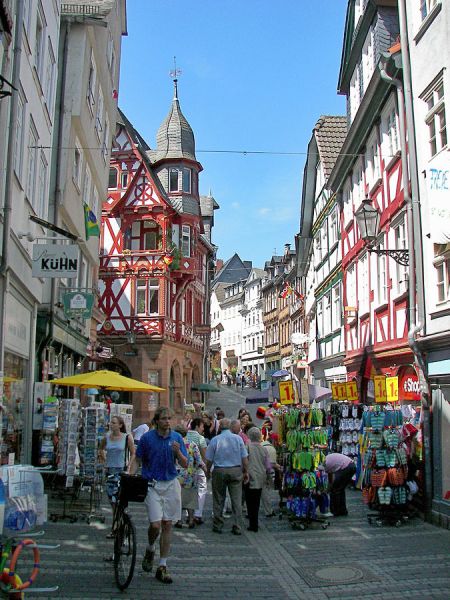
Downtown Marburg – Photo Credit: wikipedia.org
In the afternoon of October 1st, 1964, I stepped into Room 328 of the Tannenberg barracks named after the place in East Prussia, where Germany defeated the Czarist Second Army at the beginning of WW1. The room was fully occupied by ten soldiers. To accommodate me, another bed was brought into the room for the newcomer from Koblenz. Even though I felt like an intruder in this close-knit group of young men, they gave me a cordial welcome into their circle of friendship and camaraderie. We had many things in common, which greatly facilitated my acceptance by the group. All of us were near the end of our army time with 180 days or less left to go. We shared the same know-how of carrier frequency technology and were looking forward to more technical training on the latest communication devices. But best of all there was a love in the entire group for music, singing, even dancing in a wholesome, man-centred environment, which gave me a big lift in optimism and morale. There were three buddies in Room 328, who could play the guitar. They were delighted to see that I had brought my six-string with me. I gladly let them use it, as they were so much better in the accompaniment of our favourite army songs, whereas I was just a beginner and concentrated more on playing simple classical guitar pieces. We celebrated the major countdown dates of the remaining days, first every month, then every week, finally the last ten days every single day.
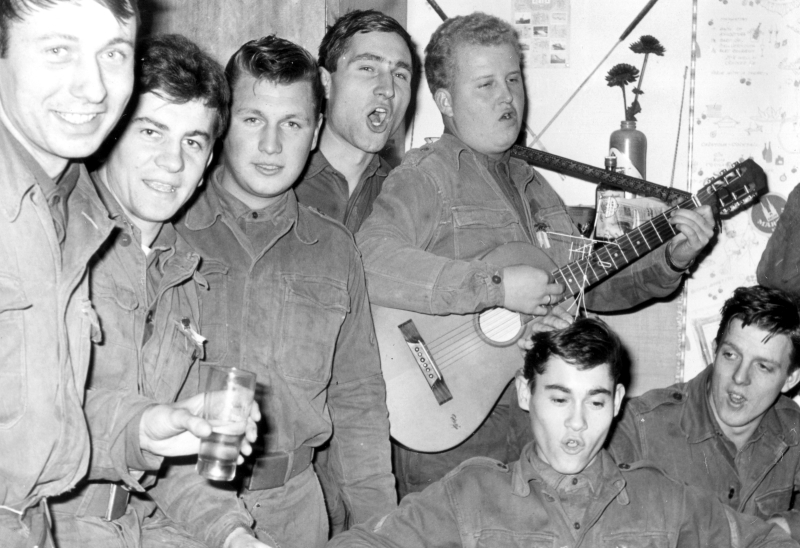
Singing and Celebrating: Peter to the left of the one Playing the Guitar
As part of the ritual we marched through the hallway past the rooms where the new recruits were just beginning their lengthy term of duty. Boisterously, mockingly, but mostly joyfully singing, our voices reverberated throughout the building with the intoxicating line, ‘Homeward bound, the reserve has rest.’ Then we returned to our room for more celebration and merrymaking. On one of these occasions, having already consumed a good quantity of the fine Marburg beer, I felt emboldened to demonstrate to my room buddies how beer can travel upwards from the mouth to the stomach. To accomplish that feat I assumed the typical yoga headstand position. To everyone’s amazement, I drank a glass of beer, which a roommate was slowly pouring into my open mouth. Klopp, the yoga man from high school, had just added a new twist to the ancient Indian system of physical exercises.
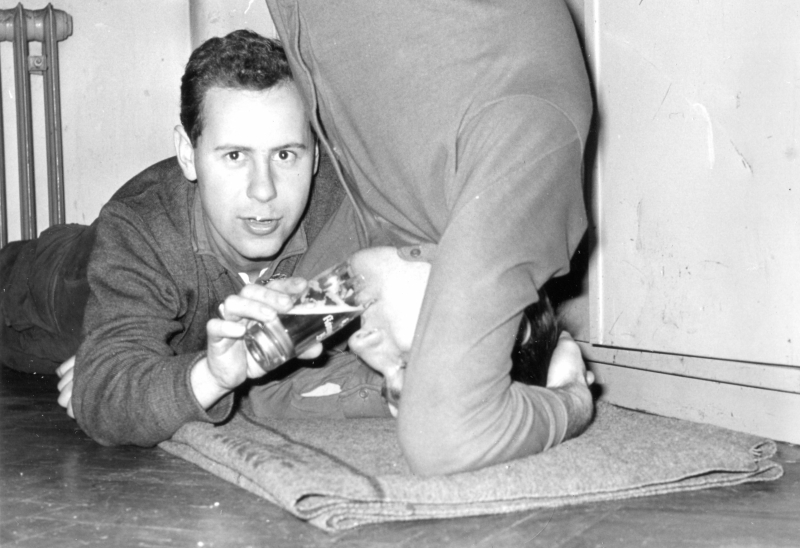
Peter drinking Beer in a Headstand Position
There must have been some favourable mention of my instructional abilities on my transfer papers. For it did not take long before I was asked to resume my teaching duties in basic electricity and electronics. To deliver effective lessons to the new recruits, I was given preferential treatment. For the preparation of the instructional units I had more time than I needed, which I often used to write letters to Biene instead.
Maneuvers and military war games were more frequent now and occurred on a much greater scale often involving several divisions drawn from the various regions of West Germany. The exact starting time, scenario and action plan were kept secret by the high command to make the exercises more realistic. Our commanding officers at Marburg were also kept in the dark and fretted like little schoolboys over their involvement in the upcoming operation. For achieving success in the eyes of the army top brass they heavily depended on our cooperation and technical expertise. Gone were the days of the master-servant relationship of the former days at the basic training period. It felt good to be truly respected as citizens in uniform. I remember one particular military exercise very well. Many days ahead of time the Tannenberg barracks were put on high alert. Weekend passes were cancelled. Maintenance crews feverishly worked on the trucks to make sure that they were ready to roll out at short notice. I had to verify that the electronic equipment was functioning properly in the truck that was assigned to my driver and me for the impending maneuver. Alluring promises were filtering down the ranks. If we did well during the seven to ten days of the upcoming manouver, we all could count on a pass for an extra long weekend as a reward for our efforts.
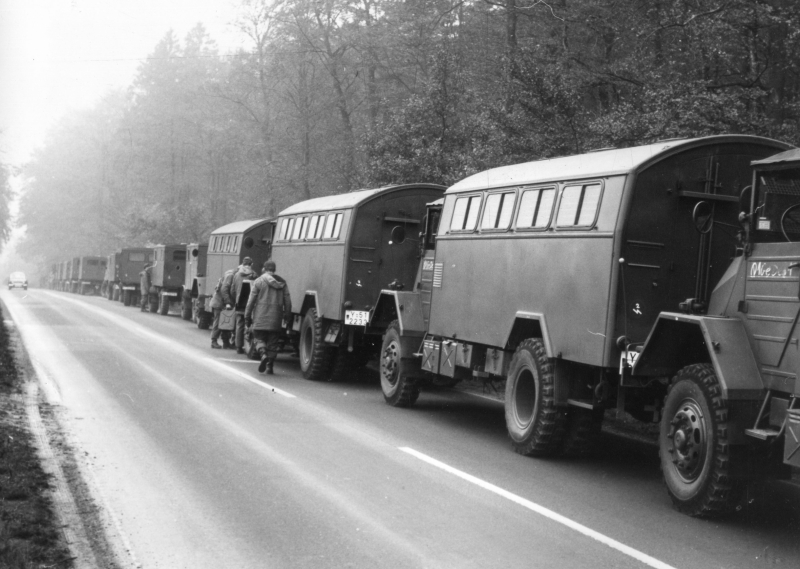
On the Way to Military Exercises on a foggy November Day
Then one day in the early morning hours the long-expected order came. Within less than an hour a column of heavy-duty Mercedes trucks was heading west. The purpose of the operation for all the army units in the northwestern region had finally been revealed. Our mission was to throw back an imaginary enemy across the River Rhine. At a location unknown to me, the truck and electronic gear for which I was responsible was parked in a small clearing surrounded by dense woods. These were tiresome days. My partner and I often worked through the night ensuring that the connections were establishing telephone contacts by the cables, which the linemen were rolling in from all directions. But there were also lulls in the frantic activities, when we took turns sneaking in a little bit of much-needed sleep. The only noise then was coming from the 220 V generator, which provided power for light, electronic gear, but also heat for those chilly November nights. I found the entire experience challenging and rewarding to be at the controls of one of the centres of a complex communication’s network. Tired, but satisfied in the knowledge of having made a small contribution to the success of the Marburg contingent, I took the extra long weekend catching up on some much-needed sleep and enjoying Mother’s excellent home cooked meals and hospitality.
A Tale of Two Castles
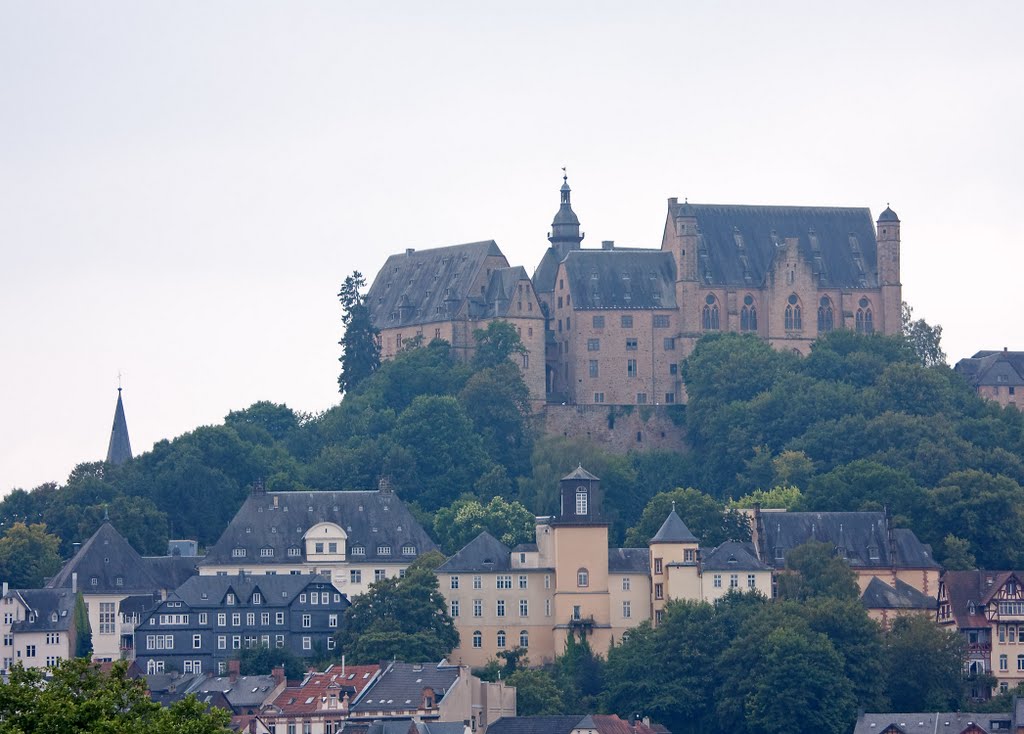
Marburg Castle – Photo Credit: Panoramio.com
In contrast to Koblenz soldiers relatively small in numbers did not overcrowd the medieval city of Marburg. The only barracks was relatively small and like Maxhof in Bavaria served as a technical training centre. To go to the city center I had to descend from the hilltop where the Tannenberg barracks was located on steep roads or if I wanted to take a shortcut on even steeper stone staircases. In the narrow streets below there was hardly enough room for cars to pass each other. It was not uncommon to see vehicles parked right on the sidewalks as not to impede the traffic flow. On my free late afternoons and evenings I often strolled by the many quaint shops. Sometimes I dropped in at one of the numerous bookstores, which always have exerted a special attraction for me. With shelves upon shelves reaching all the way to the ceiling these stores looked more like libraries, which is not surprising, if one considers that Marburg is a wellknown university town. Here I discovered and bought a copy of the New Testament in Latin. The young saleslady might have thought that I was a first year student enrolled in the faculty of theology rather than a common soldier from the local barracks.
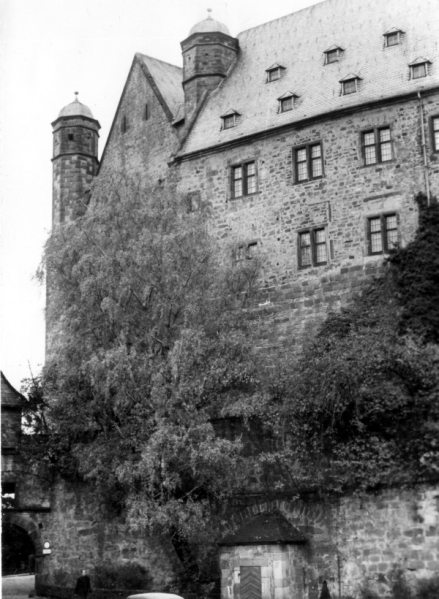
Marburg Castle – October 1964
In the downtown area there were also many cozy pubs. In one that was catering to the students of the nearby university my friend Hans and I frequently got together for a chat and a refreshing local beer from the tap. Naturally in such congenial place we did not limit ourselves to just one drink. After the third beer I felt ready to give my old friend a progress report on my relationship with Biene. Through our correspondence Hans was well aware of the trials and tribulations, but also had been very skeptical about my love to her. He shook his head in disbelief when I told him that I had met her only two times earlier in the spring. Having gone through several love affairs, all of which have ended in disaster, he could not believe that I was still on my first.
“We are planning to meet again in November,” I said noticing the same doubtful expression that I had seen so often in Dieter’s face.
Ignoring my statement, Hans bluntly asked with a sardonic grin, “Have you kissed her yet?”
“Yes, I have,” I answered curtly getting quite a bit uncomfortable with the direction our conversation was taking.
Making use of his own peculiar metaphor, which he had used in his letters before, he ventured another question. “Have you conquered the castle or has she voluntarily open the castle gate to you?”
I felt quite annoyed with the embarrassing questions, which so glibly popped out of his mouth. With a hint of rising anger I managed to reply firmly, “Whether it is open or whether it is locked is none of your business! But to satisfy your juvenile curiosity, I will wait to marry her if and when she is ready.”
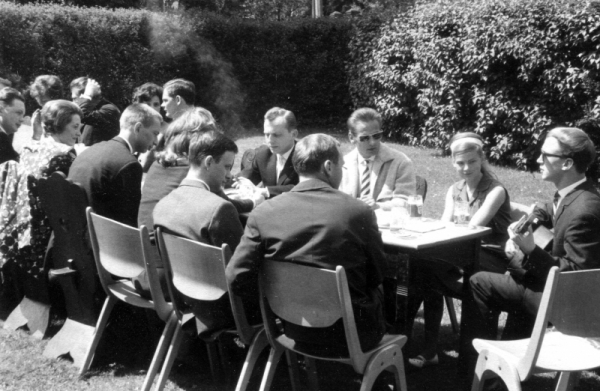
My Friend Hans giving a Guitar Concert to Fellow Students
“Ede,” using my nickname and almost shouting now, “you must be kidding me …” He stopped in mid-sentence, when he glanced at my angry and determined face. Whatever was his opinion on this delicate topic, I did not care to hear anymore from someone so disillusioned as my friend was through all his failed relationships. Fortunately I had the presence of mind to change topics, before the matter would escalate into a real fight. I told Hans that I still had the set of walkie-talkies, which I had bought from a roommate and had occasionally used in Koblenz to transmit music within the short-range of the barracks environment.
“ Wouldn’t it be exciting if we tried them out over a longer distance between the castle and the barracks?” I suggested to him. He happily agreed. And so we turned our attention away from the contentious issue of a few moments ago and focused on the number one common interest in electronics that had once formed the foundation of our friendship. Opposite to the Tannenberg barracks was an even higher hill, on which the Marburg castle and the Museum for Armory were located. Three kilometers or perhaps even four separated the two hills with a direct line of sight high above any obstruction, which might have impeded the radio signals. We agreed to test the radios at five o’clock on the very next day. To add an air of adventure, we recalled from the time before we joined the European scout movement our old code words we had used in our twosome secret society ‘The Black Hand’. However, what we in our excitement did not consider was that the fantasy world of our boyhood adventures was not so far removed from the reality of the Cold War era, where spies and agents from East Germany were roaming about looking for valuable information of military significance in West Germany. Precisely at 1700 hours Hans and I established a communication link with our walkie-talkies between the two hills. An exchange of short and snappy statements ensued taking on a distinctly clandestine character and went approximately like this.
“XU73 calling Ede Wolf. Over.”
“Ede Wolf acknowledging call from XU73. Over.”
“XU73 to Ede Wolf. Confirm validity of call by providing code word between XU73 and Ede Wolf. Over.”
“Code word is: ‘The Black Hand’. Over.”
“Roger from XU73. What is today’s message? Over.”
Now came the moment when our game reached its climax. Even though we had rehearsed the script in the pub the day before, I felt just as excited as if the whole scenario was for real. “The message for XU73 from Ede Wolf is: Five black umbrellas in Italian ice cream parlour. I repeat …”
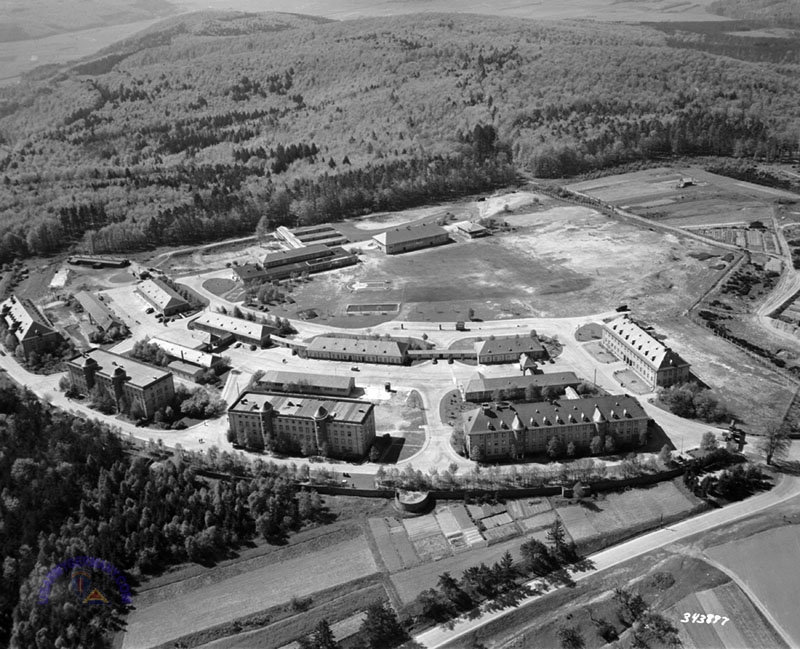
Tannenberg Barracks at Marburg – Photo Credit: wikipedia.org
I could not repeat the sentence. In the twilight of the early November evening hours I saw a police car with a directional antenna on top racing up the winding hillside road. Almost in panic I pressed the send button one more time and warned my friend, “Danger! Turn off your radio at once. I explain later.”
While the police car navigated a few more switchbacks, I had barely enough time to jump off the road and hide in the dense brush below. A minute later I heard a car passing by at high-speed no doubt in search for that elusive radio signal carrying those mysterious messages. If I had been caught, Hans and I would have been in a real pickle as to how to explain that the conversation between a student of the local university and a member of the Armed Forces was just a juvenile game apart from the disturbing fact that we had been using a communication device without a license.
Rendezvous at the Wuppertal Opera House
On the Sunday morning of November 15th, I boarded the train at Giessen and was on my way to Wuppertal, where I was to meet Biene at the train station.
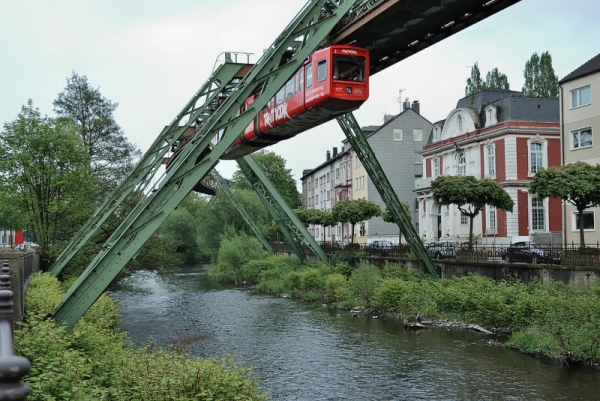
Floating Tram in Wuppertal – Photo Credit: wikipedia.org
During the three-hour train ride I had ample time to reflect on the strange nature of my relationship with Biene. In the angry exchange of words with my friend Hans I had allowed the word ‘marriage’ to slip out of my mouth, which must have seemed totally ridiculous to him and seemed to me now as well. Hadn’t she set new boundaries for the two of us? Hadn’t I acknowledged them in my letters and promised to respect them? And what was the purpose of friendship in the light of my planned emigration to Canada? Hadn’t I lost within less than a year friends and classmates, who were living closer than a half-day’s train ride from me? Would any of my friends sit for hours in a train just to attend an opera in a distant city on a Sunday evening and then in a grand loop, including annoying late night transfers, return home at eight o’clock in the morning? Why was I doing this? It seemed to me that in spite of my promises to the contrary I still wanted to climb over the wall that Biene had erected between the two of us.
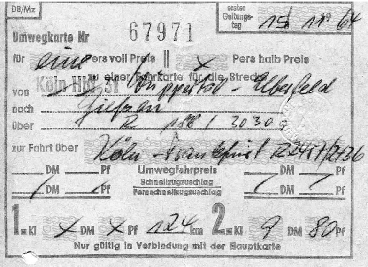
Return Ticket of November 15, 1964
As the express train was approaching my destination, I put myself in Biene’s shoes and began to ponder what had made her so eager to meet me. Why would she go through the trouble of traveling to Wuppertal to buy tickets and then exchange them a few days later, because I had postponed the date of my arrival? Would anyone do this for a mere friend? In spite of my disagreements with Dieter, Gauke and Hans, they had been right in one thing. An actual face-to-face encounter is worth more than a hundred beautifully written love letters. I remembered how annoyed I was in my grief, when Private Gauke romanticized about that happy moment when he saw his sweetheart waiting for him at the end of the platform with her hair undulating in the evening breeze. After our transfer back to Koblenz we had lost sight of each other. I felt thankful now for the care and compassion of a true friend and for the romantic image that was almost identical to the one that I envisioned now. It had vividly come back through Biene’s instructions in her postcard, “I will be standing under the railway clock near the exit behind the ticket gate.”
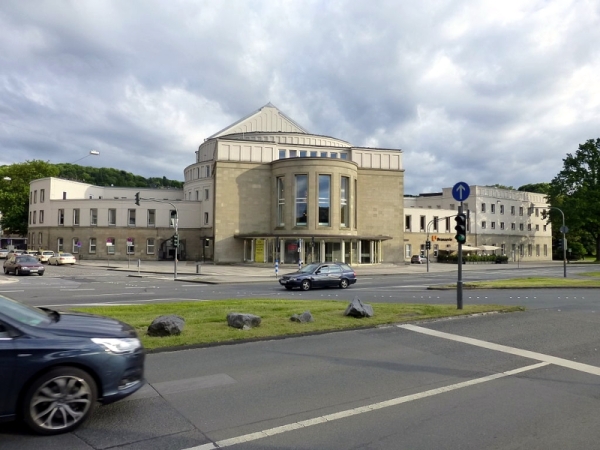
Opera House Wuppertal – Photo Credit: wikipedia.org
Then we met. During the afternoon we immersed ourselves into the mellow sensation of togetherness that resisted any attempt to spoil it with talk about how we felt about each other and what destiny held in store for us. In my memory the exuberant feeling, which I experienced while being together with her so powerfully dominated my heart that all else was drawn into a blissful blur. Later on I could not tell where and how we had spent the twilight hours before we entered the opera house to take in the sights and sounds of Mozart’s ‘Don Giovanni’. For me, who had never gone out on a date before, the experience was almost overwhelming. We were thankful for the silence imposed upon the audience by the theater’s etiquette. Any casual conversation would have ruined our sense of happiness. Instead we communicated the feeling of physical closeness to each other by the gentle squeezing of our hands. Too soon the three-hour long opera came to an end. I had to catch the last train to take me home in a veritable odyssey. By German traveling standards the round trip of more than ten hours with its many stopovers and waiting times had been an ordeal. Although I arrived at Mother’s place tired and exhausted, I felt happy. I sensed that our late night rendezvous at the opera had sprung a hairline crack in the invisible wall that Biene had erected.
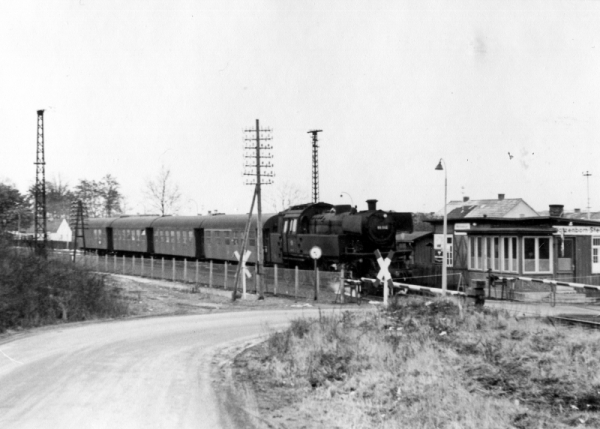
Train Arriving at my Home Town Watzenborn-Steinberg (Now Pohlheim) near Giessen (1964)
While the monotonous clickidy-clack of the train lulled me into sleep, I was blissfully unaware of the profound sadness and feelings of desperation, which had gripped Biene the very moment my train had vanished like a phantom into the darkness of the night.
The Wall Comes Tumbling Down
Excerpts from our Correspondence Half a Century Ago
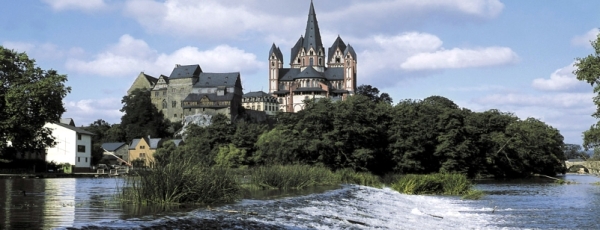
Limburg in the Lahn Valley – Photo Credit: Allemagne Romantique
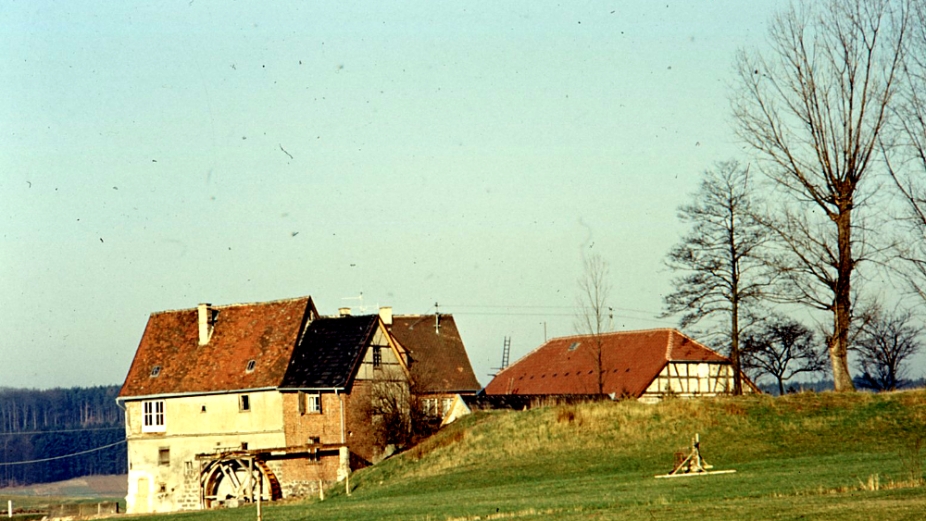
After the night-long train ride I was physically exhausted, but somehow refreshed in mind and spirit. In the next couple of days I felt like I was riding high above cloud nine. On my walks to the nearby derelict mill the dreary landscape shrouded in dense fog did not conjure up depressive thoughts. On the contrary, I let the new-found tender feelings guide me. I was whistling and singing bold scout and army songs and offered Mother a cheerful good morning, when I arrived at our home’s doorstep. A few days later I received Biene’s letter.
November 16th, 1964
” My dear Peter,
I would so much like to ask you: Come back right away and stay with me and no longer depart from me. Alas, I know that it is not possible and that you would come immediately if you could. I felt so miserable, when I walked off the platform. What would I have given to step on the train with you to travel anyplace with you no matter where. I feel so unspeakably lonesome, and the question gives me pain: For what do I live and for whom? I am so distressed and it hurts me so much in the terrible knowledge that you can only come to go away again and soon forever. Dear Peter, please forgive me. I don’t want to reproach you for anything. With your visit you brought me much joy and you undertook the long, strenuous journey, and yet I am sad and my longing for you is even greater. I would like to love you so much and be with you and make you happy. When I have calmed down a little bit, I will write you again.
Your Biene”
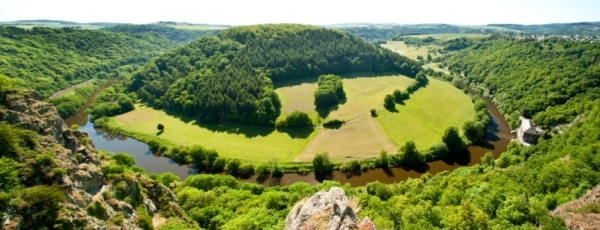
Meandering Lahn River – Photo Credit: allemagne romantique
No rhyme nor reason will ever explain why during my reading of her lines a dark cloud would cast a shadow over my entire being. Instead of rejoicing over her letter, I was deeply disturbed, not so much by her pain, suffering and longing for my presence, but rather by my own stubborn refusal to wholeheartedly accept her declaration of love. I was stewing over Biene’s sudden turnaround regarding the wall, which she had erected for whatever reason and which I had so foolishly and cowardly accepted. After I had brought the emotional stew, a mixture of confused anger and painful stubbornness, to the boiling point, I rashly wrote her a response. I told her that I had gotten used to the wall as a sort of protection against another blow of fate. Distrust had entered my heart and I was unwilling to start all over again. I had barely thrown my letter into the mailbox, when I felt sorry. I had a broken a promise I once made to myself, never to reply in haste and thoughtlessness. I was expecting the worst. Within 48 hours her reply arrived in the mail.
“Dear Peter,
Something in your letter has frightened me. For I have again recognized how much I had hurt you at the time when it appeared to you as if I wanted to erect a wall between us in order to protect myself against your affection. Oh Peter, believe me that I had never wanted this, instead I had always longed for your affection. Perhaps you had also felt it. For why did you write in spite of everything and were so kind to me? But you are distrustful, because you could never really understand me. Maybe you don’t know or just cannot believe how I cling to you and how much I love you. For the longest time I myself did not think it possible that it is so, and therefore I wanted to warn you in order not to disappoint you; for I really did not know whether I really loved you as much as it seemed. Dear Peter, this is one reason; alas there were also many other reasons, which I cannot so quickly explain to you. Only after you had come to me did I dare to admit how much you mean to me; and now, Peter, I know it for sure. And now it is certainly too late; for you yourself say that you have resigned yourself to the limits of our friendship and no longer have the same longing as before. It oppresses me very much that it no longer means as much to you that I love you, as it would have meant to you before.
And now, when I want to dream something beautiful about us, this thought destroys it: It will not be! How much I wished now you would still dream about us studying together and be together every day. See, dear Peter, such thoughts are entering my mind and many more…
How I’d wish that I could bewitch you and give you a love potion just like it happens in fairy tales so that I won’t lose you…
Your Biene”
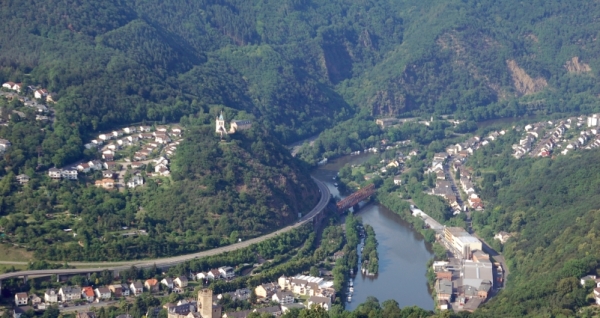
Castle Lahneck in the Lahn Valley – Photo Credit: wikipedia.org
Not waiting for a response from me, she quickly sent another letter making a last-ditch effort to save what appeared to have already been lost.
“My dear Peter,
Guess Peter, what I did last night. I took all your letters out of the portfolio and read them all once more. Alternately I became quite sad and quite happy. How strangely things have come to pass with us, if I think only about the past year! In my subconscious I must have always loved you. When I look back, I recognize it, this feeling had to struggle first through much darkness and confusion to the light. And now Peter, it is the most beautiful feeling that I have ever experienced. I believe that if I could really be every minute with you, I would fall apart experiencing so much happiness.
To you dear Peter, I send a secret Christmas kiss, which you would get under the Christmas tree.
Your Biene”
After reading Biene’s Christmas letter, the realization hit me with stunning clarity that if I could not see a wall, could not feel a wall, then in all likelihood there wasn’t a wall. Indeed, at the trumpet call of love from deep within her heart the wall had come tumbling down. The dam had been broken, and I found myself swept up by the torrent, against which no further resistance was possible and would have been sheer foolishness. Willingly I went with the flow and felt the tug carrying me unerringly into the direction of my dreams.
Of Good Luck Charms and Love Potions
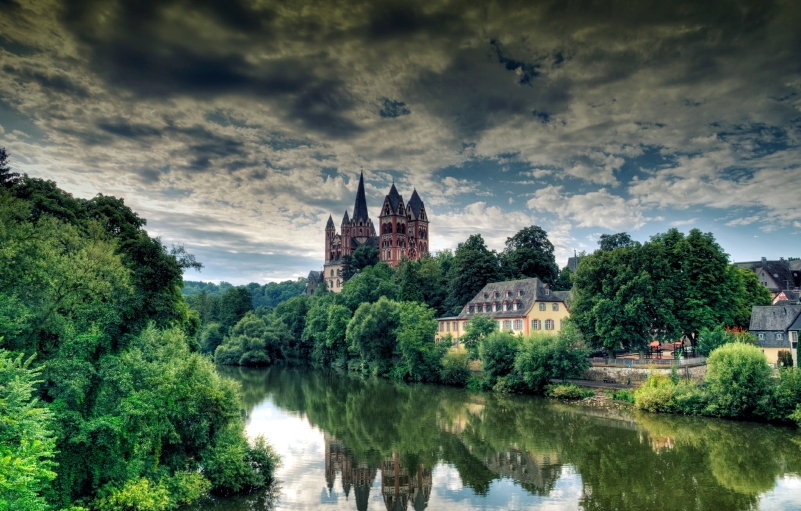
Limburg at the River Lahn – Photo Credit: goodwp.com
The wall, which had caused so much grief, had finally collapsed. A fresh breeze of lightheartedness entered our hearts and prompted us to write more cheerfully about our feelings towards one another. We felt safe to joke and banter about our relationship. For example, when I referred to Don Giovanni, the lover of over a thousand women, and boldly declared that my favorite line was ‘but in Spain already one thousand three’, Biene teasingly asked if she was perhaps Don Pedro’s 1003rd. In that case she would plan her revenge and demand that for me to be forgiven I would have to sing her an aria to demonstrate my true repentance.
At the end of our visit to the opera Biene managed to slip a good luck charm into my coat pocket. It turned out to be an effective substitute for the originally intended love potion. This talisman was a little man, made out of wood, with lots of hair spreading profusely into all directions. Biene truly believed that he would do its magic and completely surrender my heart to her. While I was less inclined to lend credence to such superstition, her strong belief proved her right. The little man with its exuberant hair both amused and endeared me to Biene all the more so, as my army buddies knowing its romantic origin and loved that cute little fellow and constantly teased me about it. Of course, I reported back to Biene how much I loved her good luck charm. When she feigned jealousy over Don Pedro’s love affair, I lectured her good-naturedly that since my cute new friend was a gift from her I considered him part of her and therefore incredibly she would be jealous of herself. Of course, I relished the excitement and bantering Biene’s gift had generated in Room 328. One morning I discovered my roommates had braided his hair. When they threatened tongue-in-cheek to cut it off, I made them all sign a written promise in a letter to Biene that they would not utter such threats again. Just to be on the safe side, from that moment on I kept the little man locked up in my closet.
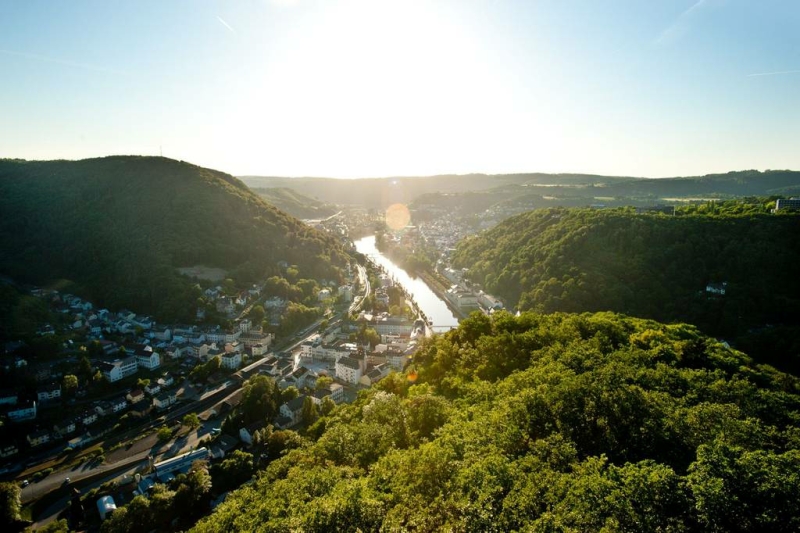
View into the Lahn Valley – Photo Credit: Romantic-Germany.info
It was also during the weeks before Christmas that my roommates being aware of my expertise in electronics started bringing their broken-down radios to me. Fortunately the radios suffered only from minor defects, such as blown fuses or tubes needing replacement and similar problems, which I was only too happy to fix. At home I began to assemble from a still functional transistorized tuner and electronic components from my parts box a little radio that I planned to use as a farewell gift for Biene before leaving for Canada.
Amid all this happiness there was just one fly in the ointment. Every once in a while with the regularity of the lunar cycle Biene would feel depressed and so miserable that according to her own words only I would have been able to comfort her, if only I had been present at such time. She would wake up in the middle of the night or even cry in her sleep. Quite frankly, not knowing anything about the so-called evil days that were often used in the German language as a euphemism for the monthly period, I was quite bewildered by the disturbing lines about her distressed state of mind. I felt an uncanny foreboding and wondered why the great joy she felt would not be strong enough to carry her across the occasional ups and downs. Afraid to walk across an emotional minefield, I chose to ignore such sentiments. I still had to learn that avoiding a problem was no way of solving it.
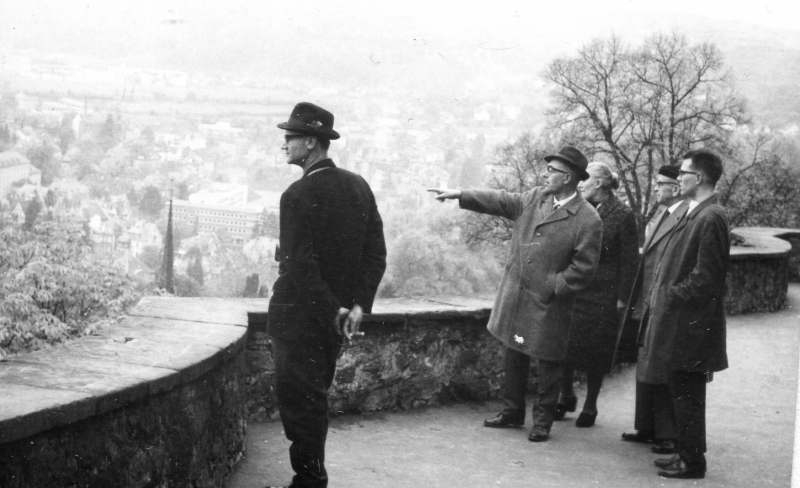
My Brother Adolf at the Marburg Castle 1964
For Christmas I mailed her an LP with excerpts of the best musical pieces from Mozart’s Don Giovanni, which immensely delighted her. She quickly regained her balance. Listening to the familiar tunes recreated the imagery of us two sitting together and holding hands. She in turn sent me a guitar booklet with easy to learn hillbilly songs, such as ‘My wife and I live all alone in a little hut we call our own’. Chords, which I learned and practiced to accompany the songs, supplemented the tunes.
At Christmas I had guard duty at an ammunition depot deep in the woods of unknown location. On my lonely night rounds along the eight-foot fence with the stars shining brightly from a cloudless sky above me, I had ample time to make plans for the future. That’s when I made up my mind to talk to Biene about them on our next rendezvous in the New Year. Indirectly I had prepared her for this by presenting one more time my thoughts on what according to my opinion fate was and perhaps more importantly what it was not.
“December 24th, 1964 – one hour before guard duty
My dear Biene,
… For I believe that we have still a lot of things to talk about. You know, a great decision will have to be made. But no matter, what it will be, it need not mean our permanent separation. Look, dear Biene, this is also the point, in which I have always voiced a different opinion. Fate can bring us death, turn us into cripples, take away father and mother, drag us into war, but we have in our hands the tender threads of happiness, and fate will take them only out of our hands, if we are incapable or unwilling to make use of them. I can promise you, ‘I come back again’. You can promise me,’ I will follow you’. This is our decision and not one of fate. And whether we both abide by it and act accordingly will be the proof of our love for each other. Now it is getting dark, and I must soon put on helmet and uniform. Have a wonderful holiday and always believe that I think of you often!
Your Peter”
Amidst feverish preparations for our next get-together in the second week of January Biene mailed along with her Christmas letter two beautiful poems, one of which I like so much that I made an attempt to translate it into English.
Eyes
Eyes gleam like a sea at night,
And softly your gaze submerges.
But your gaze is only a weak glimmer like the starlight,
Which on the dark sea winks and blinks
And yet does not fathom the mystery of the deep.

Windows to the Soul by Gertrud Klopp


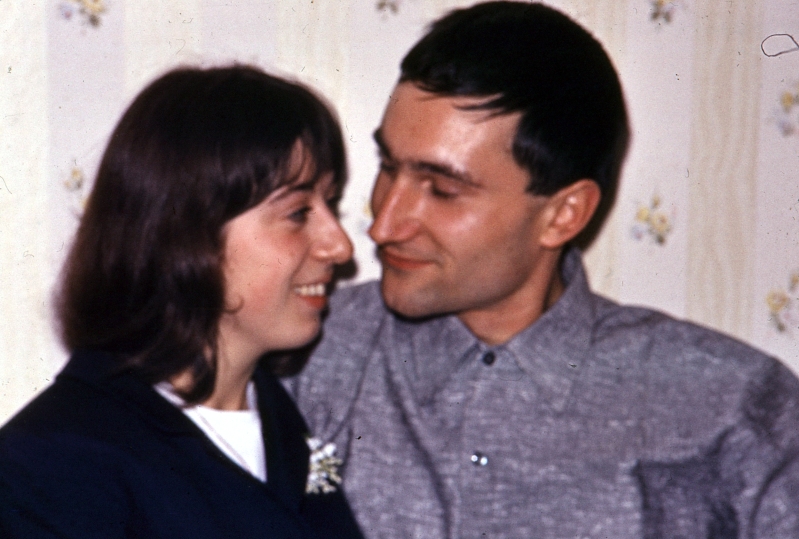

 The Peter and Gertrud Klopp Family