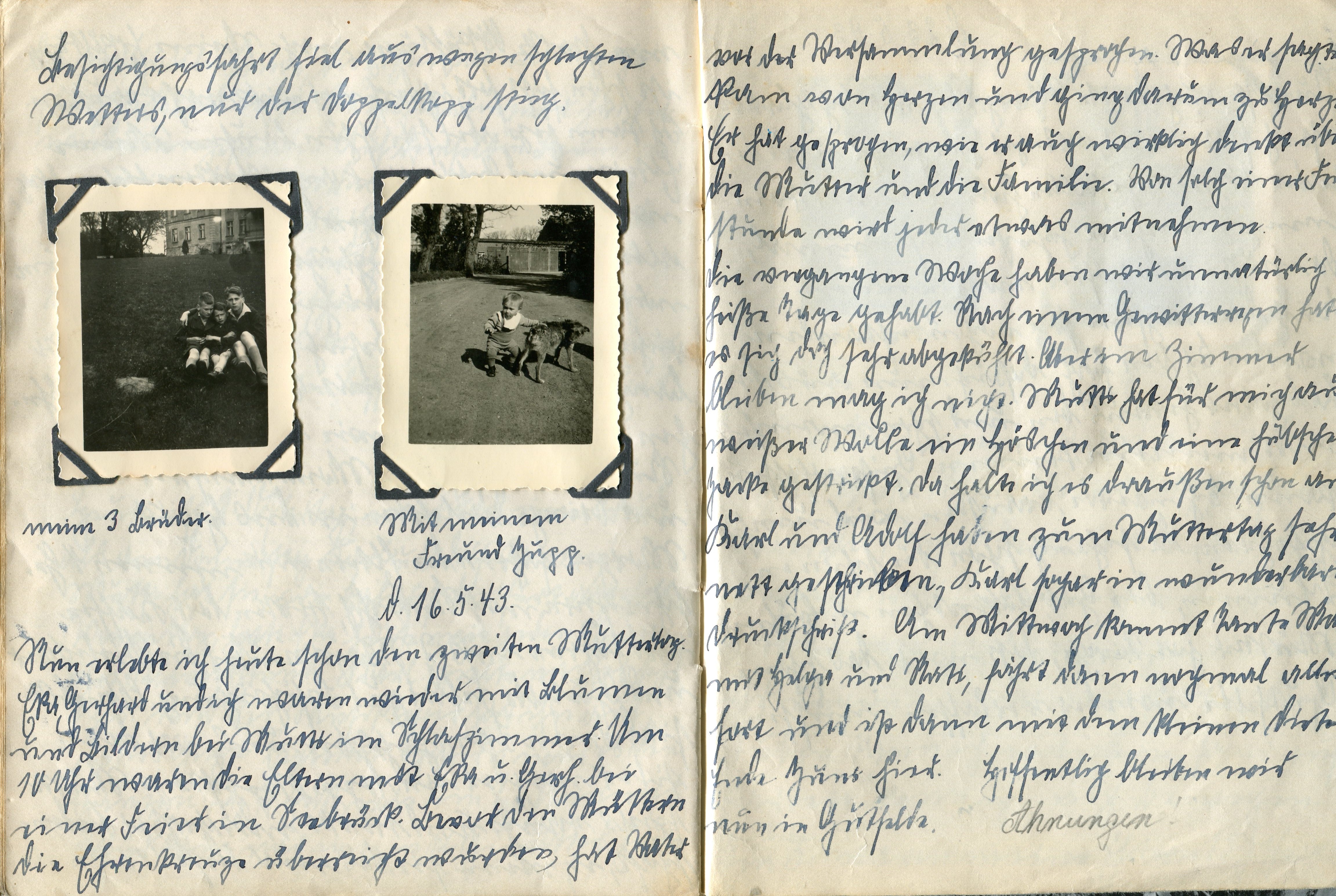
From Mother’s Diary
Chapter 5 – Part III
In the last week of August I gave Mother another scare when I came down with my first illness, an especially severe case of intestinal catarrh. She had to change diapers constantly. The diarrhea just did not want to go away. Mother was really worried by now. She immediately stopped giving me milk, cooked a sort of rice porridge sweetened with saccharin and gave me three times daily crushed carbon tablets. That seemed to help. After three days I had recovered and was my usual cheerful self again relieving Mother from the stress of worry and sleepless nights. Now I was ready again to entertain the never ending stream of visiting relatives with my laughter, smiles and beaming eyes: Karl back from high school to help with the harvest during the fall break, grandmother Elisabeth and Aunt Mieze (Maria) from Stolpmünde, and many, many more. Shortly before Christmas the measles were going around among the Klopp children, but to Mother’s great relief I did not get them, even though I had also shown some of the symptoms, a few of those scary red spots on my skin. But in the end we could all enjoy the Christmas season. Although we were now into the fourth year of the war, there were still plenty of gifts for everyone under the beautifully decorated tree. I was only interested in the baby rattle Grandmother had given to me for Christmas. There I had something concrete in my little hands that I could touch, handle, and make noise with. Karl was playing piano and the others were reciting poetry for the family. At year’s end I was proud to be able to stand up in my crib, showed off my first tooth, ate well, was toilet trained, and best of all I was happy to grow up in such a wonderful family.
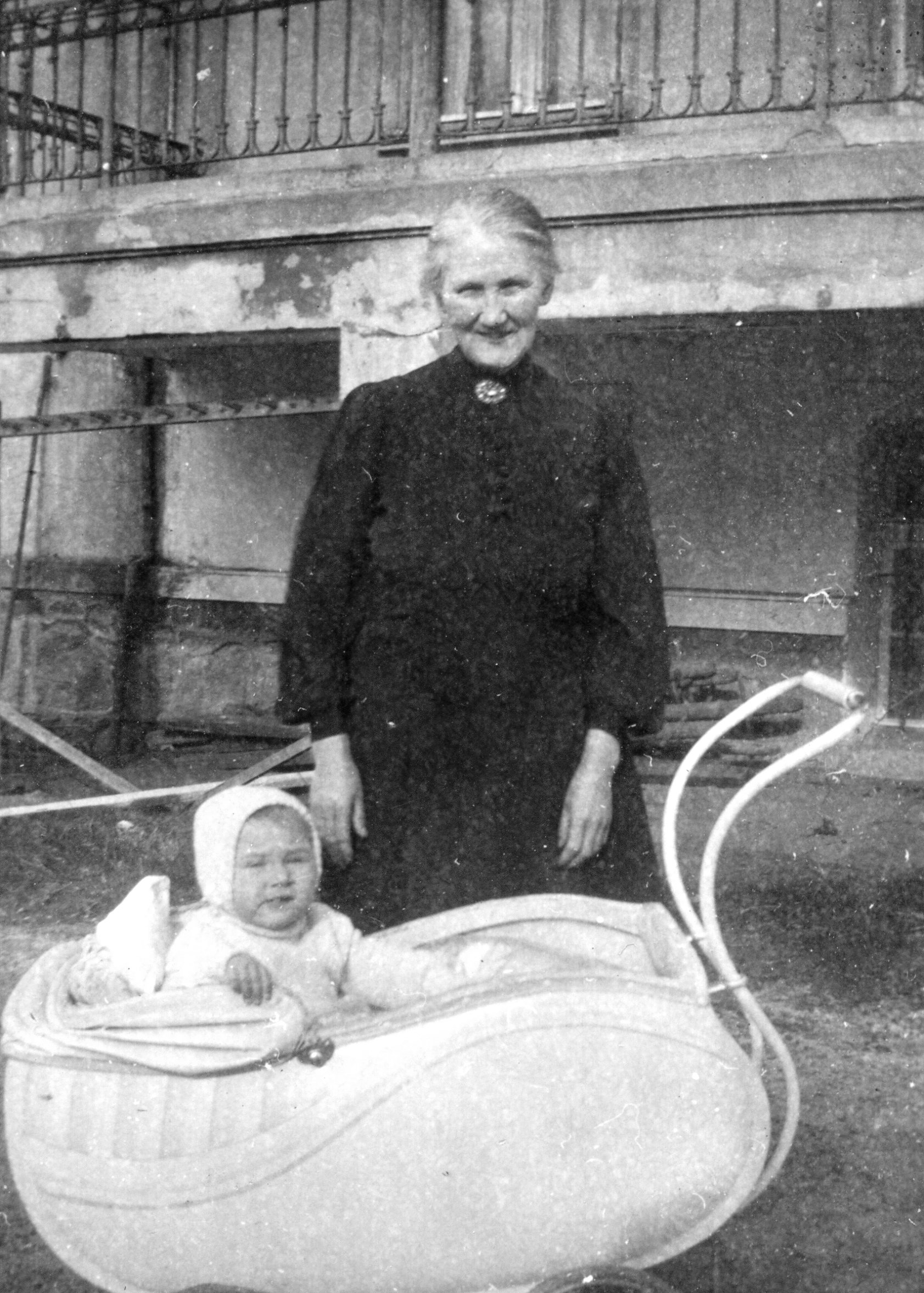
Aunt Alma from Berlin
In the New Year Karl and Adolf left Gutfelde to continue their education in Belgard. With Eka and Gerhard also away to attend a local elementary school during the day, it became very quiet around our house. But Mother still had me and I made sure with my increasing demands for food and attention that she would not get bored. We had a brief cold snap and the temperature plunged to minus 20. Nevertheless, Mother felt that even in this frigid air I must be outside and ‘toughen up’. Janina, the young Polish assistant in the Klopp household, who had taken a real liking to me, took me often for a quick stroll in my baby carriage. In the evening, when it was time for me to go to bed, friends would drop in to spend a few hours in the comfort and cozy atmosphere of the Klopp residence. Invariably discussion would turn to politics and, of course, to the war that was raging and after the surrender of the 6th Army at Stalingrad was no longer progressing in Germany’s favor. Out here, far away from police-informers and free from the fear of being denounced to the Gestapo, they voiced their opinion on the gloomy prospects of the war and even dared to make sarcastic remarks like: ‘The Führer (Hitler) has gotten us into this crappy hole, he will also take us out of it again.’ As for me, the world was still intact. I enjoyed the triple benefit of good food, shelter, and love. On that solid basis of early childhood nurturing I was being prepared to withstand the traumatic events that were to follow later with the major offensive of the Red Army in January 1945. But for the time being, even for the grown-ups with their depressing views it was still safe to live in our corner of the world. When the noisy discussion abated a little, someone suggested playing a round of Doppelkopf, the second most popular German card game. Forgetting their worries at least for a few hours, Father, Mother and her guests played the game of a long family tradition. They had a few drinks for good cheer, smoked a cigarette or two and were having a good time, while I was dreaming about my next wintry outing with Janina.
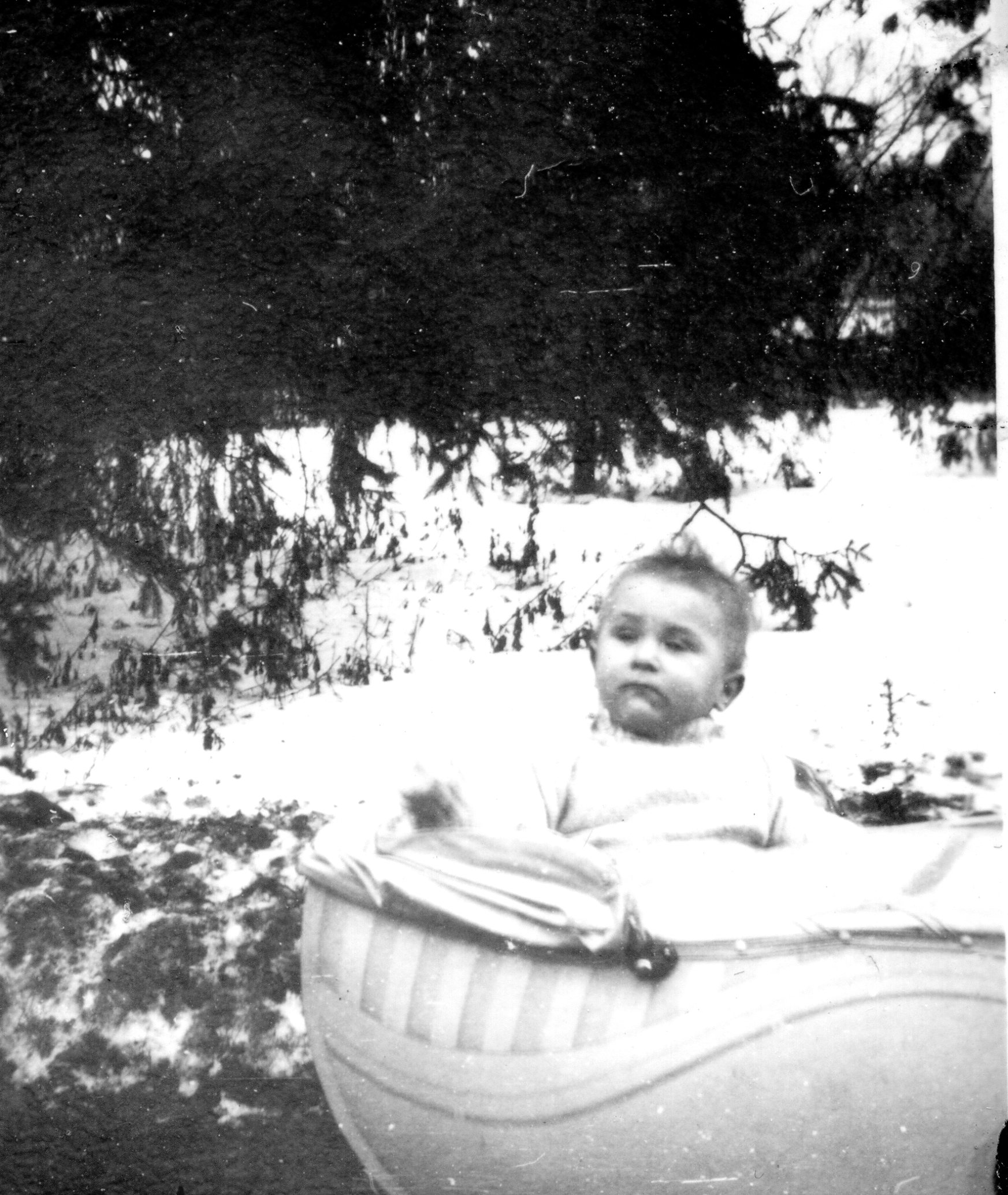
Peter in his Pram
Spring came early in 1943. I spent a lot of time outside exploring the world around me. I learned to stand up on my own and ventured to make my first stumbling steps. Jupp, the friendly family dog, was my steady companion and my best friend for a while. Unlike my older siblings I refused to take the bottle and from my first birthday on I proudly drank my milk from the cup. When people were watching, I did my best to entertain them and show off my newly acquired skills. With the good weather also came a stream of visitors to enjoy the peaceful environment and the hospitality they found at Gutfelde: Grandmother Elisabeth and Aunt Mieze ((Maria) again from Stolpmünde (Ustka), Aunt Alma from Berlin, Aunt Margot (wife of Uncle Gerhard, General-Lieutenant in the German army) with her three children Helga, Nati and Dieter, and finally my cousin Arthur Thiess from Berlin and his three daughters Ingrid, Gerlinde and Anje. These visits spread over a couple of months were quite enjoyable for hosts and guests alike, even though some stayed for as long as three weeks or even longer. On top of it all, Karl and Adolf came home for the Easter holidays. Karl had acquired a certain degree of stardom with his excellent performance at the Belgard High School and his rapid development of his piano playing skills. As always, when he was home, he was asked to demonstrate his progress at the family piano. This went over very well, especially as his music teacher was also present and accompanied him on Father’s violin.
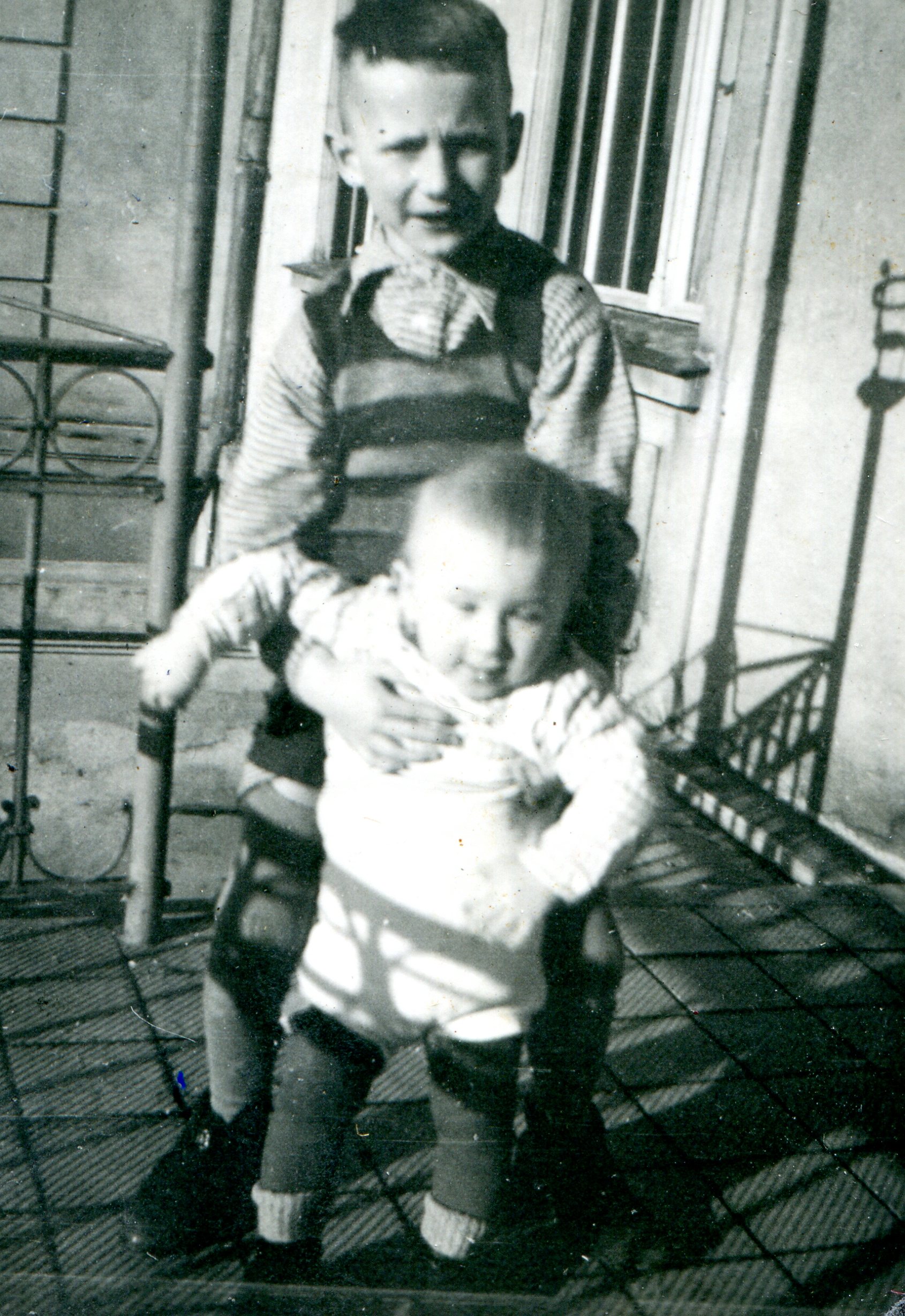
Gerhard Holding his Kid Brother
Mother was honored for the second time, since I was born, on Mother’s Day in Seebrück (Rogowo), a near-by town southwest of Gutfelde. With her five children, four of whom were male, she ranked very high among all the mothers in the region. Apart from the fact that Mother’s Day was a state supported festival, upon which a lot of emphasis was given to the meaning of motherhood mostly for ideological reasons – I would say for mythical reasons from ancient Teutonic folklore as well – women in general were considered not weak, but precious entities that had to be protected at all cost from any involvement in war activities. Germany was the only nation that did not employ women in the war effort in any shape or form. Young girls in colorful dresses presented flowers to the mothers. This year it was Father’s turn to make a speech to the assembly. What he was saying about motherhood and family came straight from the heart and with his genuine admiration left a lasting impression on all those who were present.
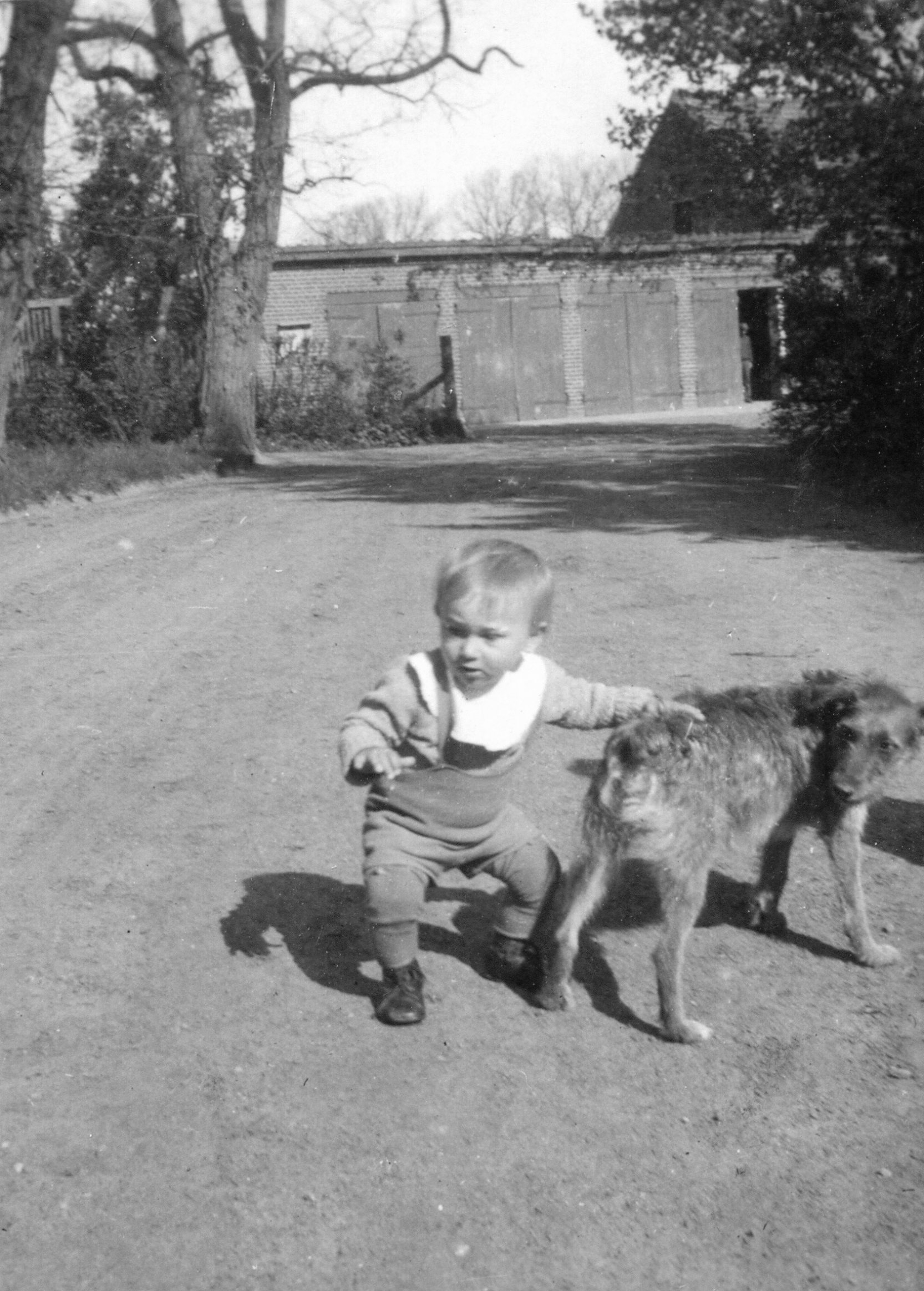
Peter and his Friend Jupp
Mother’s diary of the first 15 months of my life came to an unexpected sudden end, because she had simply reached the last page and did not want to start another booklet. If one considers that this diary with the many tiny photographs pasted into it and written in beautiful Sütterlin handwriting was from among all the other precious goods the only object that she managed to bring safely to West Germany, one must concede that we are dealing with a little miracle. The far greater miracle, the survival of the entire Klopp family in the closing days of World War 2 and afterwards, will be the subject of the next chapter.
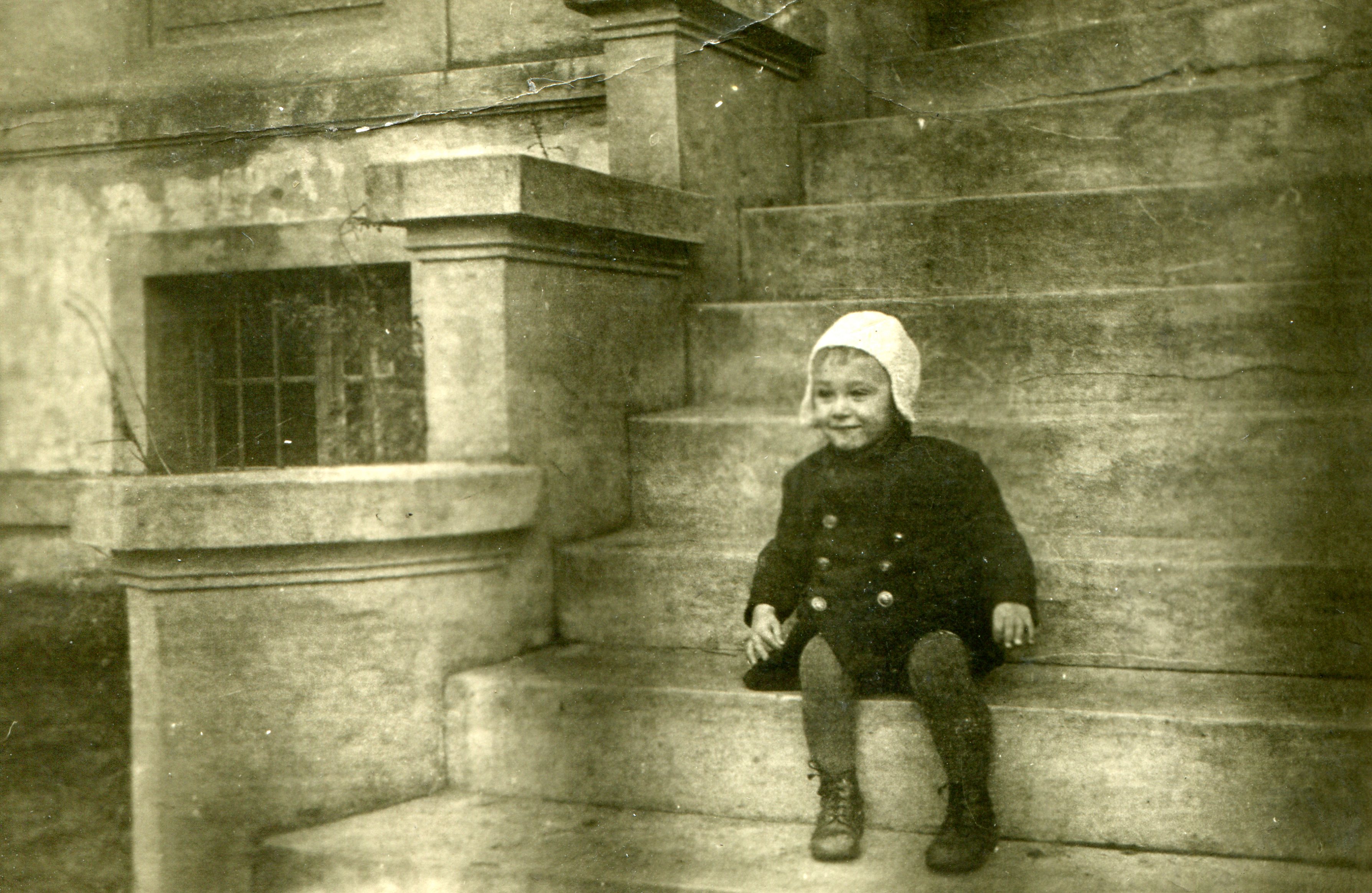
Peter Sitting on Gutfelde Staircase


