Chapter 21 of the P. and G. Klopp Story – Part I

Sorrows of Young Peter


“The Five W’s of Life:
WHO you are is what makes you special. Do not change for anyone.
WHAT lies ahead will always be a mystery. Do not be afraid to explore.
WHEN life pushes you over, you push back harder.
WHERE there are choices to make, make the one you won’t regret.
WHY things happen will never be certain. Take it in stride and move forward.”

Anonymous


With the transfer to the Falckenstein Barracks in Koblenz things were looking up for me. Our room was only slightly smaller than the one we had at the basic training camp, but instead of fifteen men only ten would share the sleeping facilities. The only drawback at the beginning was that the windows were facing one of the major north-south traffic arteries. The noise from the trucks and cars was considerable and lasted right through the night. At first I thought I could not sleep at all in a room inundated by the roar of engines and swishing of tires even with the windows closed. But little by little I got used to it and like the loud surf at the seashore at the Baltic Sea it no longer bothered me after a few days. I am sure that if the din below had suddenly stopped the silence would have woken me up.

80

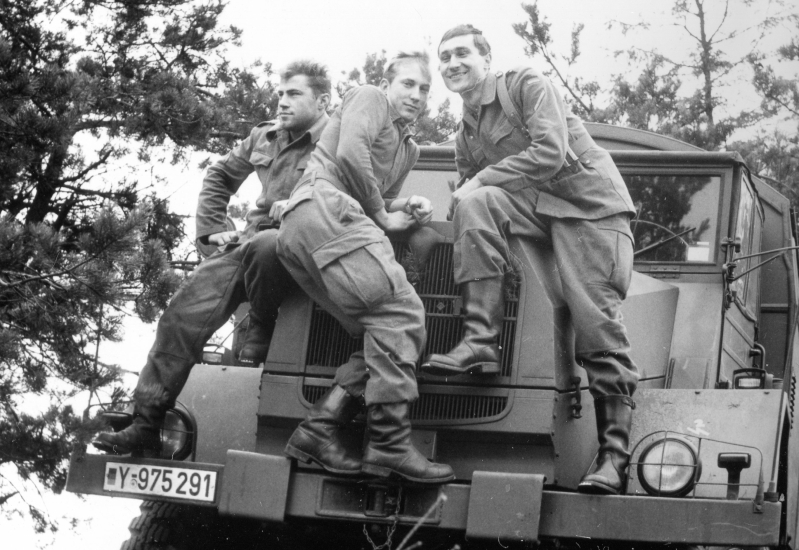
Peter on the right with truck driver and communication assistant

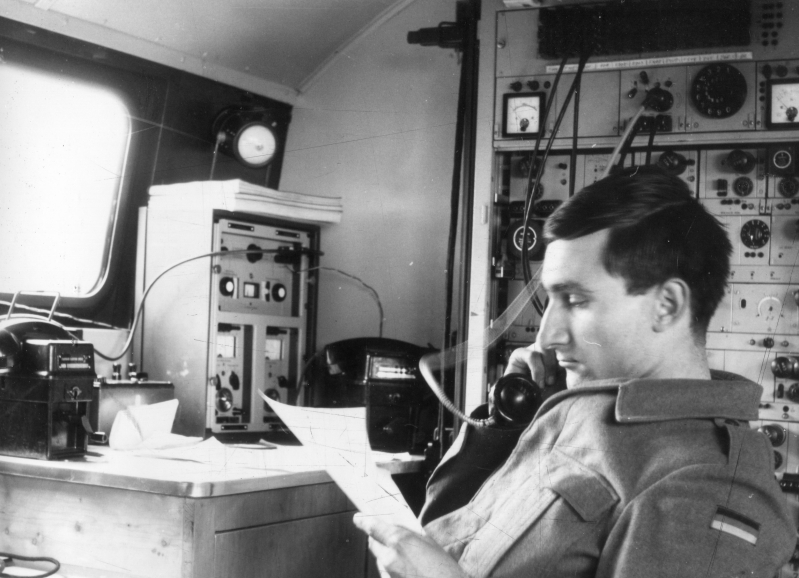
Also the pace of our daily routines significantly slackened. We still had to line up and stand at attention for the morning and noon announcements. But there were now more instructional sessions both theoretical and practical with emphasis on specialization depending to which of three major groups we belonged in the signal corps. The linemen were responsible for connecting the various field centers during military exercises. They had from a physical perspective the toughest job. Rain or shine, heat or cold, their task was to unroll miles of cable and when the maneuver was over roll it back onto the empty drums on their backs. I had the good fortune that I was assigned to the second group. I was working inside a Mercedes truck packed with electronic gear, which I had learned to operate during my training sessions. The linemen would arrive huffing and puffing after a strenuous march through forests and fields. All I had to do was to connect the wires to the carrier frequency sets, call up my counterpart at the other end and tune up the line so that it would be capable of carrying several channels at once. It was the latest technology in those days, but miniscule by today’s standards, where thousands of telephone calls can be placed over a single wire or a wireless connection. The third and most prestigious group consisted of the wireless operators trained to set up and maintain point-to-point, line-of-sight connections. To be useful, the linemen also had to connect them by cable to our stations. I liked maneuvers of this kind, especially the ones that lasted a whole week, and often as a bonus resulting in an extra long weekend pass. It was during these action filled times that I began to reflect on the career proposal the captain had made to me less than a month ago. During guard duty, which I had to do every three weeks or so, whenever my turn was announced on the company bulletin board, I had also some time to do some thinking on the purpose and meaning of military service in a world that lived under the spell of the Cold War and under the threat of a massive attack by communist forces to take over Western Europe. While walking inside the fenced perimeter of our barracks I was searching for answers to those questions that popped up in my mind during those boring two-hour shifts in the dead of night. I composed a poem, which I included here in the hope that not too much is lost in translation.

Peter at work at his 'home' packed with electronic gear

Peter at work at his ‘home’ packed with electronic gear

Night Watch

Drearily the rain is falling.

I am walking in monotone even steps.

Nothing is moving in the semi-darkness.

Radio trucks like monsters are staring at me.

They appear to mock me,

Indeed threaten to devour me.

You servants of men!

To what end are you being abused?

Abused?

Aren’t you defending freedom and peace?

If you prevent that

For which you have been built,

Then sacred is your presence.

Yeah, just stare at me!

Your power brings me joy.

And I am walking past them

In monotone even steps.


To avoid war, an army must be strong so that an aggressor will understand that nothing would be gained and much more would be lost. It was the balance of power that kept the peace in the Cold War period, in which I was a soldier.

Chapter 19 of the P. and G. Klopp Story – Part III

From Graduation into Carnival

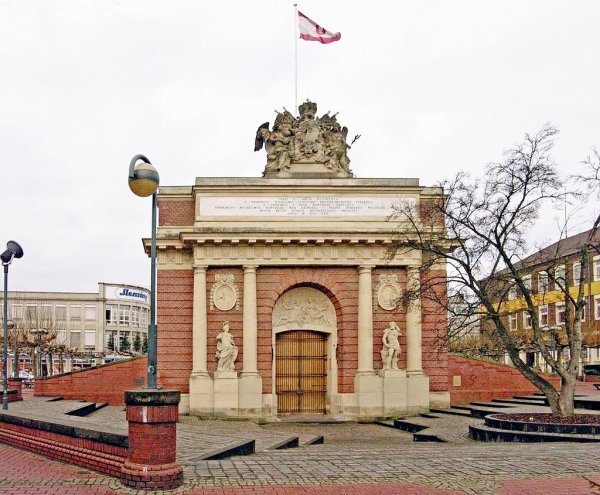
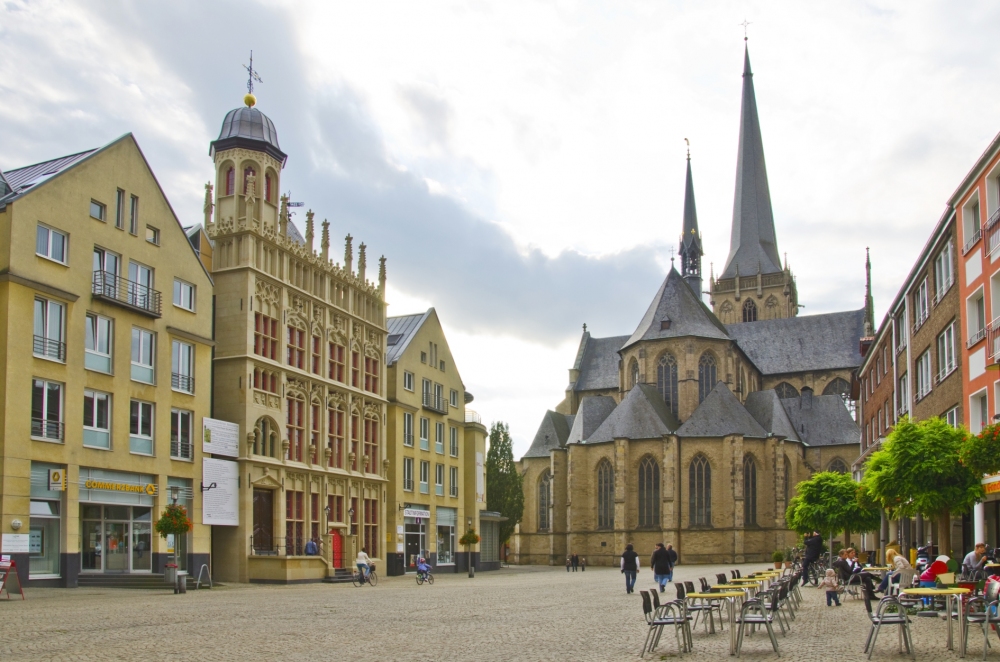
Wesel 'Berlin Gate' - Photo Credit: wikimedia.org

Wesel ‘Berlin Gate’ – Photo Credit: wikimedia.org

When school continued in the first week in January, I avoided all distractions and focused all my energies on last minute studies. By now the school administration had let us know the subjects and topics, in which we were to receive our oral examinations. For me it was Charles V in History and Calculus in Mathematics. In the remaining four weeks I emptied an entire bottle of vodka, which one could take as evidence for my industriousness. I rarely missed to fulfill my daily work quota. Indeed I would go sometimes overboard and even skip my time for relaxation with guitar or harmonica. One morning I woke up late. I was shocked to discover that I had forgotten to set the alarm clock. School had already started, so I quickly jumped into my clothes, grabbed my books, and without having had breakfast I raced to school in record time and barged into the classroom, where my homeroom and German teacher Herr Aufderhaar had just begun a lesson on German romanticism. Because he was bald and also taught religion, we had given him the nickname ‘Kahler Jesus’, which means Bald Jesus in English. He took one look at me and instead of being angry about my tardiness showed remarkable understanding for my circumstances. He teased me good-naturedly and remarked to the entire class, “Klopp is not just late for class. He did not even shave!”

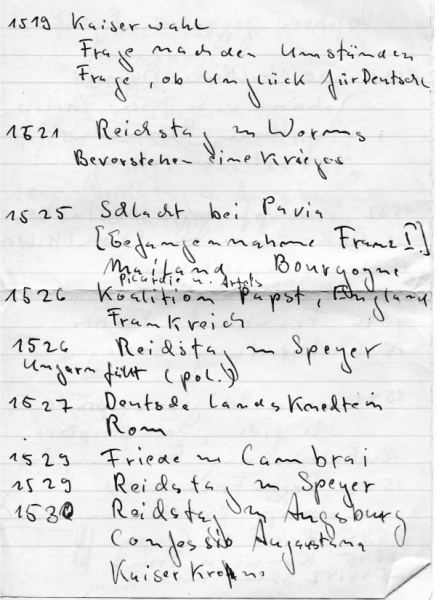
My Notes on Charles V

My Notes on Charles V

 For the oral exam in History I was well prepared. The main topic that I was given was the era of Reformation with special consideration to the way Emperor Charles V dealt with the schism that threaten to tear apart the Holy Roman Empire of German Nations. I had about thirty minutes to write down a few notes for my presentation. Then when my turn had come and I was led into the somber exam room, I described in poignant details the political struggles of the emperor against France and the Turks and the frustrations he, as a good catholic, experienced with the rapid spread of the protestant revolt against the corrupt Church of Rome. I was no longer the timid student who once stood trembling with fear in front of our history teacher. I boldly and convincingly expounded all the pertinent factors that determined Germany’s future historical and religious landscape. I took the entire time allotted for the oral exam. So the committee of principal and teachers had no time to ask any unsettling questions at the end. I walked away with the confident feeling that I had consolidated my satisfactory standing in History. Also in Math I was able to prove that I deserved a better final grade. My task was to find a solution for the total amount of work required to dig a cylindrical hole of a certain depth. Herr Müller, my beloved math teacher in the senior division, guided me through this difficult problem of integration. He so cleverly posed the right questions that they contained valuable hints allowing me to bring the session to a successful conclusion. It would have been nice to express my gratitude to an excellent teacher some fifty years later. Unfortunately, while I was searching the school Website I found out that he had passed away the year, before I started to write our family history.

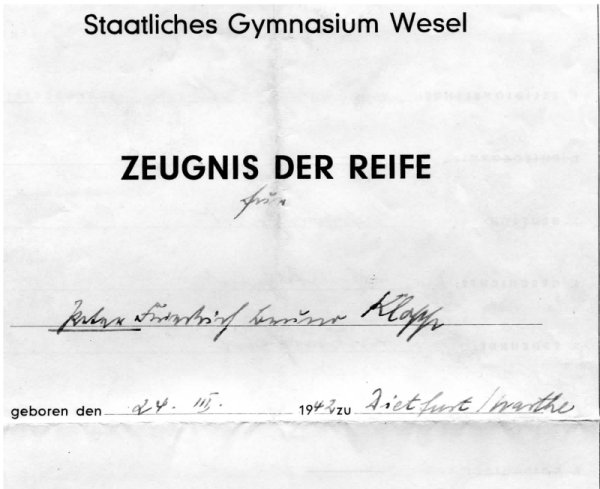
Front Page of my Graduation Diploma

Front Page of my Graduation Diploma

With the prestigious graduation certificate (Abitur) in our possession we had access to many postsecondary programs offered by the German universities. As for me, two years of military service at the Bundeswehr (West German army) had to come first. In those days it was still possible to enlist as a volunteer for a period of 24 months instead of the mandatory 18 months with the advantage of receiving a handsome salary, becoming an officer of the reserve, and being able to choose an army unit in keeping with one’s technical abilities. I opted for service in the signal corps, a choice that definitely reflected my interest in electronics and communication technologies.

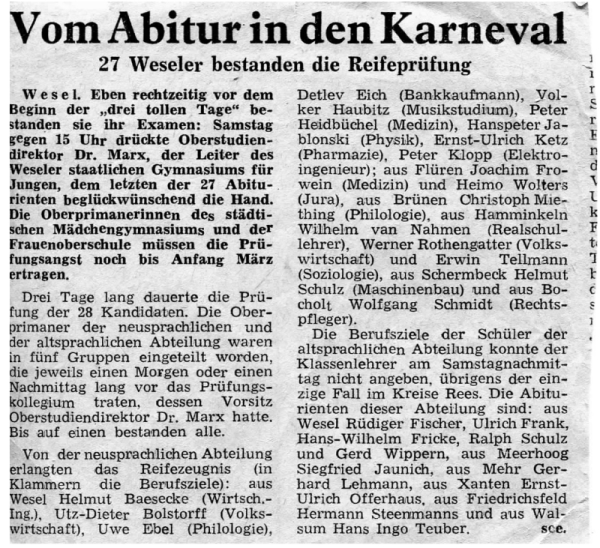
Newspaper Clipping with Names of the Graduates

Newspaper Clipping with Names of the Graduates

It so happened that the graduation exercises had ended exactly at the start of the carnival season. Being together one last time with my friends and classmates, before we would scatter into all directions, I made full use of the golden opportunity to celebrate the great milestone and to lose myself in the relaxed atmosphere of the dance hall, forgetting the trials and tribulations before graduation and not worrying for the time being about the future. When the time of drinking, dancing and attending late night parties was over, I was physically exhausted, but for the moment I felt free as if a heavy burden had been taken off my shoulders.

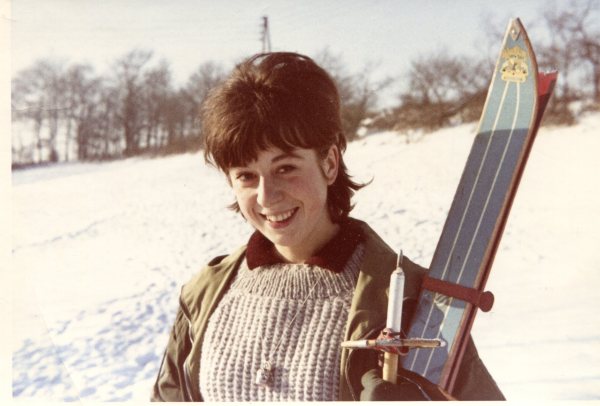
Biene with her first pair of skis - Winter 1963

Biene with her first pair of skis – Winter 1963

I had not forgotten Biene. Now with more time at my disposal I wrote her a letter bringing her up to speed on my success at school and the tumultuous days at the carnival festivities. But what mattered the most I found the courage to express my feelings about what was so special about her in my mind. At the campground in the spring the year before I had discovered in her appearance the natural beauty that needed no cosmetic enhancement with rouge, lipstick or artificial hair color. Biene for me embodied the ideal image of a girl. In the letter I gave her my father’s address hoping that she would reply.

Chapter XIX of the P.and G. Klopp Story Part II

One Drink Too Many

550_6_historische-rathausfassade--grosser-markt-flaggschiff-film

Peter’s Home Town Wesel (Willi Brordi Church) – Photo Credit: hanse.org

When I returned from my brother’s wedding, I resolved to be more goal-oriented, to study hard, to raise myself above mere mediocrity to an academic achievement I could truly be proud of. On the wall hung the work schedule, which I had imposed upon myself outlining a rigorous timetable: getting up at six, attending school from 8 a.m. to 1:30 p.m., taking some time off till three, doing homework and studying till five. After supper followed another two hours of intensive study. I had a lot of catching up to do. An hour before it was time for me to go to bed. usually around ten o’clock, I critically reviewed my day. And if according to the work schedule I had passed the test, I rewarded myself (and only then) with a small shot of vodka and let the pleasant warmth penetrate my body as a form of instant relaxation. The master allowed the slave to temporarily forget the self-imposed burden. At moments like these I would grab my guitar, play a few simple classical pieces composed by Carulli, or take out the harmonica and strike up a potpourri of folksongs, pop music or my favorite scouting melodies.

Bild 62

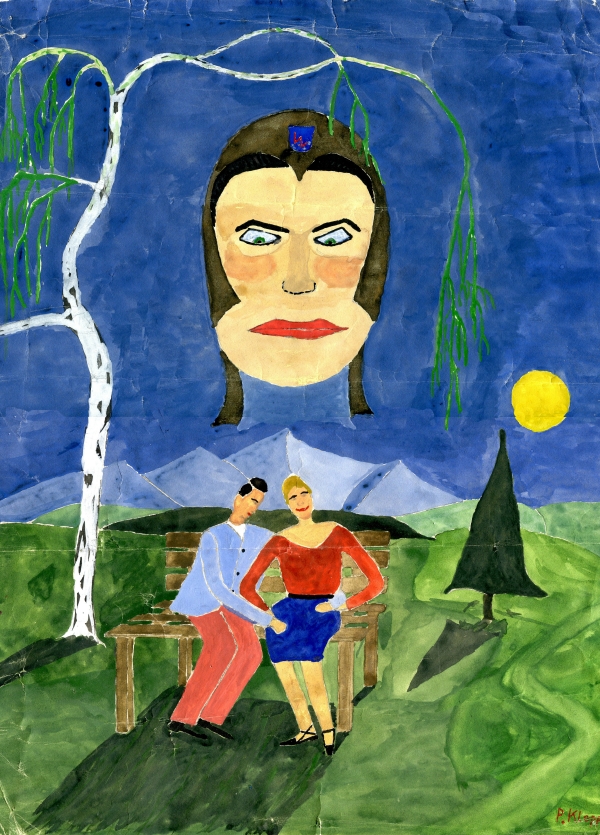
At times when I felt in a creative mood, I would open the metal box with a dozen or so water colors and try my untrained hands to paint a picture often with a futuristic theme inspired by my voracious reading of science fiction novels. One picture (see above) depicts a romantic scene showing a young couple sitting on a park bench under the light of the full moon. High above the horizon towers the head of a helmeted space woman of a distant century in the future, whose envious eyes are glaring down on the romantic couple below.

          Wilhelm, my classmate, came to school from a neighboring town. His father produced apple juice, with which he tried to compete with the popular Coca Cola product that was making economic inroads into the German beverage market. Wilhelm once demonstrated in our school how corrosive coke was by filling two glasses, one with his father’s apple juice and the other with coke. He then threw an iron nail into each glass. In the following week, when we entered the chemistry lab, we were astounded by what we saw. The nail in the glass filled with coke was completely encrusted with rust, whereas the one in the apple juice was still shiny and unaffected. However, we failed to see the connection to the possible ill effects that the popular drink might have on our sensitive stomach linings.

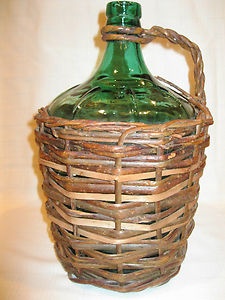
          It was about two weeks before Christmas, when Wilhelm came up to my apartment and brought me a 10-liter jug of apple juice. I placed it on the hot water radiator. Without the aid of a wine making kit with its expensive accessories we embarked on producing a cider by letting Mother Nature do the job. After only a few days I could report to my friends in school that bubbles were rising in the bottle, a certain indication that the process of fermentation had begun. Hans, Helmut, Wilhelm and I were already looking forward to our Christmas break party with the potent apple wine in the making. Soon the bacteria finding ample food in the juice and turning the sugar into alcohol multiplied a million times over generating CO2 at first weakly fizzing, then growing into a crescendo very much like the sound of rushing waters. Finally the bacteria had done their duty, and the homemade cider was ready for the party. School was out. In the New Year the final race would come to the finish line. The dreaded written and oral exams were looming on the horizon. So we four all felt the need to let go and put aside for a while our worries and graduation blues. I had put the jar outside into the wintry air on the balcony to chill the brew into a refreshing drink. We made ourselves as comfortable as possible in my tiny room. My three friends were sitting on the couch that converted into a bed and I sat on the only chair at my desk, whose prominent occupant was the giant jug with its delicious content. I poured the cider into coffee mugs. There were no glasses in the mini-kitchen. At first we had a serious talk about our plans for the future. The classroom genius Hans wanted to enroll at the Marburg University to study nuclear physics; Helmut, the lawyer’s son, was seeking a position in economics; Wilhelm planned to embrace a teaching career, and I had set my eyes on becoming an electronics engineer specializing in high frequency technology.

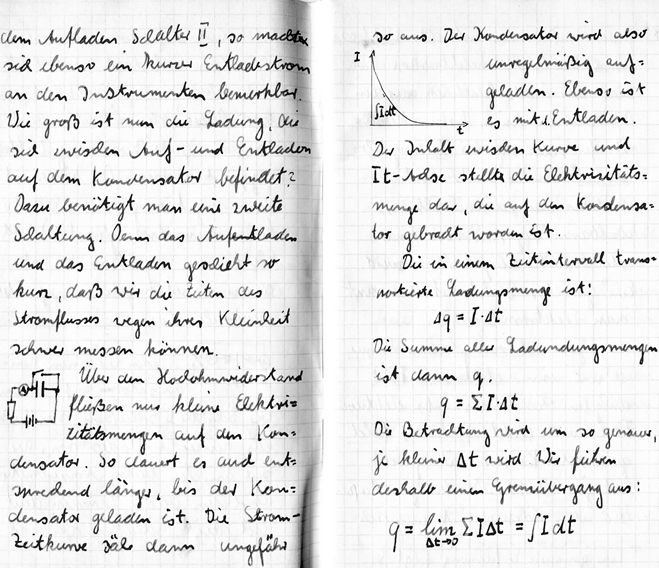
Aus Elektronik 62

Peter’s ‘Engineering Notes’ on Basic Electricity – 1962

 I poured us another cup of that deceptive cider that tasted like a refreshing fruit drink but carried a powerful punch. Hans tuned my guitar and starting picking a few melodies. Most Siemens workers in the building had gone home to their families. The apartment building was almost devoid of people. So there was nobody we would disturb with our singing. After another cup we had reached the point where singing had become the necessary ingredient for the continued success of the party. The vocal chords well lubricated by the smooth drinks were ready to metamorphose us into a cheerful bunch of young men.

Wine Jug

Our home made cider would not have earned any prizes. But it was potent.

To the great delight of my friends, after we had gone through our favorite scouting and traveling songs, I offered to sing a spiritual to express my sentiments over our oppressive teachers in school: “When Israel was in Egypt’s land, let my people go. Oppressed so hard, they could not stand …”, which I sang with the deepest voice I could muster without floundering. Now Hans injected rhythm into the life of the party and played masterfully one of the Flamenco style pieces with the beats being pounded vigorously on the guitar body. “That was the rendition of our friend and maestro worthy of another drink”, I said. By now the content of the 10-liter jug had dropped to about the halfway mark. Suddenly Helmut got up and said he had to go to the bathroom. The way he staggered into the hallway made it clear that he had already had too much to drink. Someone said, “I hope he’ll find the toilet in time. He looks ‘blau’ (German slang for drunk) to me!” Now one must know that in Germany you locked the bathroom door with a key. Poor Helmut must have taken it out and dropped it on the floor. All of a sudden we heard him call, “Let me out! You locked me in!” We rushed into the hallway and tried to convince him that he was the one who locked himself in and that he would have to find the key. “It is not in the lock”, he complained.

          “Then it must be on the floor. Look for it”, we replied. Finally he located the key. What came next is incredible. Helmut’s level of intoxication was so far advanced that his eye-hand coordination was severely hampered. He was unable to insert the key into the keyhole. Imagine the hilarious scene, in which we three friends tried very hard to give him directions how to put the key into the hole. I was just about going to call the janitor for help, when Helmut managed to open the door. He looked pale and disgruntled, whether it was out of embarrassment or intoxication, we could not tell. Without saying good-bye he took his coat and left. Needless to say the bathroom incident had put a damper on the jolly time we were having. Nobody felt like having another drink. The party was over.

Chapter 18 of the P. and G. Klopp Story – Part III

Is it Love?

Within the scope of the family history I would go too far if I included Erna’s side of the family except the ones that I came into contact with. There was the Langlitz family, Walter, Frieda (Friedchen) and their two daughters Helga and Anita. Walter had become a successful contractor who ran a prosperous business with his impressive array of trucks,

Church of Michelbach now part of Schotten - Photo Credit: wikipedia.org

Church of Michelbach now part of Schotten – Photo Credit: wikipedia.org

caterpillars, backhoes and other heavy machinery that he had acquired to assist in the government sponsored land reform program. In contrast to the northern provinces of Germany, where the eldest son inherits the farm, inheritance laws in the south required equal division of the fields among all the children of the deceased farmer. Thus, over time emerged a chaotic patchwork of tiny fields often less than one ha in size, which made farming more and more inefficient and unproductive. So Walter profited from the reallocation of land by owning the right equipment at the right time. The two daughters, Helga and Anita, age 12 and age 10, whose exact degree of relationship to Erna I do not recall, often showed up to play board games, such as chess and checkers with the newcomer in Father’s home.

52

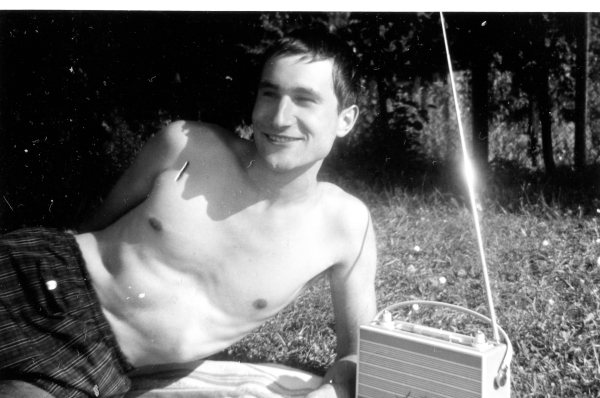
Peter Basking in the Sun – Summer 1962

Erna was also anxious to have me meet her 16 year-old niece Roswitha, who lived a few houses down the street with her widowed mother. Even though I did not recognize it at the beginning, it was clearly a matchmaking effort supported by Father. In collusion with her sister-in-law, Erna invited her niece over for coffee and cake to make sure we would see each other as often as possible. Roswitha in terms of the standards I had set for what a girl should look like fell well within the range of acceptability. However, inner qualities, such as interests in activities that one could do together, readiness to share and exchange thoughts and feelings, to support them and if necessary even to oppose them, such qualities, which began to gain more and more in importance for me, were severely lacking. In a way my encounter with her helped me set the bar a few notches higher, which further limited the number of choices for my future mate. I vaguely felt for the first time that only love could help jump the hurdle. But what is love? I could not tell, because I had not experienced it yet. So what Erna had hoped for, did not happen. We were friends, who did things together for a while. We walked down the steep hill down to the town and district swimming pool in Schotten and on Saturday evenings we went dancing in the nearby villages. The music was not exactly rock ‘n’ roll, but we could dance to it, whenever a fast beat would permit. The performance of the band improved with each refill of the giant beer mugs during the frequent breaks. Thanks to the loud music there was no opportunity to talk, and there would not have been much to talk about. On our long walk home in the moonlight I explained to her how the stars would move like the sun following the rotation of the earth. For everything I said during my scientific dissertation she approvingly giggled. Only once did she protest to express her utter disbelief, when I insisted that the moon shining so brightly now onto the forests and meadows would also show its pale face during daytime.

My brother Adolf relaxing at the Schotten Swimming Pool

My brother Adolf relaxing at the Schotten Swimming Pool

With my first visit to see Father after such along gap inconceivable in the light of today’s custody laws that require visiting rights at regular intervals, I accomplished much more than just reconnecting with him. The ice had been broken. Other family members now were eager to come in a spirit of reconciliation that was shared even by Mother albeit somewhat reluctantly. Near the end of my holidays my brother Adolf dropped in for a visit. He had returned from Canada to Germany on a temporary basis to learn a trade in an apprenticeship program at the Honeywell Company at Hanau. There he eventually acquired a journeyman ticket as a trained machinist that would – so he was hoping – land him a good paying job upon his return to Canada. Adolf endowed with a witty sense of humor and an extroverted personality was the life of the party no matter where he went. In formal or informal gatherings, in suit or in jeans, with academics or with factory workers, he was the born entertainer who made people cheer up when they were depressed, got things rolling when they appeared to be stuck. Everybody liked him. He had many friends and few enemies. There was just one problem with this gregarious likable brother of mine. He seemed to be shy, yes even afraid of unmarried women, who might take too much of a liking to him, pursue him with the full force of passion and lock him up in the golden cage called marriage. When we received an invitation to a social evening by Roswitha’s mother, Adolf felt safe, because his youngest brother was with him. On the surface it looked like we were the suitors, Roswitha being courted by two promising young men. In reality in a strange reversal of the customary roles it was the other way around. As we gathered in the living room, Frau K. served us wine, crackers and cheese, spent a few perfunctory minutes in conversation with us and discretely withdrew with a few cheerful words meaning that we now were on our own. I found the situation very odd and to some extent embarrassing, because I had expected her to stay. It was Adolf who saved the day or more accurately the evening with his social skills that helped to get the ball rolling. He asked Roswitha about school, hobbies, her likes and dislikes, the weather, and all the other trivia that he was so apt in using as a social lubricant. To her replies often accompanied by the aforementioned giggles he added humorous comments that made us laugh and feel at ease. Eventually even I emerged out of my taciturn shell and presented to everyone’s amusement a few jokes and riddles. Around eleven o’clock Adolf ironically remarked that it was time for us ‘boys’ to go home. We politely said good night and cheerfully departed to have another drink of a more potent kind at our Father’s place.

Chapter 18 of the P. and G. Klopp Story – Part II

Joy at my Father’s Home

Right from the beginning of my visit Erna and I got along very well. Her cheerful and lively disposition did not allow me to lose myself in gloomy moods, as I was occasionally prone to do, especially during prolonged periods of idleness and aimlessness. I could even see, even though I was reluctant to admit it, that Erna was the right person for Father. She was the sunshine that had brought lightness and contentment to his sunset years. From her radiated a contagious joyous spirit that created the in-peace-with-the-world atmosphere so conducive to Father’s healing process from a torturous past, from which he only now began to recover. I definitely do not remember him as a man broken in body and spirit, as my distant cousin Eberhard Klopp described him in his book of the Klopp Family History.

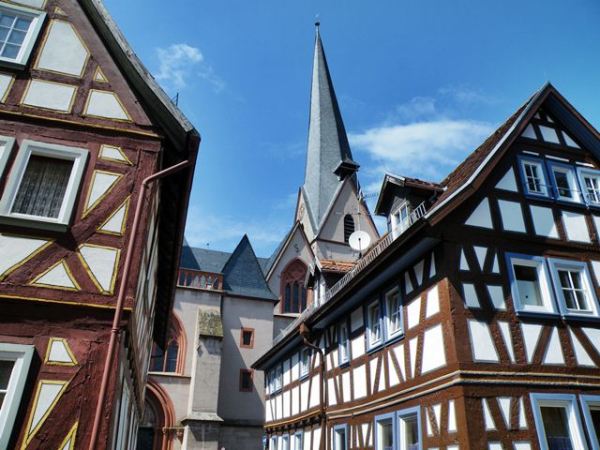
Schotten - Photo Credit: vogelsbergtourist.de

Town of Schotten – Photo Credit: vogelsbergtourist.de

Erna also had a moped of the same make and the same 49 cc class as mine, on which she would travel down the steep hill into the town of Schotten to buy the few things she needed for the small household in Michelbach. When there is company, one always seems to find the time to show off the beauty surrounding one’s home turf. Without visitors one tends to delay and leave such outings for another day. Erna was no exception. Now she was eager to travel with me to the nearby-forested hills, up the scenic Nature Park around Mount Vogelsberg, down winding country roads into the lush verdant valleys neatly tucked in between minor mountain ranges. There was no better form of transportation than our two mopeds. With a lunch pack clamped to the rear luggage rack we were ready to dart off into the wonderful Hessian landscape. Father a little overweight for these light machines gladly stayed behind looking after a few chores still to be done on this mini-farm with just a few goats to feed and milk,. Just as we were revving up the engines, Father came to the road to congenially shout over the noise, “Have a good trip!” At the end of my vacations thanks to our weekly excursions into the hill country, I had acquired a solid geographical knowledge of the region. As I was internally preparing myself to leave the Rhineland for good after my graduation, I had already created a new base to drop in as son and stepson, a place I could truly call home.

Landscape of Vogelsberg Hill Country - Photo Credit: vogelsbergtourist.de

Landscape of Vogelsberg Hill Country – Photo Credit: vogelsbergtourist.de

In the long summer evenings after supper we three would sit in the living room leisurely sipping homemade apple cider. We would talk until it was time to go to bed. More accurately speaking it was Erna, who did most of the talking. She truly had the gift of the gab. With the unerring memory for minutest details spiced up with colorful expressions and peppered with the melodious dialect of her village she was the born storyteller. I will never forget how she described the chaotic scene of the German Reichstag of the roaring twenties. She and her friends were sitting in the same living room forty years earlier and acted out the ugly political debates they had heard over the radio. And they did this with such exuberance, with so much mock yelling and screaming that the poor cats terrified by the brouhaha created by the inflammatory speeches sought refuge under the sofa and added to the parliamentary cacophony with much hissing and growling.

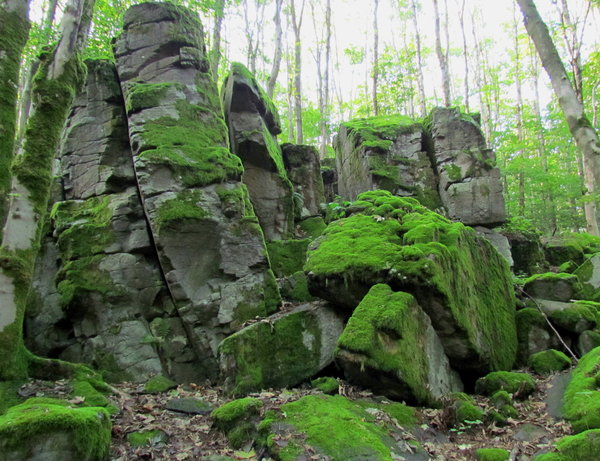
Incredible Rock Formations near the Top - Photo Credit: myheimat.de

Amazing Rock Formations near the Top – Photo Credit: myheimat.de

Chapter 17 of the P. and G. Klopp Story Part II

A Most Curious Camping Trip

How I Met Biene

Pentecost was a long weekend and the beginning of a one-week break from school, the last one before the summer holidays. Hans had dropped out of our planned camping trip, because he had to baby-sit his younger stepbrothers and sisters. So Helmut and I got together to discuss our destination and the supplies we needed for the two and a half days. The reasons for the choice of our campsite will forever remain one of the great mysteries of my life. The nearby forests on either side of the River Rhine were within easy reach of a two- or three-hour bike ride. Our favorite camping sites were on federal land, rarely controlled for trespassing by forestry officials, miles away from the noisy highways, perfect places to be in tune with Mother Nature. The choice for this particular location was the opposite of everything I had learned to cherish during the years as a scout. As Helmut and I unfolded the map for the area of North Rhine Westphalia, we glanced over the tent icons, which marked the locations of campsites, and spotted one that bordered directly on a lake. On closer inspection we found out that it was Lake Baldeney between the city of Essen to the north and the city of Velbert to the south.
Lake Baldeney - Photo Credit: dirkosada.de

Lake Baldeney – Photo Credit: dirkosada.de

          Apart from the dead side branches of the River Rhine, there was no real lake in the vicinity of Wesel. It appears to me that the things one does not have exert a certain attraction that one often finds hard to resist. So despite nagging doubts that in the light of the hard facts we had made a poor choice about our camping destination, our decision to go there was irrevocable. Who would have thought it possible that I would have considered taking a train to go camping? Was it not totally insane to trade a peaceful refuge in the forest for the hustle and bustle of a noisy commercial campground? The Rhine was filthy and burdened with chemical pollutants that came from the Ruhr industrial area, to which we were planning to go. With the economic recovery of West Germany came the demand for energy. Mining for the high-quality anthracite coal was in high gear bringing work and prosperity to the region, albeit at a price. On windless days the coal dust polluted the air. Dirt and grime covered walls, lawns, and even the wash that women hung up to dry. Yes, it is hard to believe that Helmut and I actually went, where – as people who knew the area around Essen warned us – the sun would seldom completely break through the gray cover of a leaden sky.
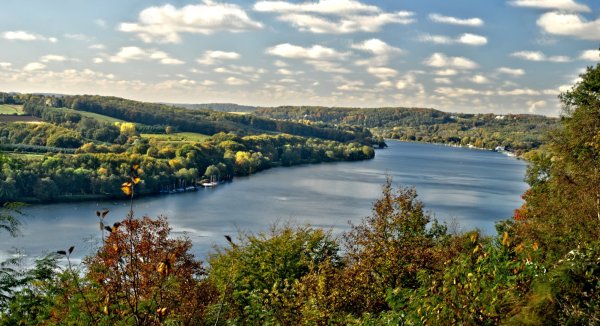
Lake Baldeney near Essen - Photo Credit: mapio.net

Lake Baldeney near Essen – Photo Credit: mapio.net

          So it came to pass that on the late afternoon of June 9th, 1962, two young men carrying heavy backpacks and holding a two-man tent between the two of them arrived at the Baldeney Lake campground. Helmut and I were pleasantly surprised to view scenery quite different from what we had anticipated to find. The sky had cleared from the cleansing action of an early morning rain. There was not even a layer of industrial haze left to obscure the blue sky. The sun shone brightly, the trees were in full leaf, the lawn impressed us with its light-green spring verdure, best of all the brilliantly shining lake reflecting the blue sky created an ambiance we had not expected in a park south of the city of Essen. Since it was still early in the season and only a few hardy people had ventured out to camp, we had no trouble finding a suitable site near the lake shore to set up our tent. We enjoyed an early supper, which I had prepared from a can of chunky soup and had heated it up over my gasoline fueled camp stove. We spent the evening listening to pop music from my transistor radio and taking in the lush-green trees and bushes that the locals call the green lung of the Ruhr region. The only reminder that the black gold was mined north of here deep down from the rich coal deposits came when we looked at the dark soles of our feet black from our bare-foot walk through the park.

          Next morning after a frugal breakfast with cereal and milk we pulled out our air mattresses into the brilliant morning sun. We relaxed reading, listening to music from Radio Luxembourg and watched people saunter by on the way to the beach. Two men, one in his early sixties, the other a little bit younger than I, caught our attention as they brought two of those so-called folding boats down to the lake shore. They can be easily transported on buses, trains, and even in the trunk of a car, because when folded together they easily fit into a large duffle bag.
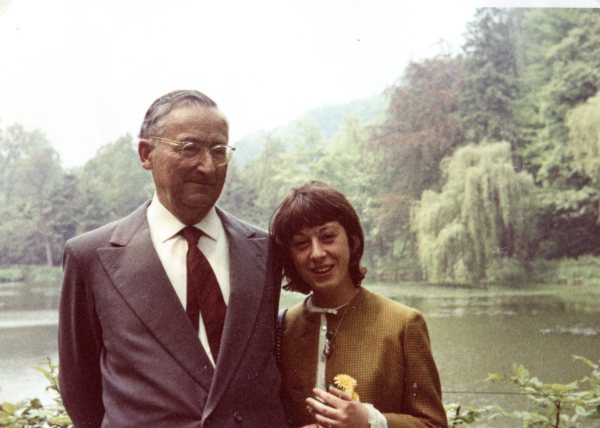
Biene and her Dad

Biene and her Dad

          For lunch I opened a can of sardines, an excellent staple for people like us traveling on a shoestring budget. Helmut having relied on me in charge of the provisions grumbled about the meal that consisted only of slices of dry bread and fish. In the meantime the boaters had returned to their tent with the folding boats. As we found out later, they were Herr Panknin and his son Walter. It seemed strange to us that they had nothing to eat and just sat there as if they were waiting for something. That something was obviously food. For now at a distance we noticed two persons approaching the camping area. As they came nearer, they turned out to be a woman and a young girl carrying baskets filled with delicious food perfect for a picnic in the sun. Enviously we looked on, as Frau Panknin and daughter Gertrud with a rather curious nickname Biene (Bee in English) unpacked the mouthwatering content of the baskets. We could see that this was culinary heaven on earth, Schlaraffenland, as a German fairy tale by Grimm so aptly describes the land, where people eat the finest delicacies in gluttonous quantities without having to work for them.
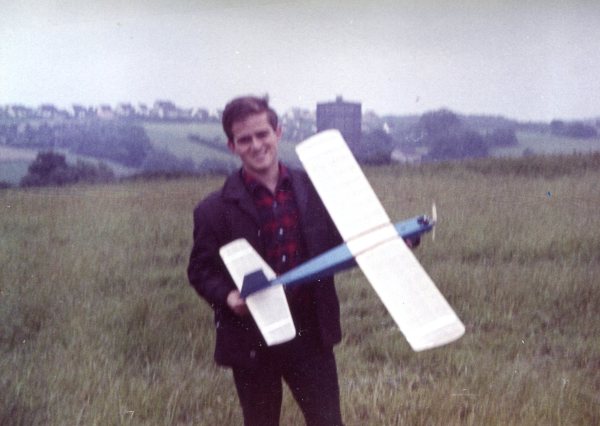
Twin Brother Walter with one of his Model Airplanes

Twin Brother Walter with one of his Model Airplanes

          What attracted me to this family, however, was not so much the food, which in comparison to our lunch was so alluring, but rather that pretty seventeen-year old girl whose first impressions on me provided a good match with the image of idealized beauty that had been growing in my mind for the past two years. Biene, from the moment I cast my eyes on her, radiated a charm whose magic did not depend on bracelets, earrings, and similar outward adornments, not on make-up or perfume, which I rightly or wrongly loathed as poorly disguised cover-ups, but rather on the very lack of all those artificial means. In short, I gazed in admiration at the girl of my dreams.
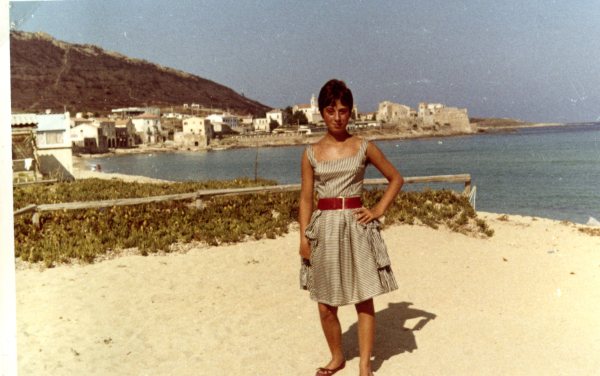
Biene at the Mediterranean Sea

Biene at the Mediterranean Sea

          Helmut and I were watching Biene and her twin brother play badminton in the open field. There was no net. The game was not very competitive. Its objective was to set new records by counting the number of times the birdie would fly back and forth before hitting the grass. Suddenly the idea occurred to me that we all could organize a mini-tournament with two pairs competing with each other for the highest score. After we had introduced ourselves, I explained the idea of a badminton tournament to be played with two pairs. Seeing that this would add a little bit of excitement, Walter and Biene readily accepted the proposal. As I had secretly wished, Biene wanted to form a team with me. I no longer recall how many rounds we played, but Biene and I always succeeded in getting the greatest number of hits. We were both very competitive, but the success in the game depended on complete cooperation. We felt good about our victories over our rivals and even more so, because we had won them together.

          It was only a matter of time, until the topic of the folding boats would surface in our conversation. Walter suggested going for a ride on the lake. Herr and Frau Panknin voiced no objections, indeed they were happy to see their twins go boating and at the same time having a little bit of peace and quiet. Somehow Helmut had managed to partner with Biene, which at first made me feel quite annoyed. But he argued convincingly that it was now his turn, since I had spent so much time playing badminton with her. As I was paddling with Walter, I soon got over my disappointment. Full of enthusiasm for his hobbies, Walter talked about his model airplanes and ships that he had been building. That was quite a pastime for Walter and took a lot of time, skills and dedication to bring a building project of this kind to perfection. I thought that just as Walter needed to have a plan and all the parts ready before he could even begin, so did I going through the same process in building a working radio. The moment Walter mentioned that he was thinking of using radio controlled devices to direct his model in the air or on water, I got quite excited and told him about my electronics projects, especially about the tube driven transmitter that provided musical entertainment to my friends in the apartment block in Wesel. Having found an area of common interest, we paddled less and less vigorously and talked all the more enthusiastically not realizing how fast time had been slipping by. When we pulled the boat ashore, we had already exchanged addresses and promised each other to mail each other schematics of electronic circuitry. Of course, what Walter did not know was that I had established a link to Biene, a connection that went beyond mere electronics. Like in an electric current, which the battery is pumping through a circuit providing energy and action to its individual parts, so warm feelings were flowing through my heart in the belief that Biene may have taken a liking to me during our badminton contest with Walter and Helmut.