Christian and Norbert Werner

A Newspaper Report on the WW I Journals of their Grandfather Friedrich Werner

Source Credit: Thüringische Landeszeitung (TLZ.DE); Photo: Foto: Conny Möller

Norbert_Christian

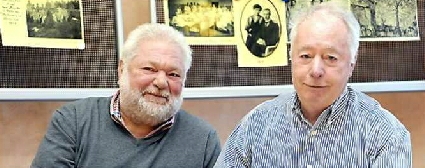
Christian (links) und Norbert Werner bewahren die Tagebücher ihres Großvaters Friedrich Werner, die er während des Ersten Weltkrieges geschrieben hat.

Er war ein großer Mann, respekteinflößend, aber dennoch liebevoll und sehr geschichtsinteressiert. So beschreibt Christian Werner seinen Großvater Friedrich Werner. Der 62-jährige gebürtige Gothaer und sein Bruder Norbert Werner halten die Erinnerungen an ihren Großvater wach, der akribisch Aufzeichnungen zur Familiengeschichte, der Geschichte der Stadt Gotha und der Region, aber auch über seine Teilnahme am Ersten Weltkrieg angefertigt hat. Die Aufzeichnungen über seine Kriegserlebnisse, die er mit zahlreichen Postkarten, Fotos und eigenen Zeichnungen illustriert hat, haben einen Umfang von 480 Seiten. Dazu kommt noch ein umfangreiches Kartenmaterial von den Kriegsschauplätzen. Continue reading

Fauquier Historical Review

Fauquier Preempted in 1897 by Funk Brothers

Report by Late Mrs. W.L.Devlin

Text and Photo Credits: ALHS and Mrs. Annette Devlin

One of the new town sites on the Arrow Lakes, due to the Arrow Dam Reservoir, is at Fauquier, called New Fauquier . This name never got into real use (PK). It is situated above the high water line laid out on part of the farm land mentioned in the following article, written ten years ago.
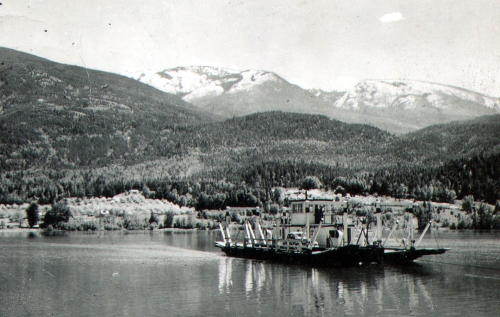
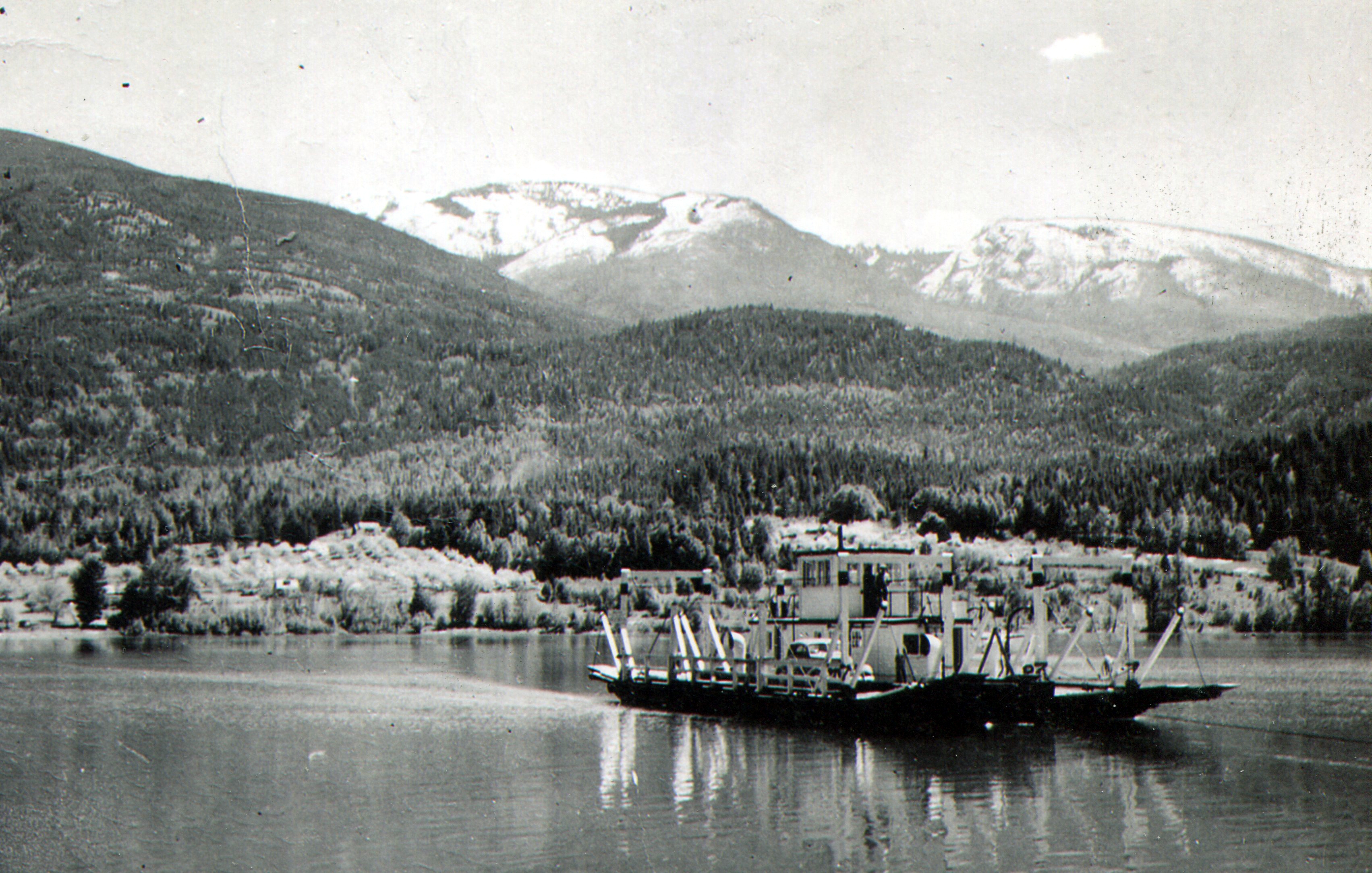
Fauquier-Needles Ferry

Fauquier-Needles Ferry in the Early 1920’s with Large Orchard on the Fauquier Side

The new settlement is a modern village with sewers, lots and the streets all engineered to separate the residential areas from business and services area, to make an efficient and attractive community. We print this story as a tribute to the early settlers of this area and to wish them well in the new town.
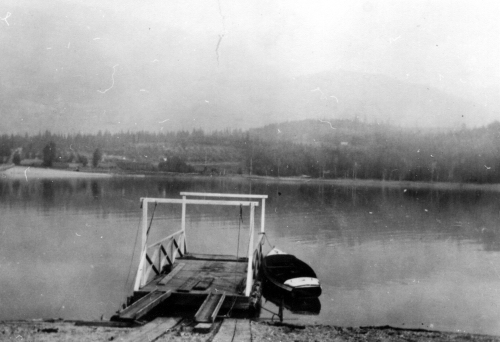
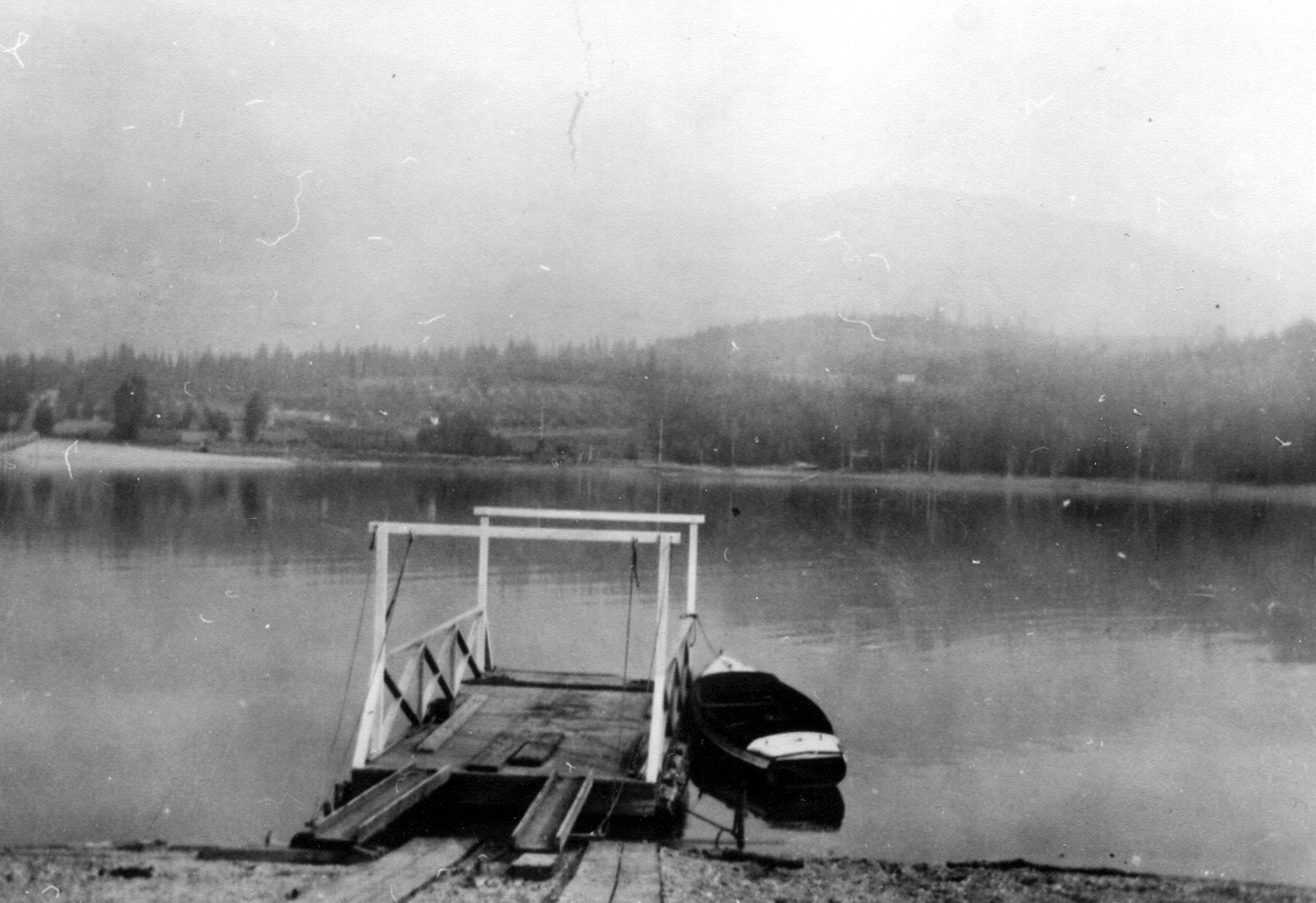
Ferry Landing

Old Ferry Landing

Mrs. W.L.Devlin’s Report (1967)

Canada celebrates its centennial this year, so I will endeavor to relate the history of our community. Prior to 1895 there were no settlers in Fauquier. Trappers and prospectors built cabins and stayed for a while, then moved on. Names mentioned by old timers are P. Anders, Jim Kelly, Muirhead, Jim Bates and Dougelle, who staked a mining claim on Stor Hill. The little cabin he built near the beacon point is still standing.

In 1897 Leonard Funk and brother George came from the Okanagan and preempted two large blocks of land. They built a cabin by the lake and began clearing, cutting trees into the cord wood, which they sold to the CPR for use in their wood-burning boats. George Funk did not stay, but his brother Leonard carved a fine farm from the forest, planted an orchard and raised a large herd of cattle, becoming a fairly wealthy man. He did much to help his neighbors get established and was a prominent figure in community affairs until his death in 1935.

Two other settlers of 1897 were Mr. Mosheimer who stayed only a few years and Mr. Thompson who preempted a half section of land next to Mr. Funk. He also bought the mining claim from Dougelle. When his sons joined the army in 1914, the family moved away.

Jim Kelly mentioned previously homesteaded the original Fauquier farm. He sold to Muirhead who in turn sold to Mr. Fauquier in 1900. After acquiring three more lots Mr. Fauquier called his holdings the Needles ranch. This property he had surveyed into ten-acre blocks, the work being completed by A. H. Green in 1910. Part of Mr. Green’s payment was a choice lakeshore block, on which he built a summer home.

At this point it might be of interest to tell a little about Mr. Fauquier. He hired Indians to clear the land on both sides of the road, approaching the landing. He built a fine home hiring two Chinese to care for the house and the gardens. Incidentally, this house burned and the family moved to a little cottage on the north side of the road. In appearance, Mr. Fauquier looked like a country squire, florid face, and gray hair, neat clipped moustache always dressed in natty tweeds. He had fine horses and drove an elegant buggy with a fringed top.

He planted a large orchard and while waiting for it to come into production he put in acres of raspberries and strawberries. Between the sale of land, fruit and cattle, he should have been successful but his extravagance exceeded his income and he died a poor man in 1917. Mrs. Fauquier was a semi- invalid and recluse. After spending her last years in a wheel chair she died at Vancouver in 1929. Continue reading

Winter on Hasty Retreat in Fauquier


What a Difference a Week Can Make

A Walk with Biene in the Sunshine

After seven days of rain, drizzle and fog, the sun broke through the depressing cloud cover like a belated Valentine’s gift. Biene and I decided to take advantage of this unusually pleasant springlike weather and took a walk down to the boat dock and strolled along the beach, where the lake level is at its lowest level in decades.

Down at the Golf Course, the snow almost 1 m high barely two weeks ago had disappeared except for the grotesque sculptures left behind by the snow plows. The first Canada geese arrived and landed accompanied by their customary honking with a splash not far from the boat dock. Biene took it as  propitious sign, as she always does when she spots an eagle. Two eagles were soaring high in the sky. Further down at the beach many tree stumps attracted my attention and I could not resist taking a few more pictures of nature’s art work in the driftwood, which was sticking out of the sand. As a bonus for our long walk I discovered on a muddy stretch dozens of golf balls that were embedded in the mud, which we carried home. There, in Biene’s flower bed. we noticed the first daffodil pushing through the dirt. Spring is not too far.


More pictures of our excursion to the lake can be viewed at Flickr. To see them, all you have to do is click on the tab above the banner on the right.


Four Grandchildren of D. and E. Barge

Alessia, Frederik, Matti and Jonni

Chart II a – VI

Captured on Video by Dieter Barge

The family tree project is not just about our ancestors of whom we are indeed proud for their accomplishments. It also very much focuses on the living members of our family that are spread half way around the globe. Thus, the project serves the important purpose to get to know one another, to connect and to enhance the feeling of belonging together. I am delighted to be able to report that since our humble start at the end of last December I recorded more than 2000 hits indicating a high degree of interest among our family members.

While I have plenty of materials drawn from Uncle Günther’s Family Chronicle, from Eberhard Klopp’s ‘Brief an die Nachfahren’, from the archives of the Arrow Lakes Historical Society, from local archivist Annette Devlin, and last but not least my own collection of hundreds of letters, documents, videos and photos, I would like to continue to appeal to all of you to make contributions to the blog.

https://www.youtube.com/watch?v=56fYULofkkI

I am delighted to welcome some more information on the very youngest members, Frederik, Alessia, Matti and Jonni, grandchildren of Dieter and Edda Barge. On this YouTube upload you can see them learn, snack and play.

The Klopp Grandparents Part II

Peter Friedrich Klopp (1852-1900) – Chart I -I

Adapted from Eberhard Klopp’s Family Chronicle

The Magdeburg period of our family line was ill-fated right from the beginning. In spite of hopeful attempts it remained  in its vocational prospects at a relatively low level. The family of the former Prussian soldier and, later on, of the ‘carting entrepreneur’ Heinrich Friedrich Klopp of Jübar painfully experienced the low-bourgeois and proletarian social conditions in the city of Magdeburg of the 19th century, which the GDR historians had later so dramatically, but accurately described in their annals. Already before 1860, the most dire poverty of all family related epochs controlled the history of our Klopp family line. Since the catastrophes of the Seven Years’ War this particular time frame represents a social and existential low point beyond all comparison.

The early death of the father at the young age of 40 and the passing of his mother at the age of 44 indicate that the change of the Klopp line from farming into the commercial and industrialized realm of business of a big city had exacted a high price  in terms of health and vitality. At the death of his mother Peter Friedrich Klopp (10th generation) was 18 years old. Perhaps out of concerns for the health of her eldest son she may have made arrangements ahead of time for employment back to the country with one of the three mills at Jersleben near Wolmirstedt.


Photo credit: Bergfels Flickr

Photo credit: Bergfels Flickr

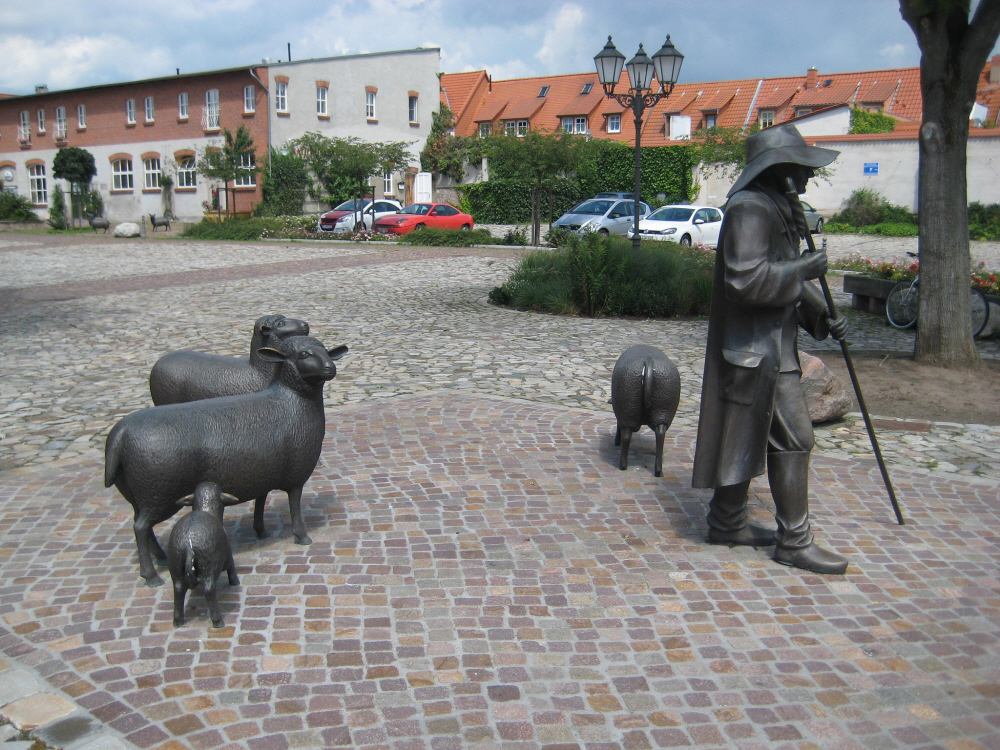
2007 Wolmirstedt Schäfergruppe von Werner Bruning

The P. and G. Klopp Story – Chapter 5 (Part I)

Chapter 5

Gutfelde (Zlotniki)


Home is people. Not a place. If you go back there after the people are gone, then all you can see is what is not there any more. Robin Hobb


At the time of my birth, Father as manager and inspector was in charge of the estates Silberberg, Oberhof and Gutfelde totaling an area of approximately 3000 ha. Although he must have been thankful to the authorities for landing him such challenging and prestigious position and therefore may have harbored a favorable disposition towards the Nazi regime, he always strove to keep his humanity in dealing with his fellow human beings, Germans and Poles alike. In particular, through his actions he distanced himself from the policy that forbade German citizens to fraternize with the defeated enemy. It is a great testimony to his moral independence from the dark and sinister sides of Nazi Germany that he allowed Polish men and women to live and work closely and cordially with the Klopp family at the Gutfelde residence and the agricultural headquarter for the region. He maintained an excellent working relationship with the former Polish estate manager Haluda, who after WW2 took over as director of the communist run state farm. From the stories I picked up from my mother I speculate that Father owed his survival to his reputation of treating fairly and equitably all the people who worked for the large estates under his directorship. Other inspectors notorious for their arrogance, cruelty and injustice in dealing with the Polish population were rounded up, lynched, hanged or shot in the closing months of the war. On a  Polish website with special focus on mansions, manors, and castles of Poland, I found an entire page devoted to Gutfelde – now an agricultural training center with orchards, wheat and corn under cultivation, 800 cows and 8000 pigs. The same page to my great surprise mentioned my father’s name as an administrator during WW2! The mansion-like imposing building was built around 1880 in the late-classical style and consisted of a body with a higher wing and ground floor extensions. It has not changed much in the last seventy years.

Family Photo 1941

Family Photo – The Klopp Children from Right to Left: Karl, Adolf, Gerhard and Eka

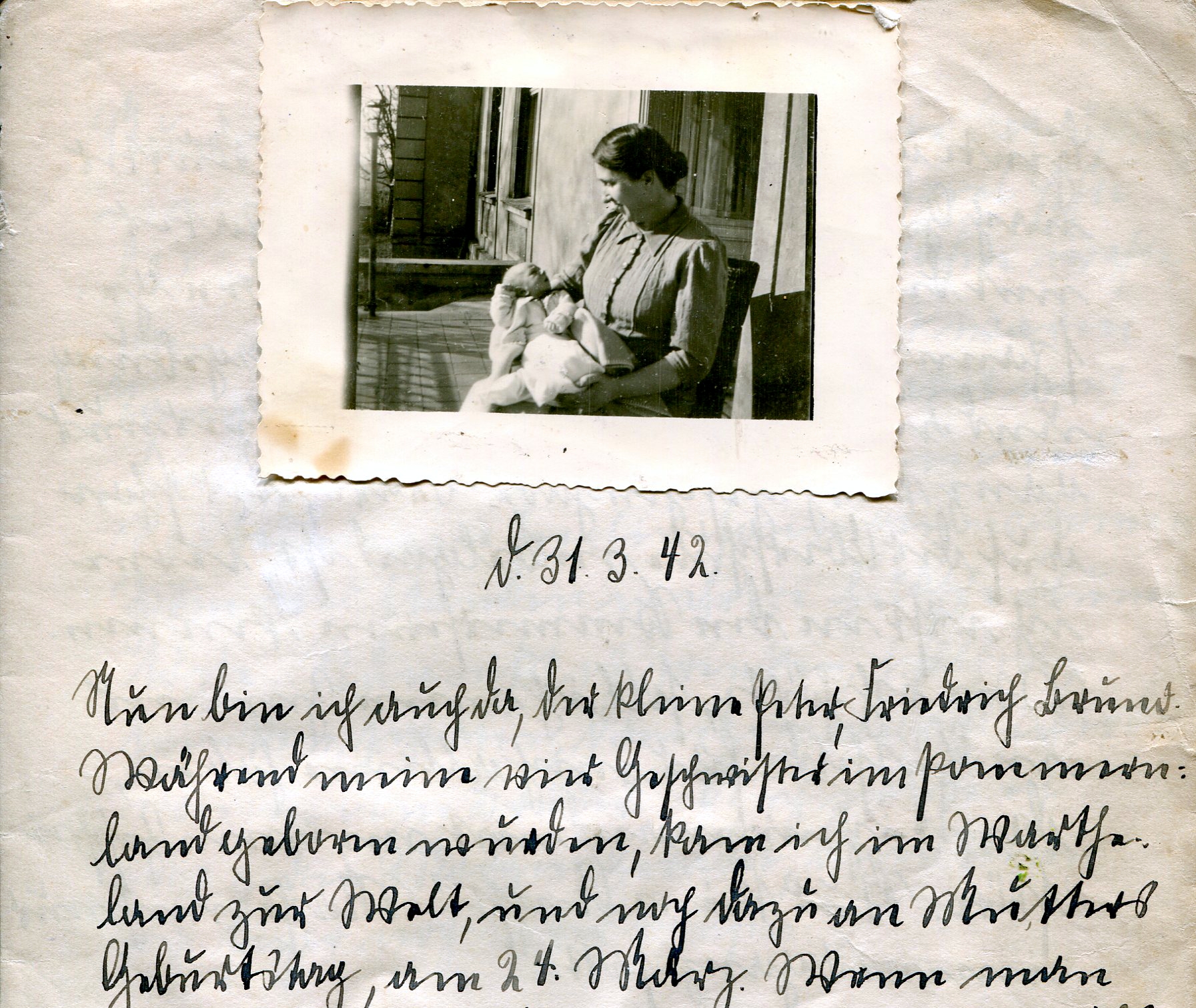
My three brothers Karl, Adolf and Gerhard and my sister Eka (short form of Erika) (now Lavana) were all born in Pomerania, whereas I began my life’s journey in the town of Dietfurt (Znin), Warthegau. There I spent the first eight days with four other babies in a warm hospital room. There were also two Polish babies born in the same county hospital. Later on in my early childhood I had to take quite a bit of good-natured teasing with made-up stories of a nurse who had accidentally placed a Polish baby into my crib, while I was being examined in another room.

First Page of Mother's Diary

First Page of Mother’s Diary about her Fifth Child Peter

When I arrived with Mother at Gutfelde, I received a truly royal reception. Karl, who attended a boarding school in Belgard (Bialogard), would see me a few months later at the beginning of his summer holidays. But the others including my proud father did everything to welcome the fifth child in the family. Flags were waving. Fir branches and a big welcome sign decorated the door to my very own room was. Inside the sunny and warm room several pots with beautiful flowers created a cheerful atmosphere for the latest arrival in Gutfelde. Continue reading