Vacation 1942 in Gutfelde (Zlotniki) Part I

Report by Hartmut Kegler – Chart II a – III

Copy of the original German diary and transposition of the Sütterlin text by Dieter Barge

From Wikipedia.org: The Prussian ministry for culture commissioned graphic artist Ludwig Sütterlin to create a modern handwriting script in 1911. His handwriting scheme gradually replaced the older cursive scripts that had developed in the 16th century. The word Sütterlin is nowadays often used to refer to all varieties of old German handwriting, although only this specific script was taught in all German schools from 1935 to 1941.
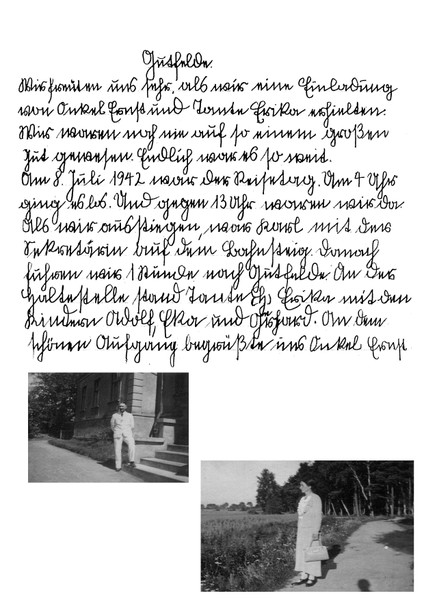
 

Bild Gutfelde 01a

Wir freuten uns sehr, als wir eine Einladung von Onkel Ernst und Tante Erika erhielten. Wir waren noch nie auf so einem großen Gut gewesen. Endlich war es soweit. Am 8.Juli 1942 war der Reisetag. Um 4 Uhr ging es los. Und gegen 13 Uhr waren wir da. Als wir ausstiegen, war Karl mit der Sekretärin auf dem Bahnsteig. Danach fuhren wir eine Stunde nach Gutfelde. An der Haltestelle stand Tante Erika mit den Kindern Adolf, Eka und Gerhard. An dem schönen Aufgang begrüßte uns Onkel Ernst.

We were very happy, when we received an invitation from Uncle Ernst and Aunt Erika. We had never been on such a huge estate before. Finally we were on our way. The traveling day was July 8, 1942. At four o’clock we departed. And around 13 hours we arrived. When we got off the train, Karl with the secretary were standing on the platform. Then we traveled for an hour to Gutfelde, Aunt Erika and the children Adolf, Eka, and Gerry were waiting at the stop. At the beautiful staircase to the entrance Uncle Ernst greeted and welcomed us.
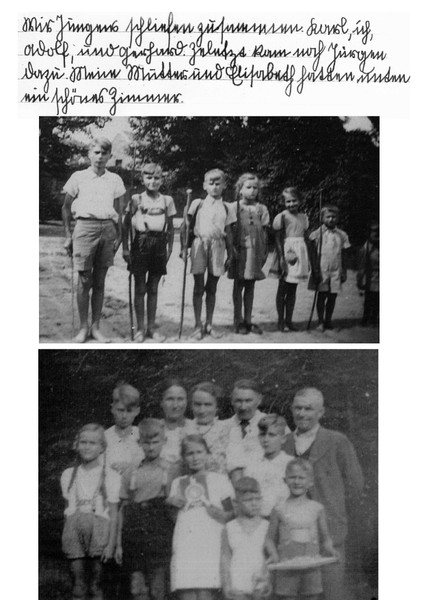
Bild Gutfelde 02a

Wir Jungens schliefen zusammen. Karl, ich, Adolf und Gerhard. Zuletzt kam noch Jürgen dazu. Meine Mutter und Elisabeth hatten unten ein schönes Zimmer.

We boys slept together: Karl, I, Adolf and Gerhard. Finally Jürgen was added to our gang. My mother and Elisabeth had a nice room downstairs.
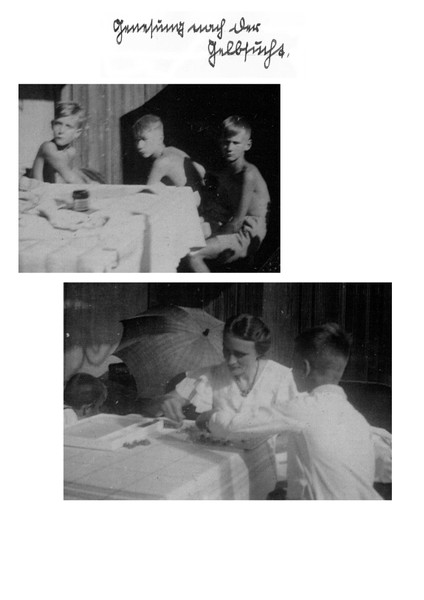
Bild Gutfelde 03aGenesung nach der Gelbsucht.

Recovery after jaundice.
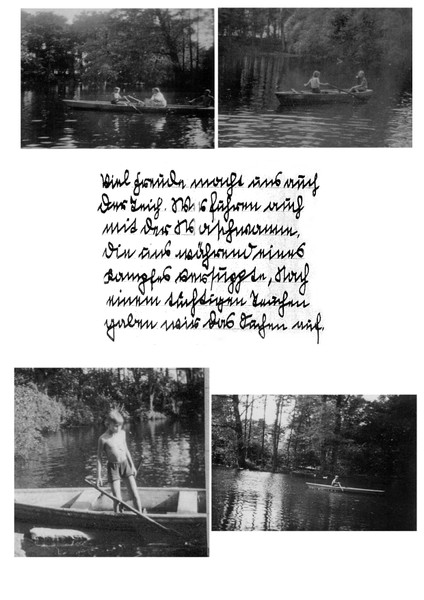
Bild Gutfelde 04a

Viel Freude macht uns auch der Teich. Wir fuhren auch mit der Waschwanne (Zinkbadewanne), die uns während eines Kampfes versuppte (versank). Nach einem tüchtigen Tauchen gaben wir das Suchen auf.

We had lots of fun on the pond. We also cruised on the washtub, which later during a ‘naval’ battle sank. After much thorough diving we gave up the search.
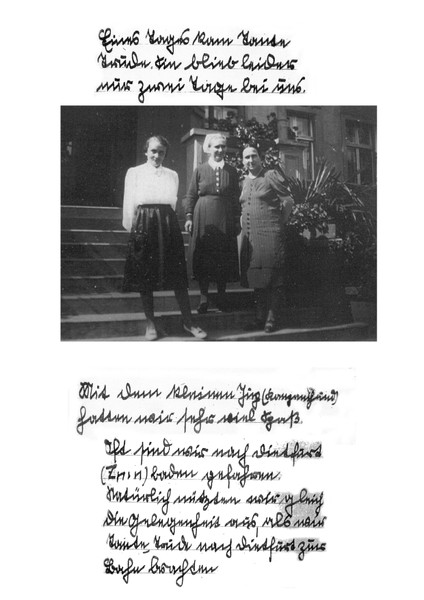
Bild Gutfelde 05a

Eines Tages kam Tante Trude (Gertrud). Sie blieb leider nur zwei Tage bei uns. Mit dem kleinen Jürgen hatten wir sehr viel Spaß. Oft sind wir nach Dietfurt (Znin) baden gefahren. Natürlich nutzten wir gleich die Gelegenheit aus, als wir Tante Trude nach Dietfurt zur Bahn brachten.

One day Aunt Trude (Gertrud) arrived. Unfortunately, she stayed only for two days. With little Jürgen we had lots of fun. Often we went swimming at the Dietfurt Lake. Naturally we made good use of the occasion, when we took Aunt Trude to the Dietfurt railway station.
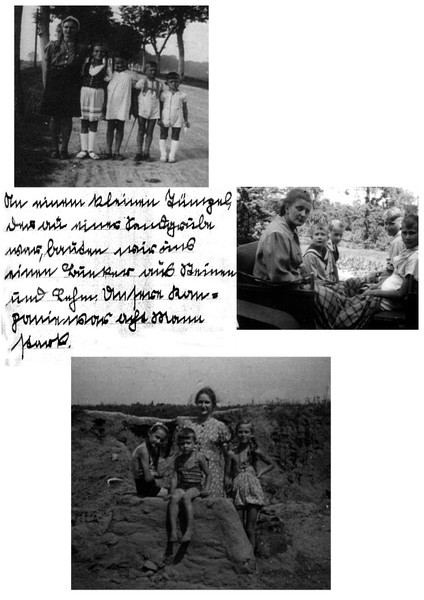
Bild Gutfelde 06a

An einem kleinen Tümpel, der an einer Sandgrube war, bauten wir uns einen Bunker aus Steinen und Lehm, unsere Kompanie war acht Mann stark.

Near a tiny pond at a sandy ditch we built a bunker out of rocks and clay. Our company was eight man strong.

To be continued …
The Klopp Grandparents Part I

Peter Friedrich Klopp (1852-1900) – Chart I -I

Adapted from Eberhard Klopp’s Family Chronicle

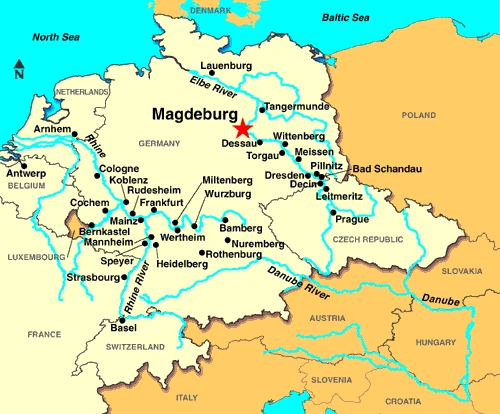
It was my goal to restrict the family research to our grandparents. Yet, to get a well-rounded picture of Peter Friedrich Klopp and to enhance our understanding of his colorful personality, I need to go back to his parents, Heinrich Friedrich and Charlotte Wilhelmine (neé Hoppe) Klopp. They got married in the St. Catherine Church on July 6, 1851 in Magdeburg, where they lived until Heinrich’s early death in 1861, most likely brought on by consumption, the most common cause of death in those days.

Magdeburg_province_map

In the few years, which Heinrich had after the wedding, he was barely able to eek out a living for his growing family. For a short while he managed to run an independent business as hauler and carrier of goods, mail and people. With horse and buggy he provided a service to the people of Magdeburg very much akin to a modern taxi service. During this time three children were born, the first born being my grandfather Peter Friedrich Klopp. The location where he worked and lived with his family was the former shopping street ‘Breiter Weg’ (Broadway), known as the popular social center complete with pubs, inns, breweries, stores, various governmental establishments and offices, for which Heinrich could provide a service in the fledgling transportation business, enough at least to feed his family. Alas, he passed away too soon, and widowed Charlotte had to endure many hardships raising her children and working as seamstress and washerwoman. On October 27, 1862 she gave birth to the illegitimate son Franz Karl August, whose father remained unknown. In 1864 she married Ferdinand Pielert, who, having been born in 1836, was ten years younger and worked as deckhand on one of the boats plying the waters of the Elbe River. Due to the transitory nature of his work the two rarely saw each other. When he finally settled down with a permanent address in Magdeburg, Charlotte had already died on October 28, 1870.

Magdeburg on the Elbe River

Magdeburg on the Elbe River – Photo Credit: Wikipedia.org

Little Peter Friedrich Klopp (born on January 23, 1852) was barely nine years old when his father died. As the eldest he experienced how his mother after the loss of the bread earner plunged into deeper misery and abject poverty. Since his stepfather Pielert was rarely at home with no permanent address in Magdeburg, the responsibility for her son’s education and trade lay entirely upon the shoulders of the single mother. The circumstances, under which Peter Friedrich Klopp found his way to the mills at Jersleben, could probably be guessed from his mother’s connections with relatives and acquaintances in her hometown Wolmirstedt, a short distance north of Magdeburg.

Auerbachsmühle_Wolmirstedt

Auerbach Mill near Wolmirstedt – Photo credit: Wikipedia.org

Fauquier on a Foggy and Drizzly Morning …

Dreary days in February often make me feel sad and even depressed, when the sun refuses to show its cheerful face. The iron man with his snow-capped head at a neighbors’ fence seems to express that melancholy feeling as if to say, “Is winter not over yet?”

Last Sunday morning I went for a walk taking the big loop around our little town. Armed with my camera I was determined to show and to prove that there is beauty even under an overcast sky with dense fog hanging heavily over the Arrow Lake.

The air was mild, almost springlike. While there was still lots of snow, it was plain that winter was on the retreat. Melt water had formed many puddles on the street, which intrigued me with their beautiful reflections. Water droplets were hanging like precious pearls from the slender twigs of wild rose bushes. To a casual observer there is nothing special about them until one discovers the images that their tiny frog lenses produce. Having captured these wonderful impressions with heart and camera, I felt cheerful in spite of an otherwise gray and dreary February morning in Fauquier, BC.

The Kegler Grandparents

Carl and Elisabeth Kegler Part II

Chart II a – I

Adapted from the Kegler Family Chronicle

By their son Günther Kegler (1894-1986)


It was not an easy beginning for the pastor’s couple. Until 1901 six children were born. In addition to the already crowded household there were Frau Pastor’s parents, Mr. and Mrs. A.Mass with their two unmarried daughters dwelling under the same roof since 1895. Marie Mass died in 1900, Adof Mass in 1906, Klara Mass in 1908 and Hedwig Mass in 1919. All have been buried in Grünewald. The small village cemetery is now completely overgrown, and gravesites can no longer be recognized. The former Eastern Provinces have become Polish territory. Up to 1900 the household of the pastoral home consisted of twelve persons.

Worth mentioning would also be the fact that Grünewald was a church patronage, a designation for the privileges of the patronage master of the church. The acquisition of these privileges resulted from a donation of a building lot and the funding for the construction of the church. The patronage master had the right to be part of the selection process for filling a pastoral vacancy. The patronage master of the Grünewald parish was Christoff (popularly called the ‘Stoffer’) von Glasenapp at the Grünewald domain. Von Glasenapp originated from an old Pomeranian nobility, just as von Kleist, von Gaudecker and many others.

What can we say about Frau Pastor – or colloquially called ‘Fru Pastern, Fru Preistern’! We could summarize her description with a ancient Indian proverb:

Where mothers keep watch,

The gods may rest!

Whoever experienced her as mother, grandmother, church mother in the broadest sense, friend, acquaintance, leader of a steadily growing household, und much more, could not say anything better! No matter how often the children brought home friends for the holidays, nothing was too much for her! Amazed and in awe her children are aware of this, her descendants upon hearing stories about her will feel the same! Awareness and silence are in order and are worth more than a thousand words!


Here again, as for her husband Carl, you can read more about her in the eulogy from 1948 in the German section of this blog.

The Kegler Grandparents

Carl and Elisabeth Kegler – Part I

Chart II a – I

Adapted from the Kegler Family Chronicle

By their son Günther Kegler (1894-1986)


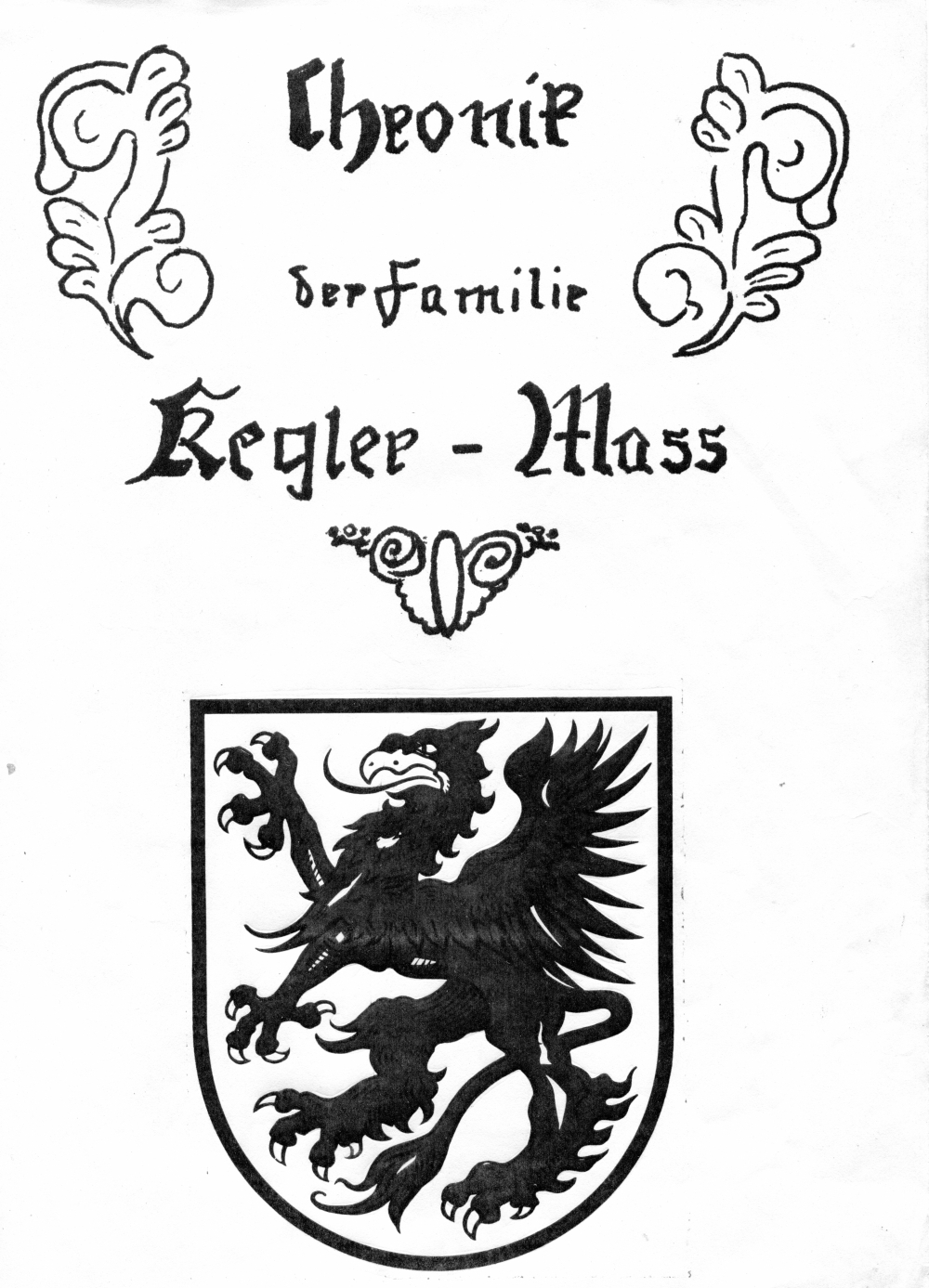
Title Page of Kegler-Mass Family Chronicle

Title Page of the Kegler-Mass Family Chronicle

Carl Kegler

Born 1860-09-22 in Luckow, Randow County, Western Pomerania,

Pastor in Grünewald, Neustettin County,

Died 1919-06-15 in Grünewald.

and his wife

Elisabeth Kegler (neé Mass)

Born 1868-08-13 in Groß-Krossingen, Obornik County, former Province of Posen (Poznan),

Died 1948-09-14 in Erfurt after the expulsion from Stolpmünde at her son’s residence.

The two were married 1891-02-05 in Pniewno-Konopat, Schwetz County, former Province of West Prussia.

Carl Kegler studied theology in Greifswald, Berlin and Halle. He was a member of the student fraternity “Neo-Borussia”, a color-bearing association with the color band black-white-black-red. The fraternity founded after the Napoleonic Wars adhered to Christian-patriotic ideals and strove for the unity of the German nation. He would talk a lot about his student life, the great challenges, about serious and also lighthearted matters. Soon his children could sing many of student songs by heart, such as Halle on the Saale and many more. His youngest son Bruno was especially receptive for such things and would have loved to study.

In 1891 he was installed as pastor of Grünewald, Neustettin County and stayed in the congregation until his early death. He was the successor of Pastor Nedtwig, who had taken the vacant and larger parish in Gramenz, Neustettin County.

Affiliated with the parish of Grünewald were also the sister congregations (without pastors) Zechendorf and Kowalk and some other smaller churches especially during WW1. The distances were considerable and the congregations could only be reached by horse buggy or bicycle. He was not only a spiritual caregiver with all his strength, but also as a farmer’s son a capable countryman. To the parish also belonged ca. 40 Prussian acres (morgen) of land with a barn, stables, cattle and farm implements, etc. Thus, in the agricultural domain he was able to be helpful  with much advice and supportive action.

For more information I added the text of the eulogy, which a pastor and friend had delivered at Carl’s funeral in 1919. It is in German and can be located at the usual subheading of the P. and G. Klopp Story.

To be continued …
The Glorious Days of the Sternwheelers

Sternwheelers Linking Fauquier to the World

Some History Notes on the Lifeline of the Fruit Trade

Photo Credits: Arrow Lakes Historical Society, Text from A. Devlin’s Personal Archive

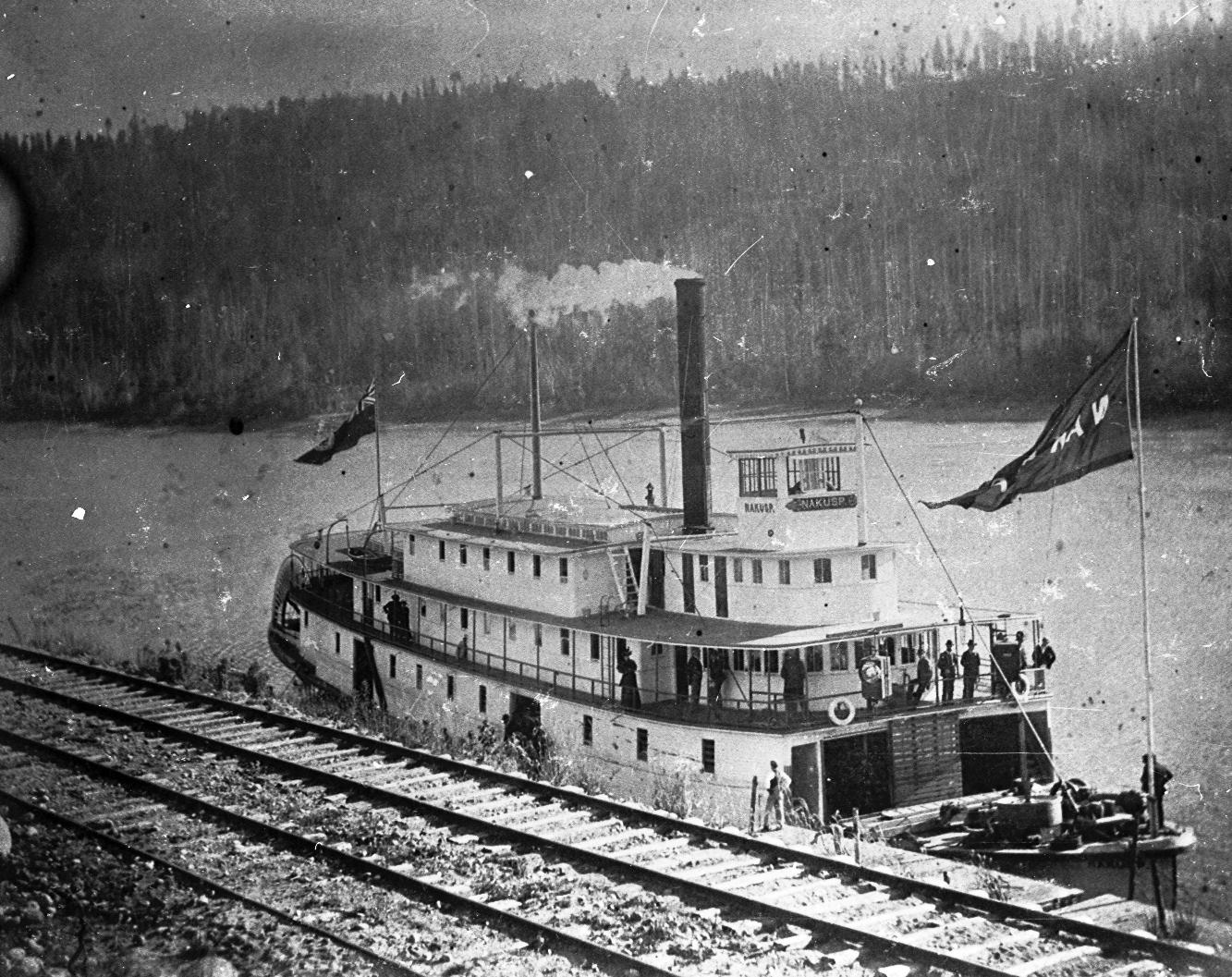
?????????????????????????????????????????????????????????1895 – SS Nakusp – first steamship built in Nakusp – here docked at East Robson on the Columbia River 1898

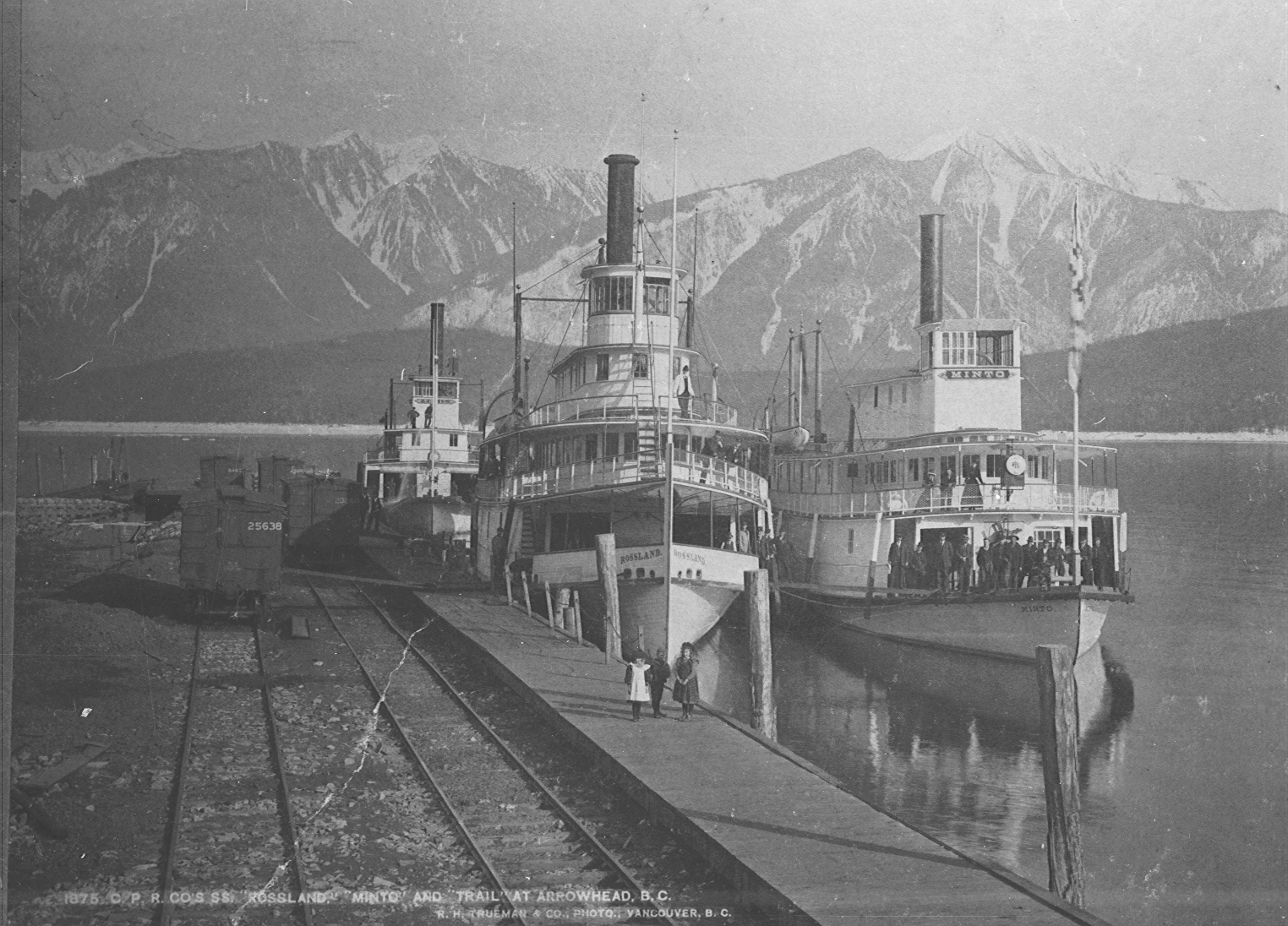
?????????????????????????????????????????????????????????????????????????1896 – SS Trail built in Nakusp, used to haul freight and to push a barge from Revelstoke to Trail. The barge carried coal for the smelter in Trail, then she hauled ore from the smelter to Northport. Here she is docked behind the Rossland at Arrowhead, Upper Arrow Lake, 1898.

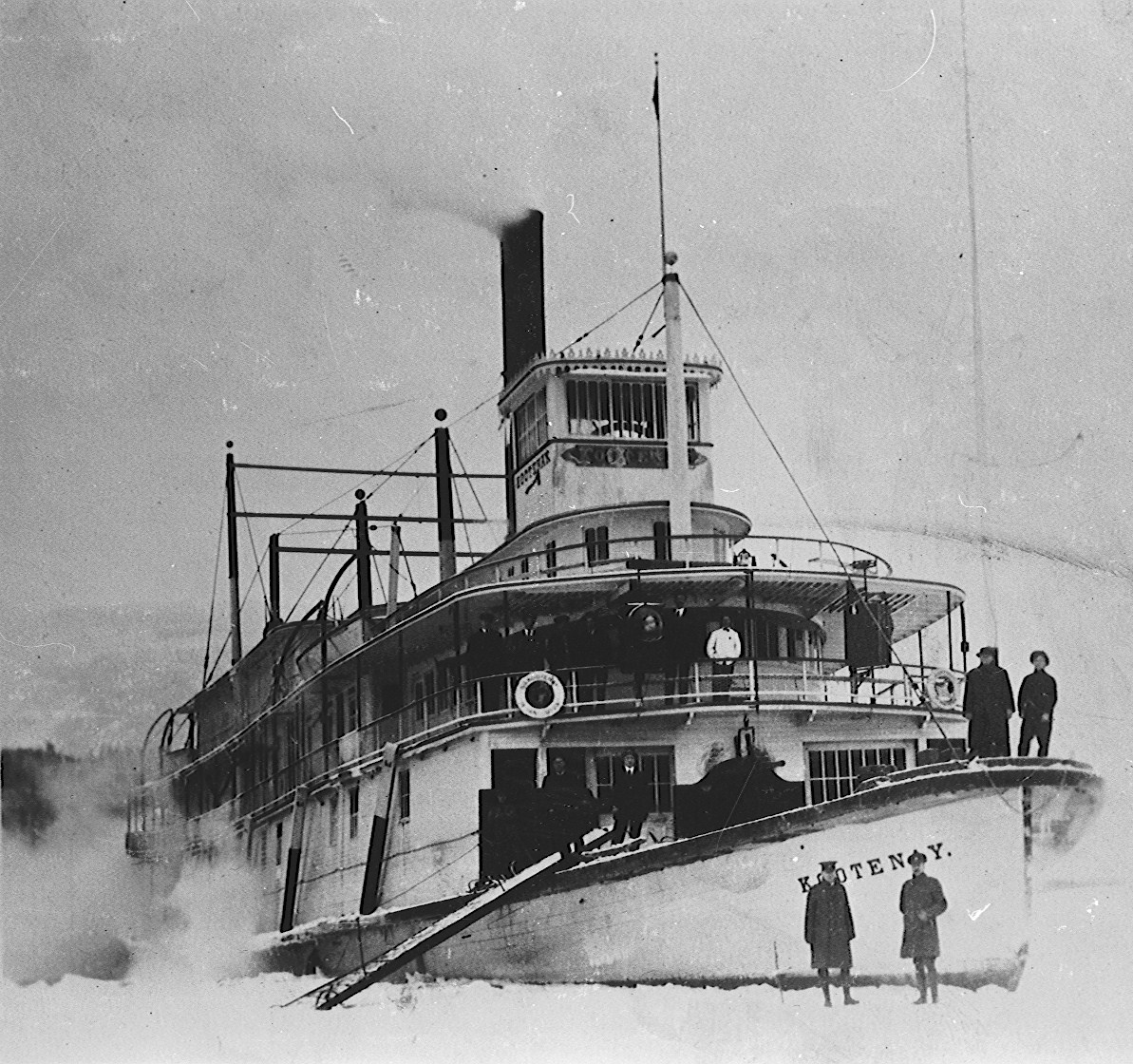
???????????????????????????????????1897 – SS Kootenay built in Nakusp and launched in April – group posing in front of sternwheeler on frozen Upper Arrow Lake ca. 1920

??????????????????????????????????????????????????

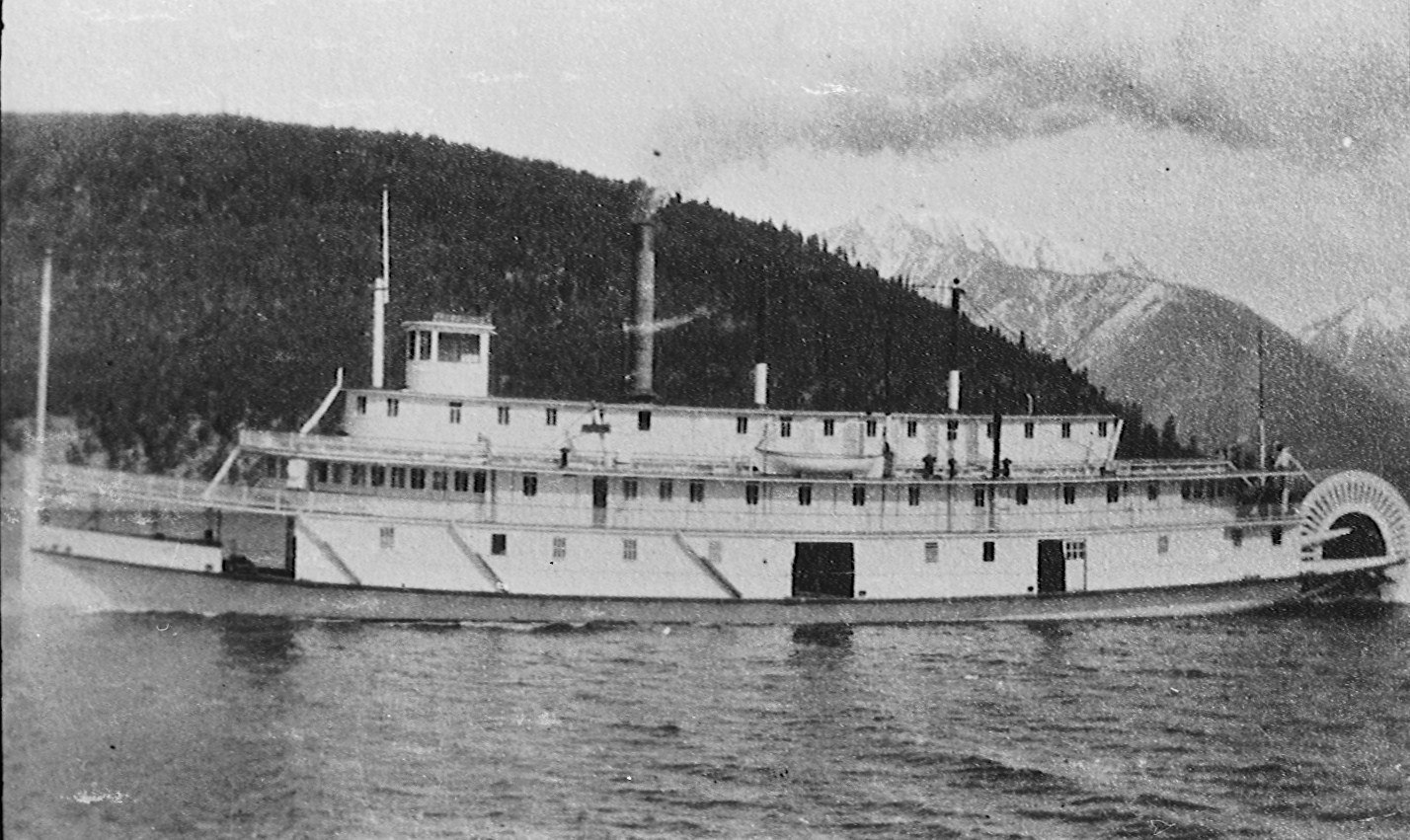
1897 – SS Rossland built in Nakusp and launched without furniture, fittings or windowpanes so that the SS Lytton could be withdrawn at last for repairs, here seen sailing on Upper Arrow Lake (1898- 1916).

?????????????????????????????????????????

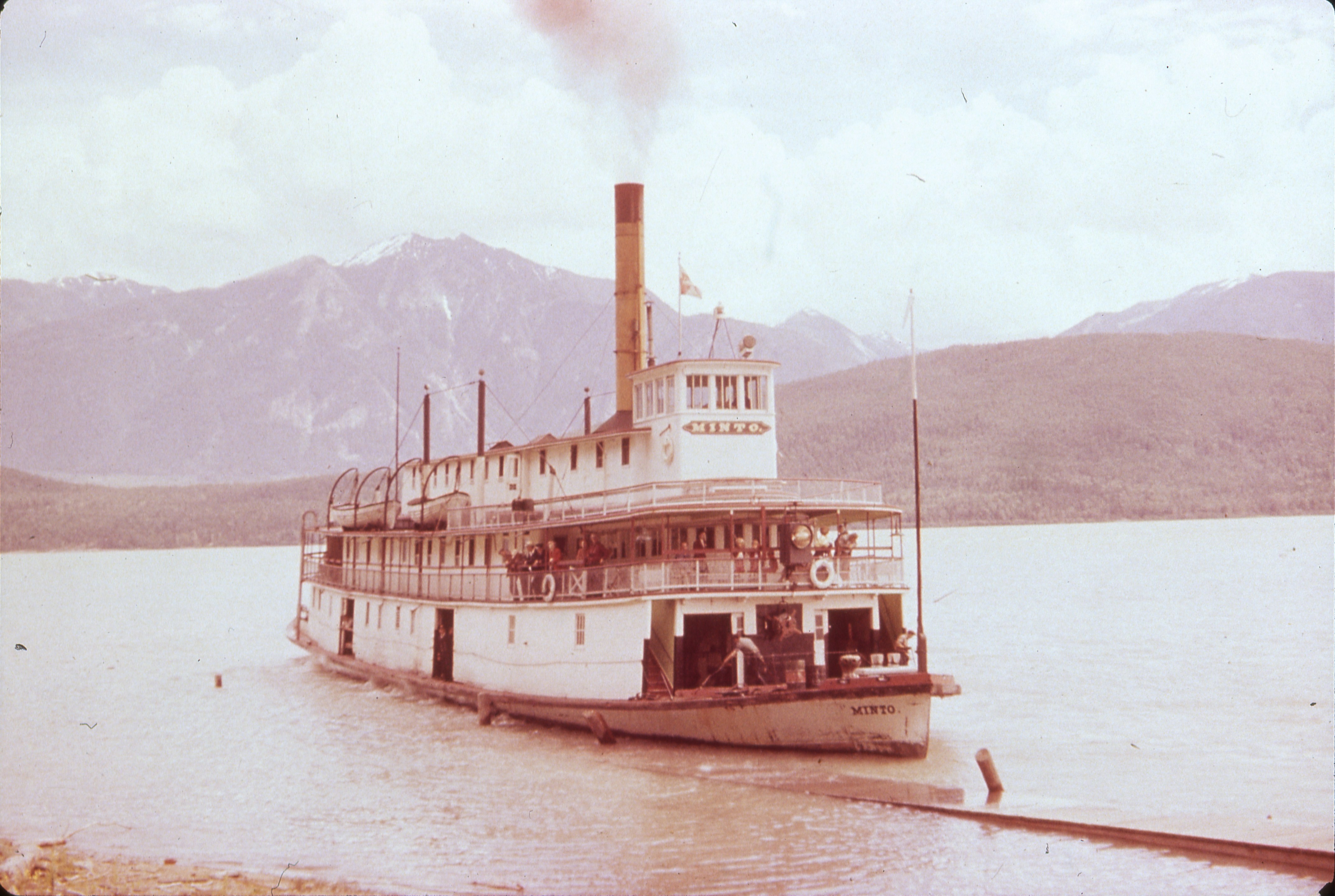
1898 – SS Minto built in Nakusp, parts from Toronto, shipped to Nakusp in 1000 parts. First steel hull on the Arrow Lakes and named after Canada’s Governor General. It was meant to go to the Stikine River for the Gold Rush. The picture was taken at Arrowhead on Upper Arrow Lake, 1952.

??????????????????????????????????????????????????????1902 – SS Revelstoke built in Nakusp, used to take tourists between Revelstoke and Downie Creek. It was the last sternwheeler to run the fast water of the Columbia River Canyon from 1902 to 1915.

1906 – prosperous fruit trade began on the Arrow Lakes

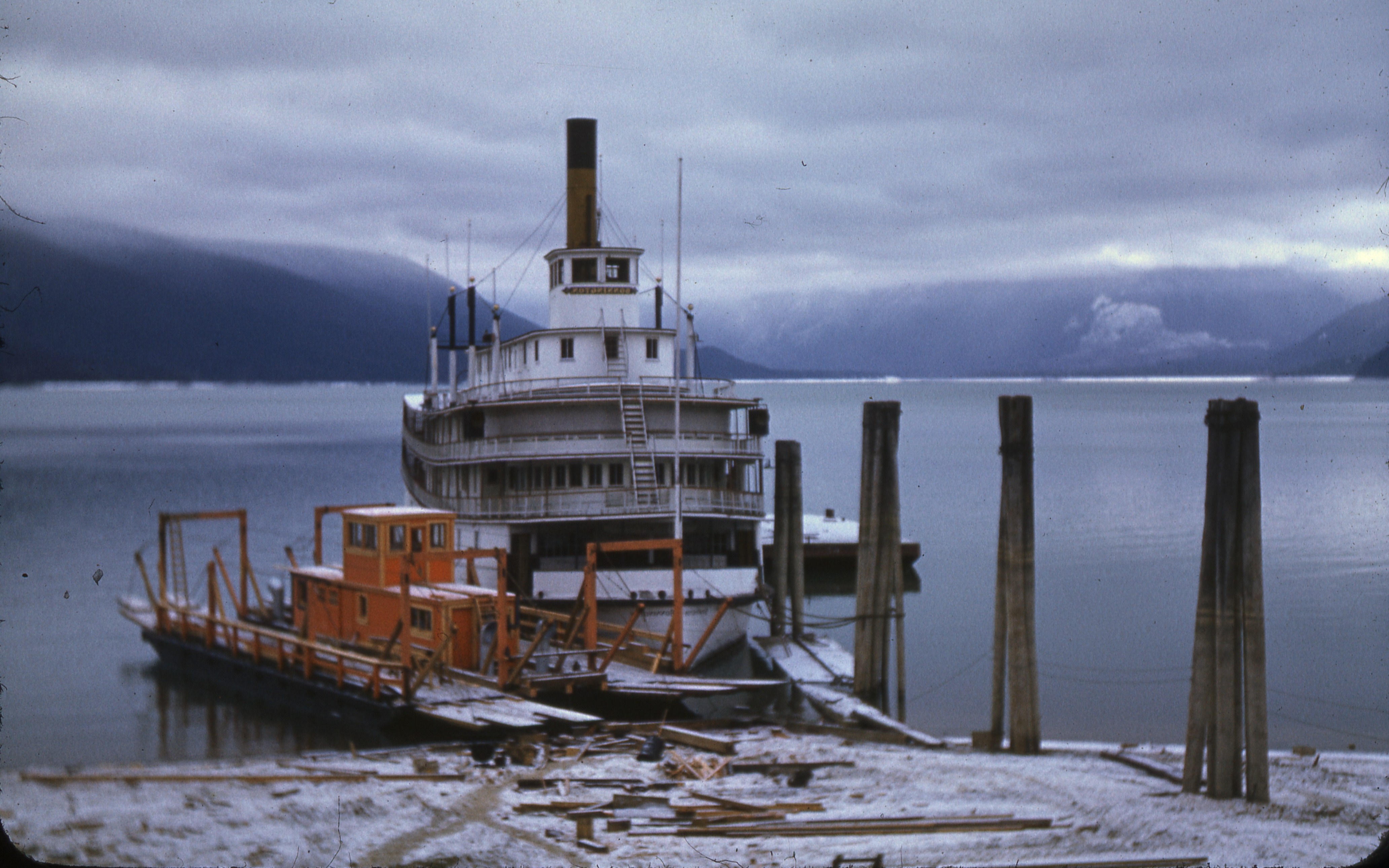
???????????????????????????????????????????????????????????????????1911 – SS Bonnington built in Nakusp; largest steamer on the Arrow Lakes; was to be used to carry passengers for a proposed circle tour by CPR (Revelstoke to Arrowhead by rail, Arrow Head to Robson by steamer, Robson to Nelson by rail, Nelson to Lardeau by steamer, Lardeau to Trout Lake City by rail, Beaton to Arrow Head by steamer, Arrow Head to Revelstoke by rail); launched in April and a half day holiday was declared in Nakusp. On the picture above the derelict SS Bonnington docked at CPR wharf, Nakusp, 1940 or 1941; Fauquier – Needles ferry temporarily docked at left for repairs.