The P. and G. Klopp Story

Gutfelde - Zlotniki

Gutfelde – Zlotniki

Chapter 5 – Part II

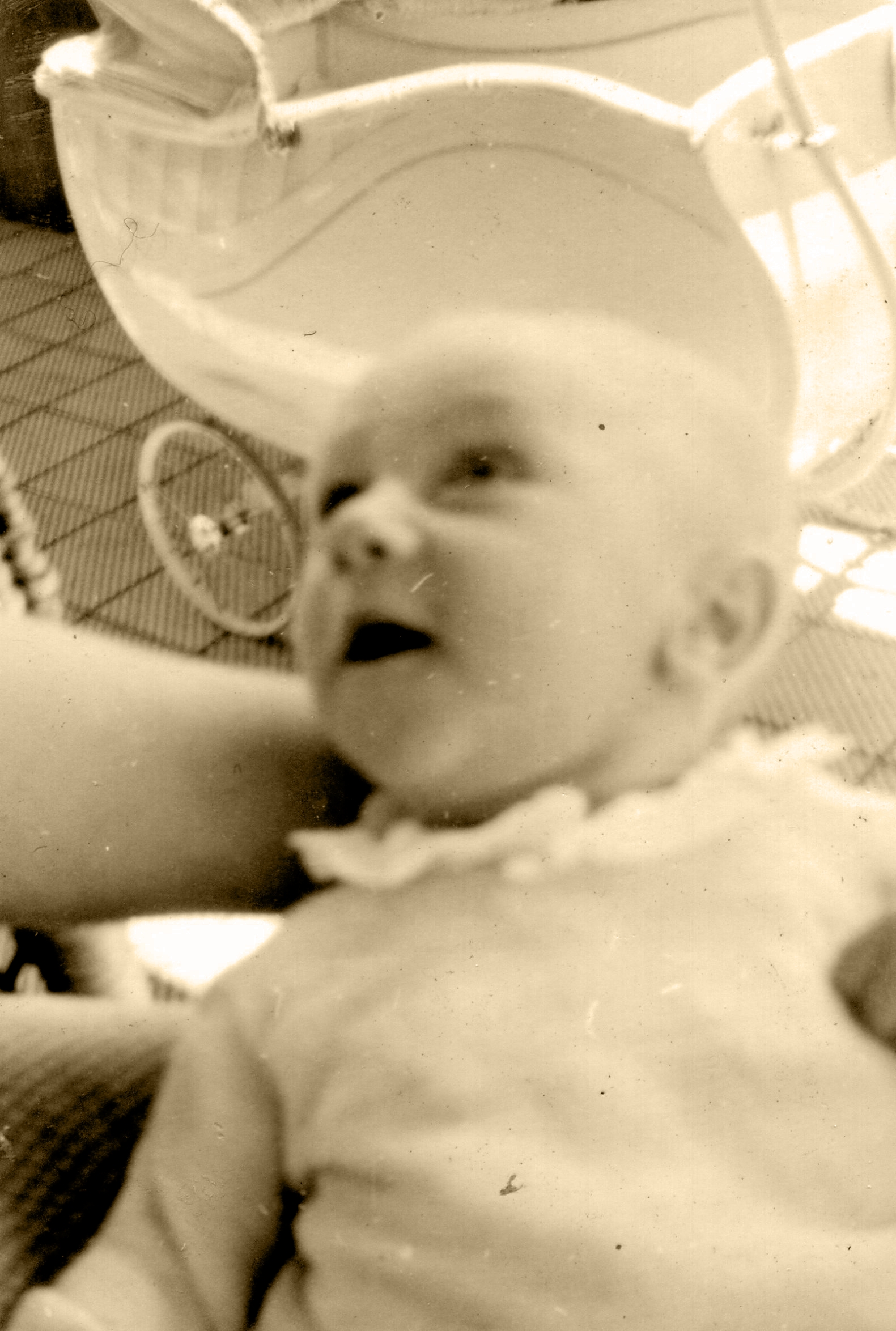
At the end of June I had grown into a feisty, likable character bringing joy into everybody’s heart with my entertaining giggles. Indeed I had a lot to be happy about. By now, I received already a real dinner, first spinach, then mashed strawberries and Mother’s own milk for dessert. Occasionally she would give me a portion of semolina porridge with juice, and I had carrot juice every day. What a wonderful life!

17

 Now Karl came home from his boarding school in Belgard for the summer holidays. He happened to greet me, when I was at my very best behavior. I had woken up from a very good sleep, just had my favorite meal and presented to my oldest brother the sweetest smile I could muster. He was so delighted that he stood in front of my crib for a long time, while I was laughing at him, babbling endless stories while gazing at him with wondering eyes. At last Karl was allowed to pick me up and to hold me in his arms. He even granted me a little brotherly kiss. Continue reading

Is our Golf Course Slipping into the Lake?

IMG_4170

Yesterday morning I listened to a CBC radio interview with our local fire chief John Banta. The topic was our golf course, one of the main recreational and scenic attractions of Fauquier. The ground facing the lake has been undergoing major shifts making some people believe that the entire golf course with that wonderful little clubhouse included will eventually slip into the lake. The gist of the conversation revealed that there are two opposite viewpoints on the nature of the upheaval of the grounds facing the lake to the north. While the CBC interviewer spoke of impending disaster, John pointed out that only two of the nine holes have been affected and that the club house in his opinion is quite safe in its present location.

Having also heard so many different opinions from friends and neighbors, I decided to investigate the problem area myself and attempted to provide evidence for or against CBC’s claim that before long the golf course, club house and all will eventually slip into the lake.

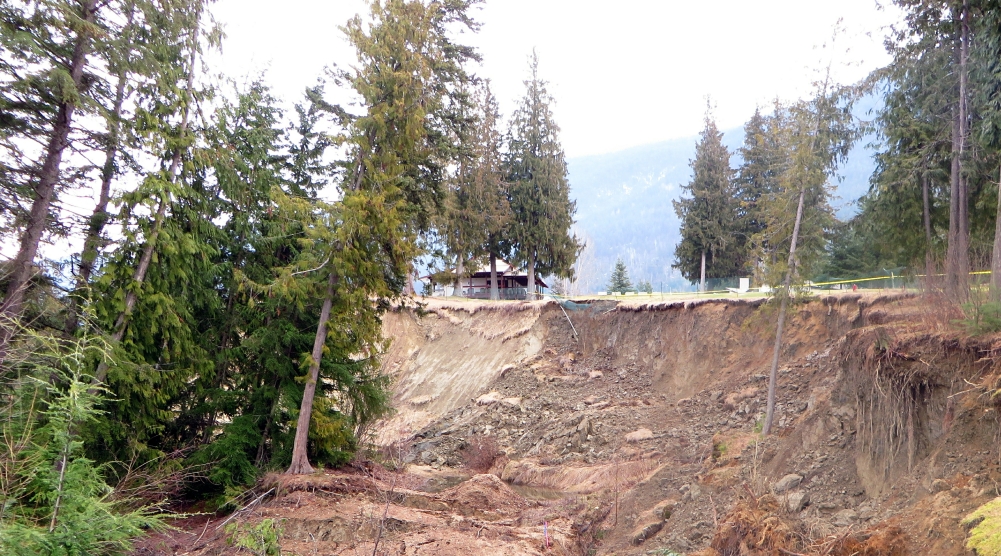
Here is what I discovered at the site and I use the pictures to support the evidence:

  1. Near the warning ribbon directly facing the lake there is an almost vertical drop-off of several meters.
  2. Facing northwest I noticed another drop-off not quite as frightening, but still dangerous enough to cause serious injury, should someone step over the edge. Again the angle with ground above and the ground below was nearly 90°.
  3. Making a big loop around the area I worked my way up to take a closer look from below. It was very clear that the ground has been in motion everywhere I looked.
  4. The entire surface area, however, no matter how big or small, revealed the same picture, not what one would expect a movement toward the lake, but rather sinking ground with a distinct vertical downward trend.

Thinking about a probable cause for this unusual phenomenon, I thought that there is only one plausible explanation. Not more than three weeks before this disturbing event we experienced a heavy snowfall followed by a two-week period of steady rain and unseasonably warm temperatures. The ground became saturated. The drainage ditches in town filled up to maximum capacity. But what was worse was the underground seepage that took place on a grand scale. The fine sand that is sandwiched between layers of clay was washed away leaving large underground cavities behind, over which the surface areas of the golf course near the lake collapsed. Of course, it did not help any that the lake is presently at its lowest level in years creating a huge imbalance of the entire shoreline.

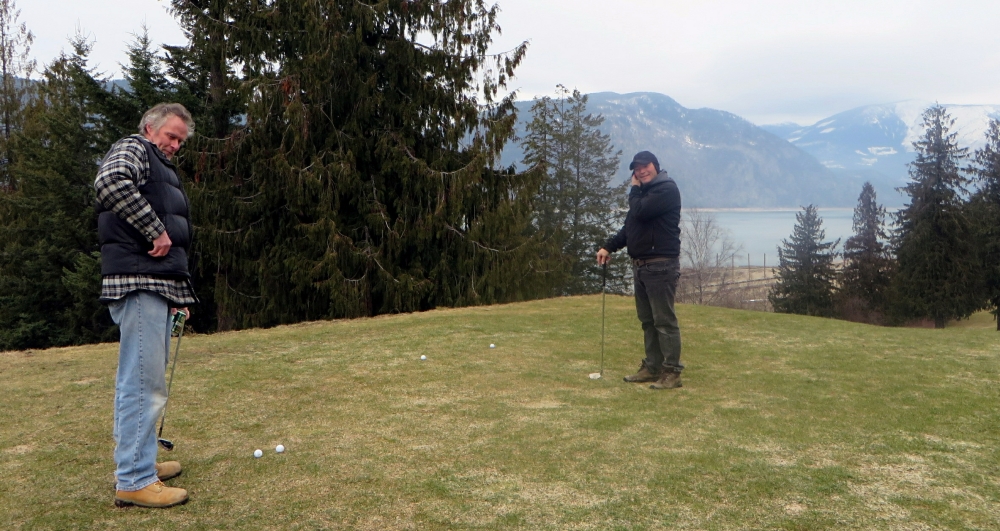
I can only express my sincere hope that BC Hydro being in control of the lake level will generously chip in with sufficient funds to make the necessary repair possible. I felt a little bit more cheerful when at the end of my exploration of the damage I noticed two golfers testing their skills on the remaining 7 intact holes. Wow! What a sight in February!

IMG_4188

Explaining Navigation Buttons

The theme that I am using is making use of quite a few navigation buttons. Until very recently I was not even sure myself what in particular they were designed to do. After some research I came up with the answers and I am  sharing them with you, who may have been  just as puzzled as I was once myself.

 The image at the top shows the right side of the header with 3 social links. When you click on any of the three, you will be directed to my Facebook, Flickr, or YouTube medias.

The image ( ‘Share this:) displays buttons that when pressed let alert your friends about the post you just read. You can share by using your email, Facebook, or Google + pages. The post that you looked at will then be available to your friends by the click of a button. If you liked the post, but do not wish to write a comment, you can also press the Like button.

The tabbed widgets at the footer are quite nifty indeed. They allow you by the click of a tag to access respectively the categories, tags, archives and comments. It is my hope that this little tutorial was a little helpful to the readers and followers of my blog.

Vacation 1942 in Gutfelde (Zlotniki) Part II

Report by Hartmut Kegler – Chart II a – III

Copy of the original German diary and transposition of the Sütterlin text by Dieter Barge

Bild Gutfelde 07a

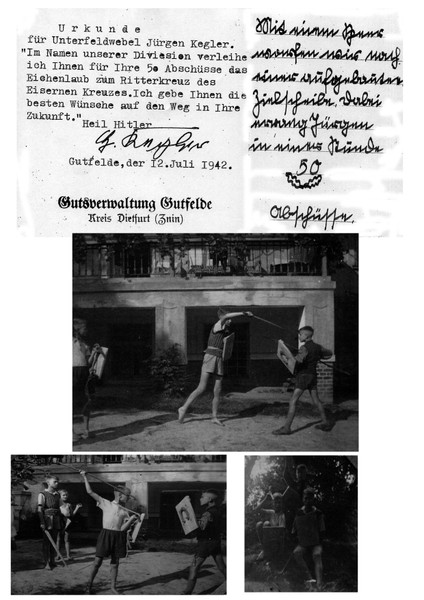
Mit einem Speer warfen wir nach einer aufgebauten Zielscheibe. Dabei errang Jürgen in einer Runde 50 Abschüsse. (und bekam die Urkunde)

We threw a spear onto the target we had set up . Jürgen scored 50 knockdowns in a single round and received the certificate of achievement.

Continue reading

Christian and Norbert Werner

A Newspaper Report on the WW I Journals of their Grandfather Friedrich Werner

Source Credit: Thüringische Landeszeitung (TLZ.DE); Photo: Foto: Conny Möller

Norbert_Christian

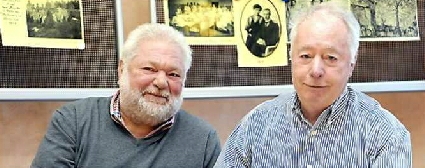
Christian (links) und Norbert Werner bewahren die Tagebücher ihres Großvaters Friedrich Werner, die er während des Ersten Weltkrieges geschrieben hat.

Er war ein großer Mann, respekteinflößend, aber dennoch liebevoll und sehr geschichtsinteressiert. So beschreibt Christian Werner seinen Großvater Friedrich Werner. Der 62-jährige gebürtige Gothaer und sein Bruder Norbert Werner halten die Erinnerungen an ihren Großvater wach, der akribisch Aufzeichnungen zur Familiengeschichte, der Geschichte der Stadt Gotha und der Region, aber auch über seine Teilnahme am Ersten Weltkrieg angefertigt hat. Die Aufzeichnungen über seine Kriegserlebnisse, die er mit zahlreichen Postkarten, Fotos und eigenen Zeichnungen illustriert hat, haben einen Umfang von 480 Seiten. Dazu kommt noch ein umfangreiches Kartenmaterial von den Kriegsschauplätzen. Continue reading

Fauquier Historical Review

Fauquier Preempted in 1897 by Funk Brothers

Report by Late Mrs. W.L.Devlin

Text and Photo Credits: ALHS and Mrs. Annette Devlin

One of the new town sites on the Arrow Lakes, due to the Arrow Dam Reservoir, is at Fauquier, called New Fauquier . This name never got into real use (PK). It is situated above the high water line laid out on part of the farm land mentioned in the following article, written ten years ago.
Fauquier-Needles Ferry

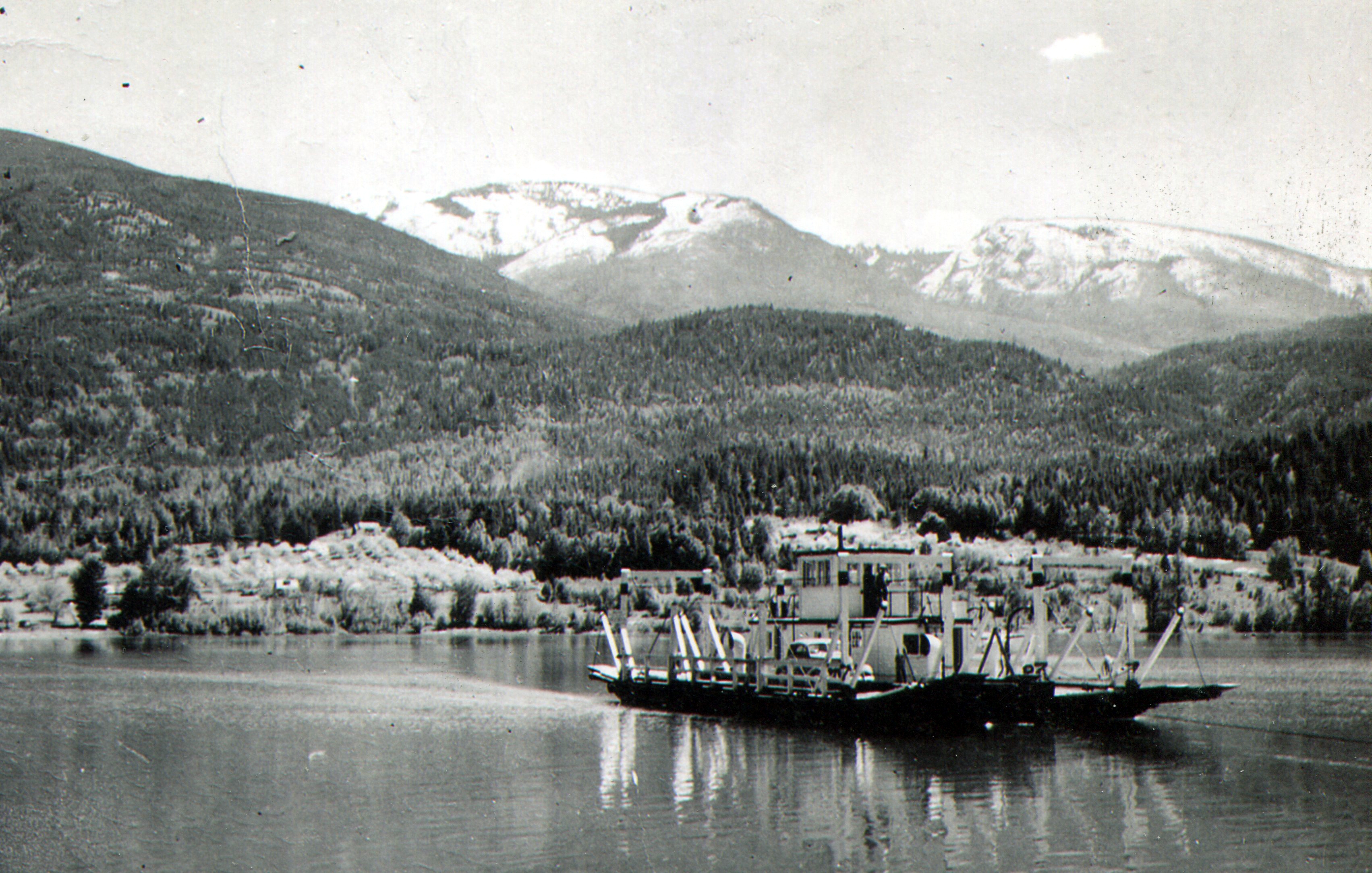
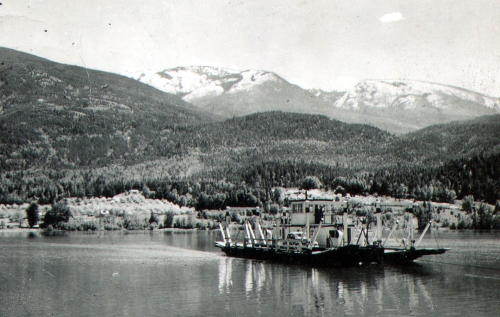
Fauquier-Needles Ferry in the Early 1920’s with Large Orchard on the Fauquier Side

The new settlement is a modern village with sewers, lots and the streets all engineered to separate the residential areas from business and services area, to make an efficient and attractive community. We print this story as a tribute to the early settlers of this area and to wish them well in the new town.
Ferry Landing

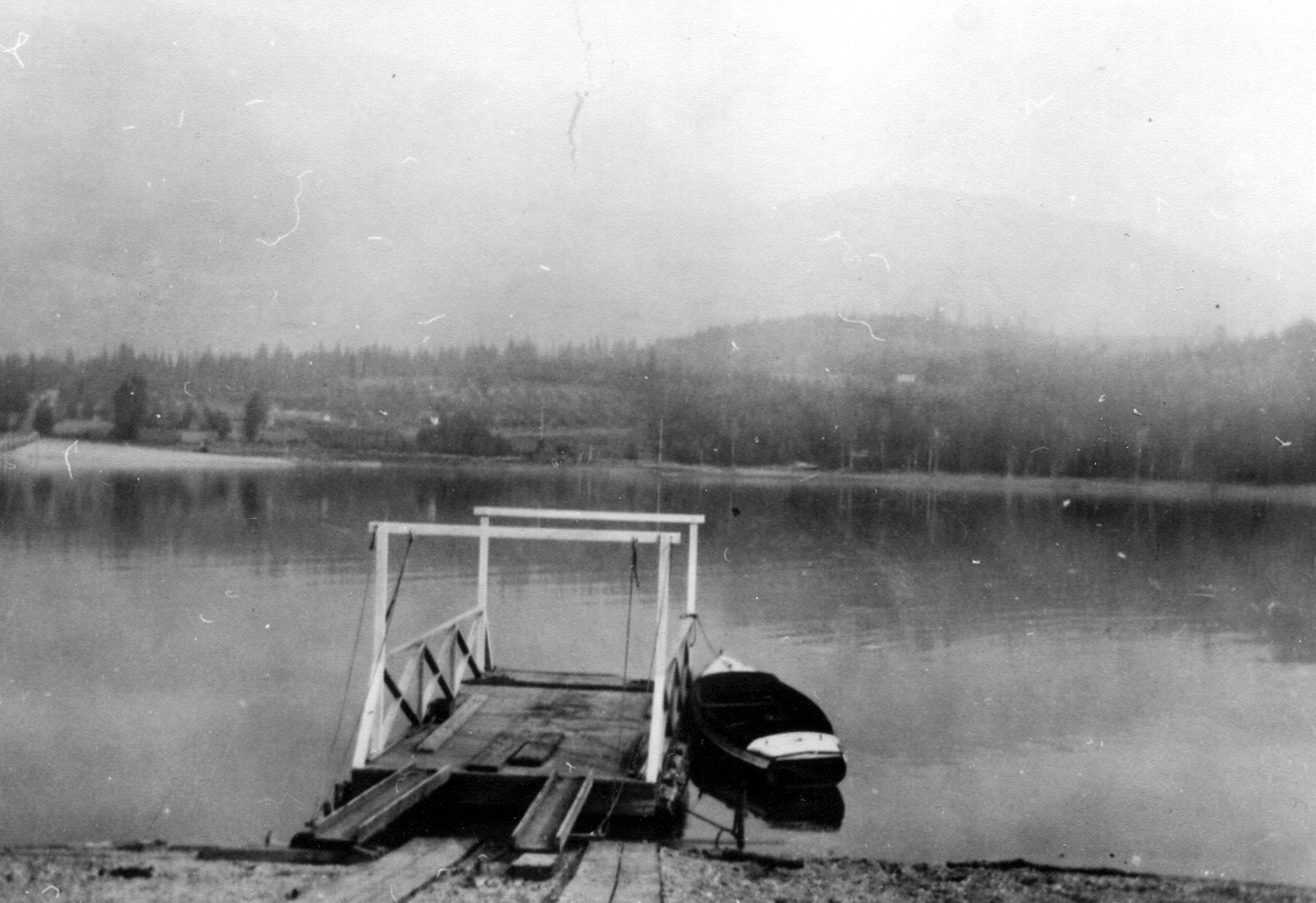
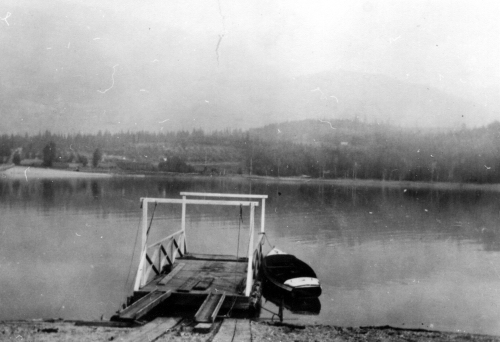
Old Ferry Landing

Mrs. W.L.Devlin’s Report (1967)

Canada celebrates its centennial this year, so I will endeavor to relate the history of our community. Prior to 1895 there were no settlers in Fauquier. Trappers and prospectors built cabins and stayed for a while, then moved on. Names mentioned by old timers are P. Anders, Jim Kelly, Muirhead, Jim Bates and Dougelle, who staked a mining claim on Stor Hill. The little cabin he built near the beacon point is still standing.

In 1897 Leonard Funk and brother George came from the Okanagan and preempted two large blocks of land. They built a cabin by the lake and began clearing, cutting trees into the cord wood, which they sold to the CPR for use in their wood-burning boats. George Funk did not stay, but his brother Leonard carved a fine farm from the forest, planted an orchard and raised a large herd of cattle, becoming a fairly wealthy man. He did much to help his neighbors get established and was a prominent figure in community affairs until his death in 1935.

Two other settlers of 1897 were Mr. Mosheimer who stayed only a few years and Mr. Thompson who preempted a half section of land next to Mr. Funk. He also bought the mining claim from Dougelle. When his sons joined the army in 1914, the family moved away.

Jim Kelly mentioned previously homesteaded the original Fauquier farm. He sold to Muirhead who in turn sold to Mr. Fauquier in 1900. After acquiring three more lots Mr. Fauquier called his holdings the Needles ranch. This property he had surveyed into ten-acre blocks, the work being completed by A. H. Green in 1910. Part of Mr. Green’s payment was a choice lakeshore block, on which he built a summer home.

At this point it might be of interest to tell a little about Mr. Fauquier. He hired Indians to clear the land on both sides of the road, approaching the landing. He built a fine home hiring two Chinese to care for the house and the gardens. Incidentally, this house burned and the family moved to a little cottage on the north side of the road. In appearance, Mr. Fauquier looked like a country squire, florid face, and gray hair, neat clipped moustache always dressed in natty tweeds. He had fine horses and drove an elegant buggy with a fringed top.

He planted a large orchard and while waiting for it to come into production he put in acres of raspberries and strawberries. Between the sale of land, fruit and cattle, he should have been successful but his extravagance exceeded his income and he died a poor man in 1917. Mrs. Fauquier was a semi- invalid and recluse. After spending her last years in a wheel chair she died at Vancouver in 1929. Continue reading