Addition to Post ‘One Drink Too Many’ in German

Guest Contributor: Norbert Werner

Reifferscheid Family Tree – Chart IV – IV

Kommentar zum Post: One Drink Too Many

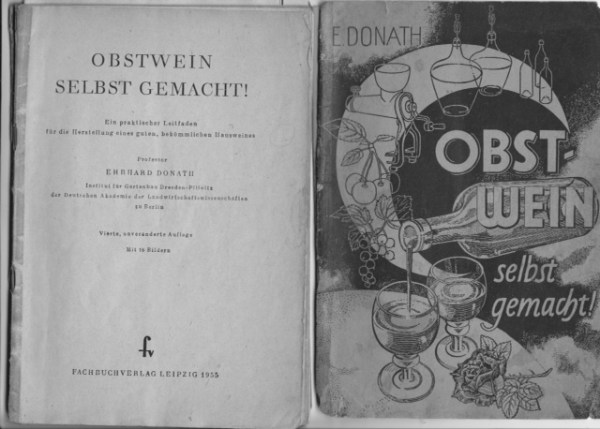
Eine wirklich sehr heitere Geschichte. Dazu möchte auch ich meinen Kommentar abgeben: Bekanntlich lebten wir in der DDR ja in einer “Mangelwirtschaft”, obwohl man das, streng genommen, auf den Alkohol nicht immer beziehen konnte.(Ist ein extra Thema!) Aber bezüglich Wein gab es oft nur übersüßen Weißwein aus Ungarn, der zu heftigem Kopfschmerz führte. Da wir in den Gärten unserer Großfamilie Obst im Überfluss hatten, begannen wir bald mit der eigenen Herstellung von Wein aus den verschiedensten Früchten: Apfel, Sauerkirsche, Hagebutten…

!cid_74D6A3E9-450D-47A7-98EA-36B96403E6E6

Die Äpfel wurden in unserem Waschhaus in Stücke geschnitten und dann mit einer handelsüblichen Küchenmaschine zu Brei verarbeitet. Zum Trennen von Saft und Fruchtfleisch haben wir die Wäscheschleuder benutzt (die damals noch nicht in der Waschmaschine integriert war). Dann kam alles in große 10- und 20-Liter-Ballons, mit Hefe und Zucker versetzt und mit einem Gärröhrchen verschlossen. So standen sie dann wochenlang in Küche, Schlafzimmer,… herum und mussten auch regelmäßig umgefüllt werden. Dazu namen wir einen Kunststoffschlauch (ähnlich der Benzinleitung beim “Trabant”!), saugten mit dem Mund an und ließen es dann im freien Fall laufen. Mein Sohn (damals im Kindergartenalter) machte das viel Spaß und er half seinem Onkel oft dabei. So wunderten wir uns zunächst, dass er auf der Heimfahrt mit dem “Trabant” fröhlich sang und erzählte, was sonst nicht seine Art war. Er hatte sehr lange an dem Schlauch gesogen und es war ein süßer Saft!!

Chapter XIX of the P.and G. Klopp Story Part II

One Drink Too Many

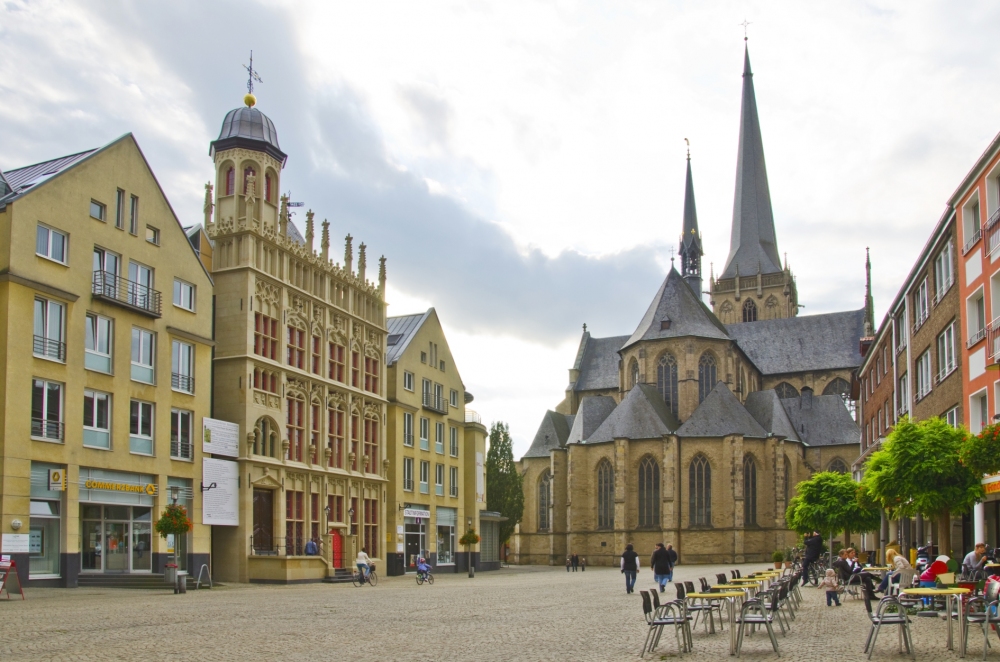
550_6_historische-rathausfassade--grosser-markt-flaggschiff-film

Peter’s Home Town Wesel (Willi Brordi Church) – Photo Credit: hanse.org

When I returned from my brother’s wedding, I resolved to be more goal-oriented, to study hard, to raise myself above mere mediocrity to an academic achievement I could truly be proud of. On the wall hung the work schedule, which I had imposed upon myself outlining a rigorous timetable: getting up at six, attending school from 8 a.m. to 1:30 p.m., taking some time off till three, doing homework and studying till five. After supper followed another two hours of intensive study. I had a lot of catching up to do. An hour before it was time for me to go to bed. usually around ten o’clock, I critically reviewed my day. And if according to the work schedule I had passed the test, I rewarded myself (and only then) with a small shot of vodka and let the pleasant warmth penetrate my body as a form of instant relaxation. The master allowed the slave to temporarily forget the self-imposed burden. At moments like these I would grab my guitar, play a few simple classical pieces composed by Carulli, or take out the harmonica and strike up a potpourri of folksongs, pop music or my favorite scouting melodies.

Bild 62

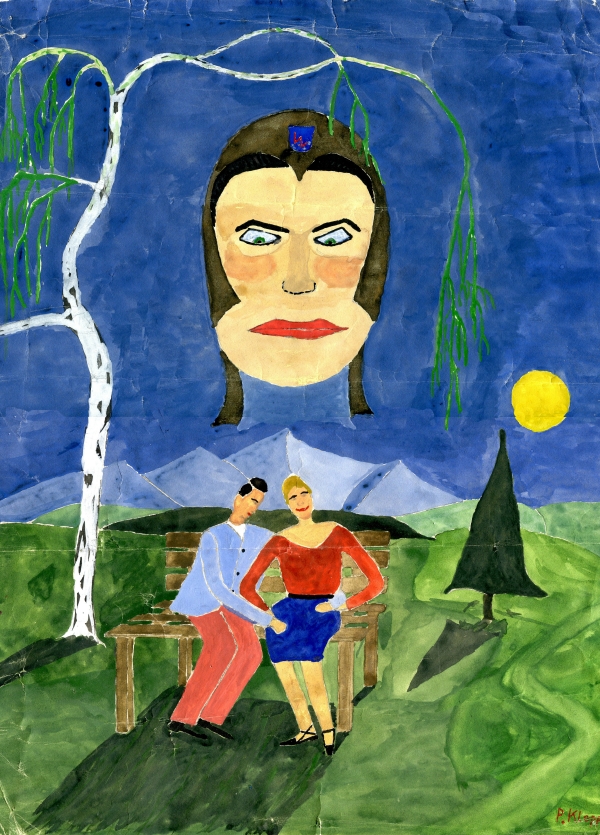
At times when I felt in a creative mood, I would open the metal box with a dozen or so water colors and try my untrained hands to paint a picture often with a futuristic theme inspired by my voracious reading of science fiction novels. One picture (see above) depicts a romantic scene showing a young couple sitting on a park bench under the light of the full moon. High above the horizon towers the head of a helmeted space woman of a distant century in the future, whose envious eyes are glaring down on the romantic couple below.

          Wilhelm, my classmate, came to school from a neighboring town. His father produced apple juice, with which he tried to compete with the popular Coca Cola product that was making economic inroads into the German beverage market. Wilhelm once demonstrated in our school how corrosive coke was by filling two glasses, one with his father’s apple juice and the other with coke. He then threw an iron nail into each glass. In the following week, when we entered the chemistry lab, we were astounded by what we saw. The nail in the glass filled with coke was completely encrusted with rust, whereas the one in the apple juice was still shiny and unaffected. However, we failed to see the connection to the possible ill effects that the popular drink might have on our sensitive stomach linings.

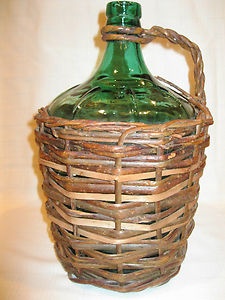
          It was about two weeks before Christmas, when Wilhelm came up to my apartment and brought me a 10-liter jug of apple juice. I placed it on the hot water radiator. Without the aid of a wine making kit with its expensive accessories we embarked on producing a cider by letting Mother Nature do the job. After only a few days I could report to my friends in school that bubbles were rising in the bottle, a certain indication that the process of fermentation had begun. Hans, Helmut, Wilhelm and I were already looking forward to our Christmas break party with the potent apple wine in the making. Soon the bacteria finding ample food in the juice and turning the sugar into alcohol multiplied a million times over generating CO2 at first weakly fizzing, then growing into a crescendo very much like the sound of rushing waters. Finally the bacteria had done their duty, and the homemade cider was ready for the party. School was out. In the New Year the final race would come to the finish line. The dreaded written and oral exams were looming on the horizon. So we four all felt the need to let go and put aside for a while our worries and graduation blues. I had put the jar outside into the wintry air on the balcony to chill the brew into a refreshing drink. We made ourselves as comfortable as possible in my tiny room. My three friends were sitting on the couch that converted into a bed and I sat on the only chair at my desk, whose prominent occupant was the giant jug with its delicious content. I poured the cider into coffee mugs. There were no glasses in the mini-kitchen. At first we had a serious talk about our plans for the future. The classroom genius Hans wanted to enroll at the Marburg University to study nuclear physics; Helmut, the lawyer’s son, was seeking a position in economics; Wilhelm planned to embrace a teaching career, and I had set my eyes on becoming an electronics engineer specializing in high frequency technology.

Aus Elektronik 62

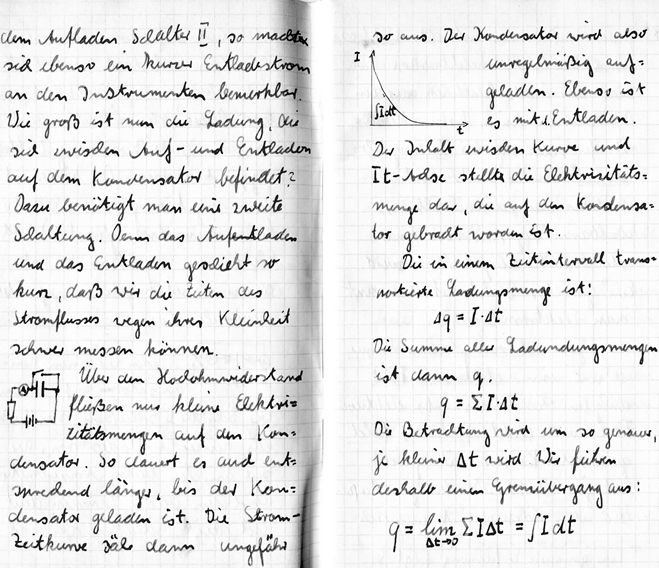
Peter’s ‘Engineering Notes’ on Basic Electricity – 1962

 I poured us another cup of that deceptive cider that tasted like a refreshing fruit drink but carried a powerful punch. Hans tuned my guitar and starting picking a few melodies. Most Siemens workers in the building had gone home to their families. The apartment building was almost devoid of people. So there was nobody we would disturb with our singing. After another cup we had reached the point where singing had become the necessary ingredient for the continued success of the party. The vocal chords well lubricated by the smooth drinks were ready to metamorphose us into a cheerful bunch of young men.

Wine Jug

Our home made cider would not have earned any prizes. But it was potent.

To the great delight of my friends, after we had gone through our favorite scouting and traveling songs, I offered to sing a spiritual to express my sentiments over our oppressive teachers in school: “When Israel was in Egypt’s land, let my people go. Oppressed so hard, they could not stand …”, which I sang with the deepest voice I could muster without floundering. Now Hans injected rhythm into the life of the party and played masterfully one of the Flamenco style pieces with the beats being pounded vigorously on the guitar body. “That was the rendition of our friend and maestro worthy of another drink”, I said. By now the content of the 10-liter jug had dropped to about the halfway mark. Suddenly Helmut got up and said he had to go to the bathroom. The way he staggered into the hallway made it clear that he had already had too much to drink. Someone said, “I hope he’ll find the toilet in time. He looks ‘blau’ (German slang for drunk) to me!” Now one must know that in Germany you locked the bathroom door with a key. Poor Helmut must have taken it out and dropped it on the floor. All of a sudden we heard him call, “Let me out! You locked me in!” We rushed into the hallway and tried to convince him that he was the one who locked himself in and that he would have to find the key. “It is not in the lock”, he complained.

          “Then it must be on the floor. Look for it”, we replied. Finally he located the key. What came next is incredible. Helmut’s level of intoxication was so far advanced that his eye-hand coordination was severely hampered. He was unable to insert the key into the keyhole. Imagine the hilarious scene, in which we three friends tried very hard to give him directions how to put the key into the hole. I was just about going to call the janitor for help, when Helmut managed to open the door. He looked pale and disgruntled, whether it was out of embarrassment or intoxication, we could not tell. Without saying good-bye he took his coat and left. Needless to say the bathroom incident had put a damper on the jolly time we were having. Nobody felt like having another drink. The party was over.

Friedrich Wilhelm Ferdinand Klopp (1879-1952) – Part VI

Ferdinand Withdraws from the Harsh Realities of Postwar Germany

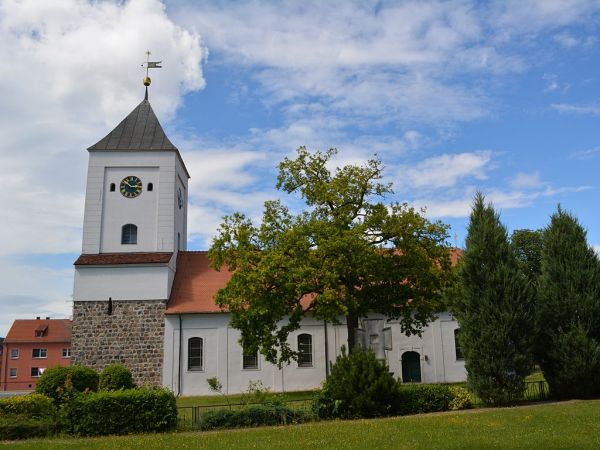
Before the end of WWII, perhaps in 1944, Ferdinand purchased a larger house in Rhinow, Brandenburg, to secure it as a retirement home. The former hotel, which the now 65 year-old Ferdinand remodeled for private residential use, was located at Dorfstraße 58. Here the entire Ferdinand Klopp family experienced the end of war and a new beginning. The family at that time also included their daughters and sons-in-law, who had returned from the war and POW camps.

Rhinow Town Church - Photo Credit: wikipedia.org

Rhinow Town Church – Photo Credit: wikipedia.org

The invasion forces of the Red Army declared the building as a Soviet command post. Family documents and photos were permanently lost during the ‘liberation’. The Polish language skills of mother Rosalie, who had been speaking German for the past 50 years and is being described as kind-hearted, hospitable woman, kept her daughters out of harm’s way from the Soviet soldateska notorious for raping girls and women of all ages during and after the end of WWII.

When for property owners life became more and more unbearable in the GDR, embittered Ferdinand began to give away his furniture, farm animals and estates to the people in Rhinow. He transferred title of his house at Dorfstraße 58 to his daughter Margarete Rocke and her two children.

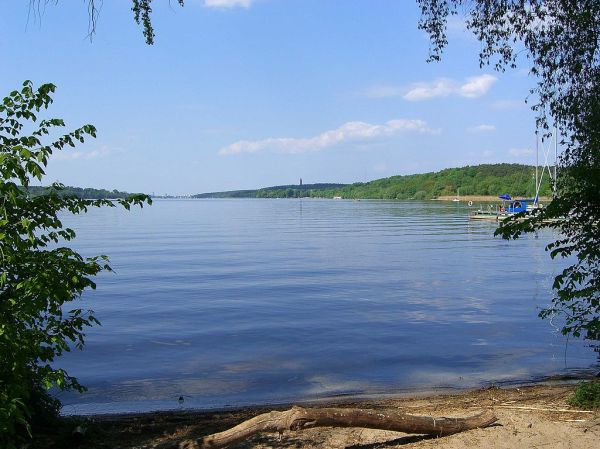
River Havel at Lake Wannsee - Photo Credit: wikipedia.org

River Havel at Lake Wannsee – Photo Credit: wikipedia.org

Given to cynicism, he withdrew from the harsh reality of life under the Communist regime and moved with his wife into a little cottage with a flower garden back into the village Strodehne near Rhinow. There he lived for another year, during which time he indulged in his angling passion at the River Havel. On July 17, 1952 his wife found him dead lying in her flower beds. At the age of 73 he had suffered a fatal heart attack.

Descendants:

  1.  Margarethe
  2. Charlotte
  3. Gertrud
  4. Victoria Luise
  5. Meta
  6. Rosel


Chapter 19 of the P. and G. Story – Part I


Alone at the Siemens Apartment Building


“Study hard, for the well is deep, and our brains are shallow.”

Richard Baxter

In search for a place to spend the next six months Mother had found a mini-apartment in a huge building complex that had been specifically built for single workers in the local Siemens factory. Small it was indeed. The room I called my own covered hardly an area of fifteen sq. m. I shared the hallway, which contained a few basic kitchen facilities, with an older man next door, who fortunately moved out before Christmas with no one moving in to replace him. On the right side of the hallway was the common bathroom with a shower instead of a bathtub. In spite of the limited space I was extremely happy to have my own four walls with a large window and even a tiny balcony facing the rising sun.

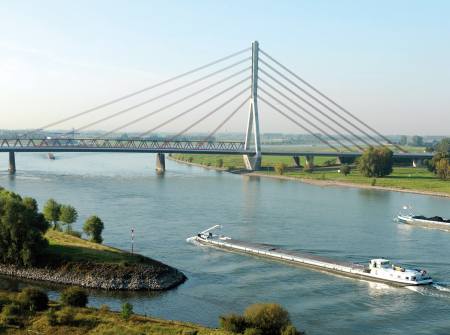
Wesel at the Rhine

Wesel at the River Rhine with the New Bridge

It was from here that I wrote my first letter to Biene’s twin brother Walter at the end of August. As promised I included schematics of electronic circuits that I thought might be of interest to him. Of course, I had not forgotten Biene, whose image began to fade in my mind, but whose idealistic afterglow I cherished all the more. “And do not forget to greet your parents and Biene from me,” I ended this letter and all subsequent ones. Walter promptly replied and inserted an advanced RC transistor diagram that was far too complex for me to understand or to be useful for my simple projects. But the desired connection had been made, and before long Biene and I were corresponding with each other. There were two important aspects to the letters, which were traveling back and forth between Velbert and Wesel. One, they opened a window and brought bright sunshine and fresh air into the often gloomy, stuffy interior of my soul; two, due to the physical distance we could write about our thoughts and feelings, wrapped up in a flowery language, carefully worded and lovingly presented. We opened our hearts to each other and discovered that we both had a romantic vein that was rich and seemed to be inexhaustible. In short, the seeds of our developing relationship had fallen on fertile ground. For me in particular, the correspondence proved to be a journey into the wonderful world of self-discovery. I enjoyed creating written tableaus depicting dream-like, often melancholic scenes with fact and fiction imaginatively intertwined. They engendered in a perpetual cycle an ever increasing sense of self-awareness. Reminiscing about a stopover at a railroad station I once wrote her.

Wanne-Eickel 22:10

          Over the railroad station sways the moon. Its pale light flickers through dense patches of fog, and the moist shimmering rails vanish behind the impenetrable wall of uncertainty. I am pacing the empty platform up and down, three minutes forth, and three minutes back. Slowly, hesitatingly the heavy hand of the clock advances from one-minute mark to the next. Lost in thoughts I look up to the moon. The cold, damp forces of nature’s power attempt to snuff out its golden light. But it is not you, good moon, who are eluding me, you, the embodiment of all my happiness. No, around me lurk the cold forces; they seize me with their moist fingers. Oh happiness, you would always dwell among people, if darkness were not all around us that hides you and saddens my heart. Two lights emerge from out of the fog. They have a goal; they glide over solid tracks. I can put my trust in them. In vain the dense fog is clutching to hold the iron vehicle; it cannot delay its course. I step onboard. 22:20

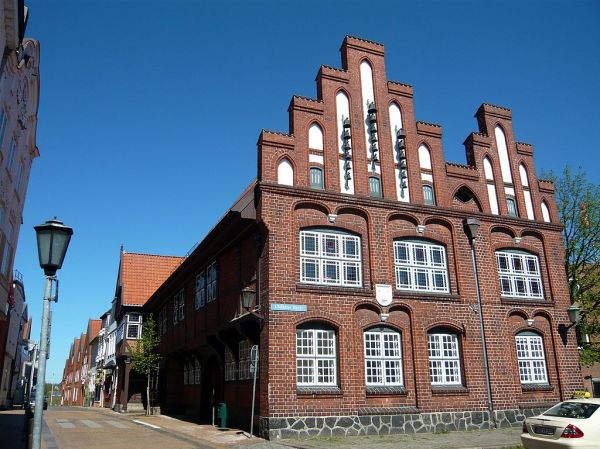
Old City Hall of Rendsburg - Photo Credit: wikipedia.org

Old City Hall of Rendsburg – Photo Credit: wikipedia.org

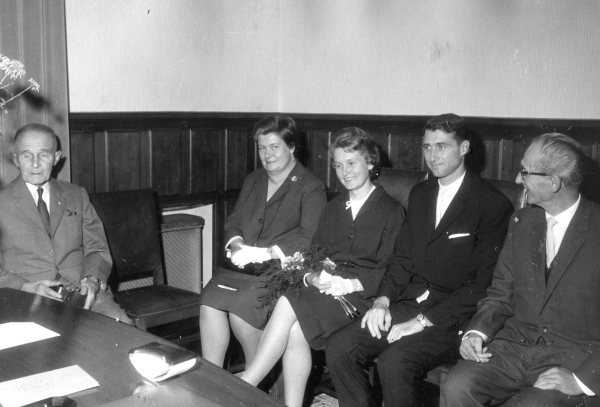
Shortly after I had written the letter to Biene with its sentimental railroad story, I traveled by train to Rendsburg in Northern Germany to attend my eldest brother’s wedding. Karl’s bride was Ingrid Lehmann, born in Königsberg (now Kaliningrad), East Prussia, whose father was a retired sea captain. Karl was making sure that everything was prim and proper for the festivities. He checked out my clothes and appearance very carefully and was quite pleased with the new suit I was wearing. Even though I had shaved in the morning, Karl spotted the beginning of new growth darkening the area around my chin and requested for the sake of the important event another shave. Putting my usual stubbornness aside, I complied with his request.

Wedding Ceremony at City Hall

Wedding Ceremony at City Hall

With almost all close relatives present it was a memorable wedding. At the banquet Captain Lehmann and Uncle Günther solemnly delivered words of wisdom, reflections on their lost home provinces in the East, fine speeches, which were recorded on tape and can still be heard today on audio CD. It was here in Rendsburg that for the first time I was seriously contemplating about what it would be like to tie the knot and form a life-long partnership in marriage. I also began to see that hard work at school and university must come first to realize such dreams. I thought that as an electronics engineer I might have a fairly good income to support a wife and family.

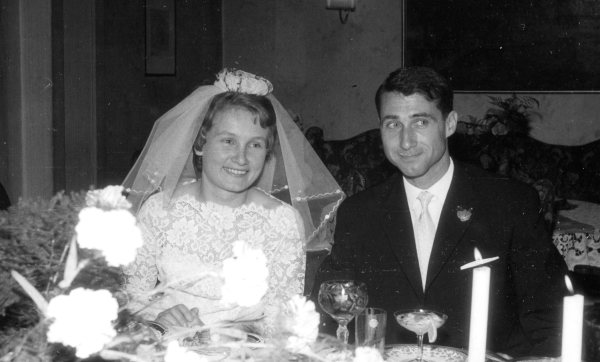
Karl and Ingrid Klopp (Lehmann) at the Wedding Banquet

Karl and Ingrid Klopp ( née Lehmann) at the Wedding Banquet

Friedrich Wilhelm Ferdinand Klopp (1879-1952) – Part V

Mother Emma and Ferdinand

Klopp Family Tree

Chart I – II

In 1923 Ferdinand acquired the inn “At Recreation” (Zur Erholung) in Hainrode near Sangerhausen. Connected to and supporting operation of the inn was a small farm. Here mother Emma, often traveling from place to place, found a reliable stop-over and return station. She was very thankful to her son for support and encouragement. Ferdinand’s daughters had fond memories of the idyllic hours, when Grandma talked about the olden days and taught them how to dance.

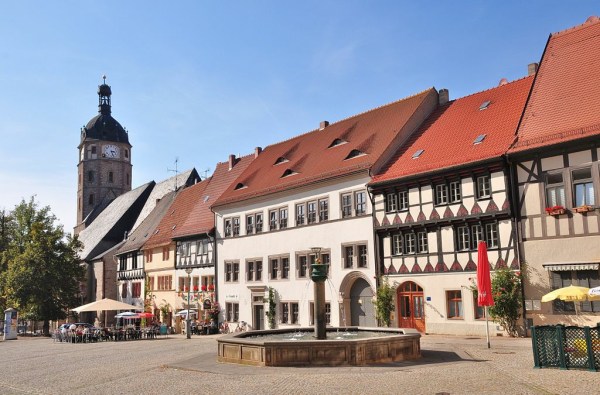
Sangerhausen in the Harz Mountains - Photo Credit: wikipedia.org

Sangerhausen in the Harz Mountains – Photo Credit: wikipedia.org

Ferdinand sent the older daughters for their education to a boarding school in Magdeburg, while the youngest daughters Meta and Rosel to the Berlin Lette-House for their trade diploma. There Ferdinand’s sister Anna had already received her education  around the turn of the century.

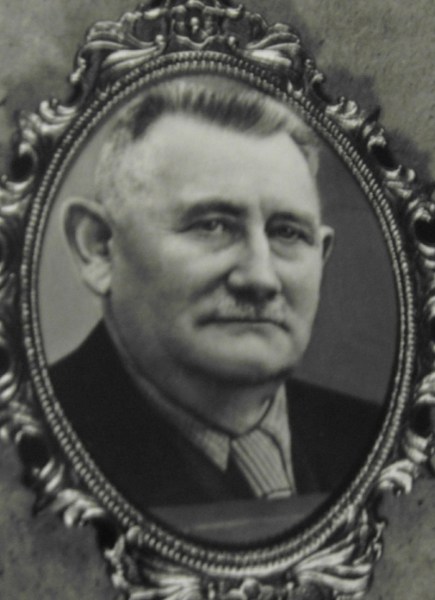
Ferdinand Klopp

Ferdinand Klopp

Ferdinand sold the inn in Hainrode in 1930 and acquired a private house in Bad Saarow-Pieskow at Lake Scharmützel. Perhaps in conjunction with his sister Jula’s auctioning off of her hotel, Ferdinand abandoned his property again in 1930. He moved with his wife Rosalie and his two daughters – the other 4 were already on their own – to St. Andreasberg in the Harz Mountains. There he managed for three years the “Hotel at the City Park” (Hotel zum Stadtpark). The property was destroyed in a bombing raid. Already in 1939 the family had moved to Nordhausen.  The author of the Klopp Family Chronicles, my distant cousin Eberhard, reported that the daughters Meta and Rosel refused to answer questions as to how their father managed to pay for their upkeep and how he had spent the years during the Nazi era.

Walter K. Panknin – Wie ich die USA sehe Part III

Guest Post by Gertrud’s Nephew Norbert Werner

Reifferscheid Family Tree – Chart III – III & IV
 Blog Contribution in German by Norbert Werner

Walter K. Panknin – Wie ich 1989/90 in den USA erlebt habe

(Wie ich die USA sehe – Teil III)

Zusammengestellt von Norbert Werner

Vorwort: Ende 1989 begannen unruhige Zeiten in der DDR. Die Menschen gingen auf die Straße und demonstrierten für einen „besseren Sozialismus“. Mit dem Anschluss an die Bundesrepublik und der Wiedervereinigung im Oktober 1990 kamen viele neue Sorgen und Probleme auf uns bisher recht unmündige Bürger zu. Ich suchte mir in Walter einen Gesprächspartner, der mir manches erklären und vielleicht auch einen Rat geben sollte.

Arlington, 30.9.1989

Ja, meine Lieben, auch ich habe in der Presse verfolgt, was in Deutschland so vor sich geht. Mehr als einmal habe ich an Euch alle gedacht und mich in Eure Situation versetzt… Ich bin ziemlich sicher, dass sich der in der UdSSR begonnene Prozess der Liberalisierung nicht mehr aufhalten lässt und über kurz oder lang auch in der DDR fortsetzen wird. Ein einzelnes Land, so groß oder klein wie die DDR, kann nicht auf Dauer in so verkrusteten Strukturen bestehen, vor allem nicht, wenn ja praktisch alle Nachbarländer, alle Verbündeten, alle Vorbilder von früher einen neuen Kurs einschlagen. Die Menschen sind einfach mündiger geworden. Zu lange hat man ihnen einzureden versucht, dass schwarz=rot ist, das ein Kreis viereckig ist. Lange, allzu lange haben sich die Menschen damit abgefunden, haben sich ihren eigenen Teil gedacht. Doch irgendwann kommt einfach mal der Punkt, wo man offen sagen dürfen will: Schwarz ist schwarz und rot ist rot, und ein Kreis ist rund. Es ist im Grunde die in jedem Menschen verbleibende „Würde“, die sich nicht total unterdrücken lässt. Es ist die Würde und das eigene Streben, ausreichend selbst bestimmen zu können was man tut, wohin man sich entwickelt, was man wird. Ich bin absolut sicher, dass in kurzer Zeit, in wenigen Monaten, maximal 1-2 Jahre, auch in der DDR ein Umdenken und ein drastischer Wandel stattfinden wird. Ich hoffe nur, dass dieser Wandel einigermaßen geordnet, ohne dramatische Vorgänge erfolgen wird. Wie es gehen kann hat man in Russland, Polen, Ungarn gesehen.
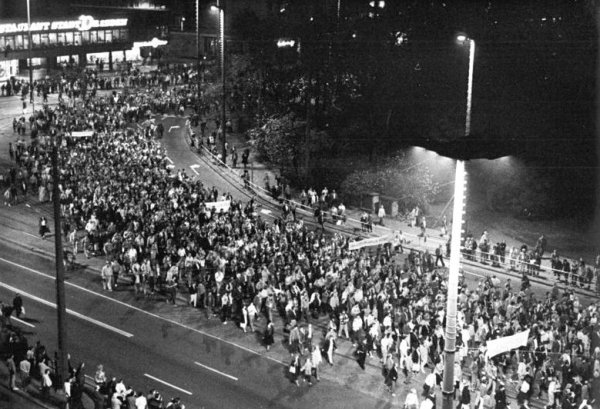
Leipzig,Montagsdemonstration - Photo Credit: wikipedia.org

Leipzig,Montagsdemonstration – Photo Credit: wikipedia.org

Arlington, 23.10.1989

Leber N., liebe Ch., ich war in den letzten Jahren vielleicht nicht so oft bei Euch, aber doch oft genug, um mir ein sehr plastisches Bild von dem machen zu können was Euch in diesen Wochen und Monaten berührt. Auch hat uns unser reger Schriftwechsel im letzten Jahr noch näher zueinander gebracht, als wir ohnehin schon waren. Man braucht nur die Anzahl der Flüchtlinge der letzten Monate durch die Bevölkerungszahl zu dividieren um sofort zu sehen, dass fast ein jeder ganz persönlich betroffen ist. Plötzlich fehlt ein Freund, ein Kollege, ein Bekannter. Auch kann ich Deine Wut und Enttäuschung verstehen, dass gerade diejenigen geflohen sind, denen es noch am besten ging. Mit Deiner trotzdem so besonnenen Haltung scheinst Du gottseidank nicht allein dazustehen. Wie ich in der Zeitung gelesen habe, muss vor allem der große Protestumzug in Leipzig sehr verhalten und besonnen gewesen sein.
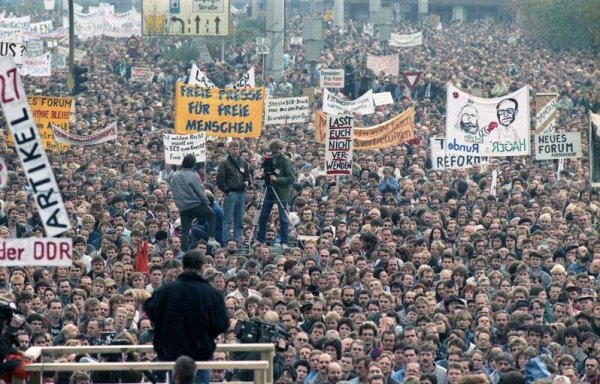
Berlin Demonstration - Photo Credit: wikipedia.org

Berlin Demonstration – Photo Credit: wikipedia.org

Arlington, 9.11.1989

Meine Lieben,

mein Brief von gestern ist noch nicht abgeschickt und die Ereignisse haben sich überschlagen. Heute ist die Mauer gefallen. Mir fehlen die Worte, um Euch meine Empfindungen und Gefühle zu schildern. Was soll ich in diesen Stunden denken und schreiben, die in die Geschichte Deutschlands eingehen und die uns persönlich alle so tiefgreifend beeinflussen werden. Ich wünsche Euch Kraft, Besonnenheit und einen klaren Kopf, um in dieser Zeit weiterhin das richtige zu tun. Ich bin bei Euch allen in meinen Gedanken und bleibe Euer Walter.
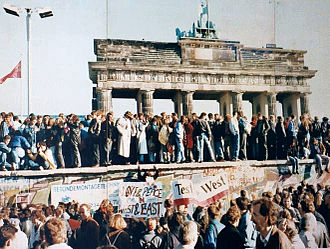
Fall der Mauer - Photo Credit: wikipedia.org

Fall der Mauer – Photo Credit: wikipedia.org

Arlington, 18.12.1989

Meine Lieben, der Versuch, die Ereignisse der letzten Wochen zu beschreiben und zu charakterisieren führt mich hinweg von Eurem und meinem Alltag. Doch eines Tages werden eure Kinder sagen können: „Ich habe es erlebt- ich war dabei!“ Ich hoffe und wünsche, dass die Ereignisse in der DDR sich niemals wieder umkehren werden. Ich weiß, das der Westen sicherlich nicht Sinnbild alles Guten ist, doch ich bin aus tiefstem Herzen überzeugt, dass Ihr alle einen Schritt in die richtige Richtung tut. Es wird Euch alle fordern,- es wird nicht leicht sein,- doch was war leicht in der Vergangenheit? Es wird Euch helfen auf lange Sicht. Und wenn ich sage „lange Sicht“, so meine ich die nächsten 5-10 Jahre.

Arlington, 9.10.1990

Aus der Ferne, doch in Gedanken war ich voll dabei, habe ich die Vereinigung unserer beiden Staaten erlebt und mitverfolgt. Zwei Staaten, wie sie sich gegensätzlicher kaum vorstellen lassen, die aber trotzdem zusammengehören Dies ist, jeder weiß und spürt und erlebt es, kein leichter Prozess. Für beide Seiten. Ich habe vor Kurzem an die Zeit nach 1945 gedacht, als meine Eltern im Alter von 53 bzw. 56 Jahren mit zwei 10jährigen Kindern und zwei Koffern ein neues Leben begannen. Ich glaube, wir haben ca. 4 oder 5 Jahre in einer Einzimmer-„Wohnung“ gelebt, ehe wir die erste Wohnung bekamen. 1961- im Jahr des Mauerbaues- machten wir unsere allererste Urlaubsreise nach Italien an den Gardasee.