Anna Rosa Klopp (1881 – 1924) – Part I

Introducing the Fifth Child of Friedrich and Emma Klopp

Klopp Family Tree Chart I – II

Rosa’s Marriage with August Diesing

On June 6, 1881 Rosa was born in Jersleben. Her father P.F.W. Klopp had just given up the mill at Osterweddingen due to an interim phase at his trade. In his home town Jersleben he recovered sufficiently to prepare the short-lived enterprise of the ‘Düppler’ mill at Olvenstedt. Since the family returned in 1885 via Magdeburg-Neustadt to Jersleben, Rosa was introduced to the school in 1887 either there or in Wolmirstedt.

Stassfurt - Photo Credit: wikipedia.org

Stassfurt-Atzendorf – Photo Credit: wikipedia.org

She did not resettle with her mother Emma in Elsenau, West Prussia, but married in 1903 the carpenter and later construction master August Diesing (1875-1939) of Atzendorf near Staßfurt. At the time of the wedding he was employed at a local construction company.

Rosa and August had seven children: Werner, Elsbeth, Rosa, Alice, Erika, Willy, and Fritz. The eldest son, most likely born in 1903, wears a marine uniform on a photo from 1920.

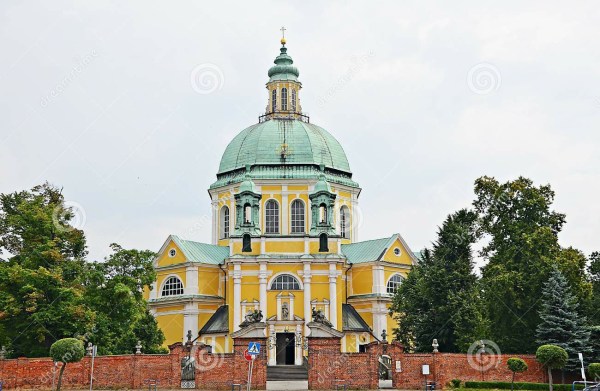
Monastery of Gostyn - Photo Credit: dreamstime.com

Monastery of Gostyn – Photo Credit: dreamstime.com

Since 1905 at the latest, the family was residing in Gostyn, Posnan and participated in 1908 in the acquisition of a dairy business lease with brother-in-law Ferdinand Klopp (1879 – 1952, see previous posts).  Daughter Rosa, known as Rosel, was born there in 1905. Also all subsequent children were born there, before the region became part of the re-established country of Poland.

In 1919 the Diesing family established themselves on a temporary basis at Lebus west of the River Oder. Carpenter Diesing also appeared to have acquired land and worked on it for a while in the agricultural domain.

Chapter 19 of the P. and G. Klopp Story – Part III

From Graduation into Carnival

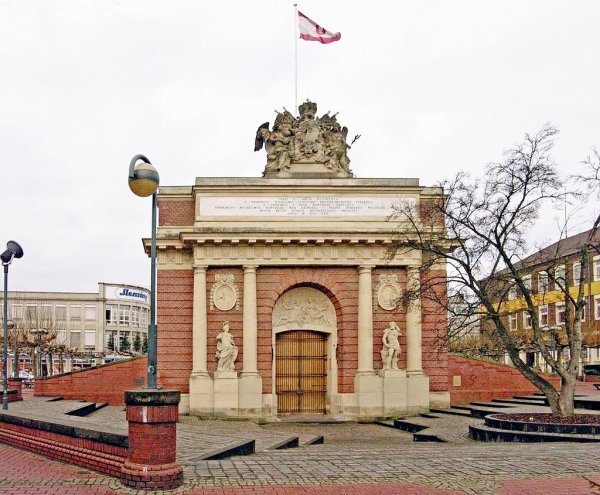
Wesel 'Berlin Gate' - Photo Credit: wikimedia.org

Wesel ‘Berlin Gate’ – Photo Credit: wikimedia.org

When school continued in the first week in January, I avoided all distractions and focused all my energies on last minute studies. By now the school administration had let us know the subjects and topics, in which we were to receive our oral examinations. For me it was Charles V in History and Calculus in Mathematics. In the remaining four weeks I emptied an entire bottle of vodka, which one could take as evidence for my industriousness. I rarely missed to fulfill my daily work quota. Indeed I would go sometimes overboard and even skip my time for relaxation with guitar or harmonica. One morning I woke up late. I was shocked to discover that I had forgotten to set the alarm clock. School had already started, so I quickly jumped into my clothes, grabbed my books, and without having had breakfast I raced to school in record time and barged into the classroom, where my homeroom and German teacher Herr Aufderhaar had just begun a lesson on German romanticism. Because he was bald and also taught religion, we had given him the nickname ‘Kahler Jesus’, which means Bald Jesus in English. He took one look at me and instead of being angry about my tardiness showed remarkable understanding for my circumstances. He teased me good-naturedly and remarked to the entire class, “Klopp is not just late for class. He did not even shave!”

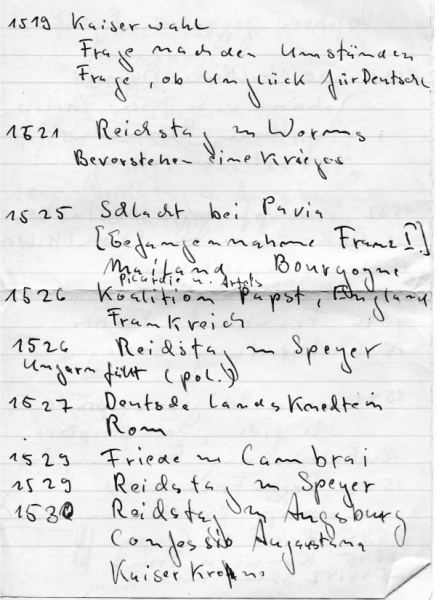
My Notes on Charles V

My Notes on Charles V

 For the oral exam in History I was well prepared. The main topic that I was given was the era of Reformation with special consideration to the way Emperor Charles V dealt with the schism that threaten to tear apart the Holy Roman Empire of German Nations. I had about thirty minutes to write down a few notes for my presentation. Then when my turn had come and I was led into the somber exam room, I described in poignant details the political struggles of the emperor against France and the Turks and the frustrations he, as a good catholic, experienced with the rapid spread of the protestant revolt against the corrupt Church of Rome. I was no longer the timid student who once stood trembling with fear in front of our history teacher. I boldly and convincingly expounded all the pertinent factors that determined Germany’s future historical and religious landscape. I took the entire time allotted for the oral exam. So the committee of principal and teachers had no time to ask any unsettling questions at the end. I walked away with the confident feeling that I had consolidated my satisfactory standing in History. Also in Math I was able to prove that I deserved a better final grade. My task was to find a solution for the total amount of work required to dig a cylindrical hole of a certain depth. Herr Müller, my beloved math teacher in the senior division, guided me through this difficult problem of integration. He so cleverly posed the right questions that they contained valuable hints allowing me to bring the session to a successful conclusion. It would have been nice to express my gratitude to an excellent teacher some fifty years later. Unfortunately, while I was searching the school Website I found out that he had passed away the year, before I started to write our family history.

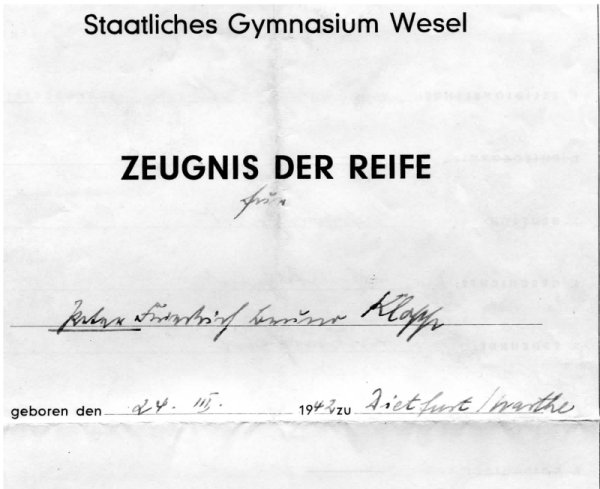
Front Page of my Graduation Diploma

Front Page of my Graduation Diploma

With the prestigious graduation certificate (Abitur) in our possession we had access to many postsecondary programs offered by the German universities. As for me, two years of military service at the Bundeswehr (West German army) had to come first. In those days it was still possible to enlist as a volunteer for a period of 24 months instead of the mandatory 18 months with the advantage of receiving a handsome salary, becoming an officer of the reserve, and being able to choose an army unit in keeping with one’s technical abilities. I opted for service in the signal corps, a choice that definitely reflected my interest in electronics and communication technologies.

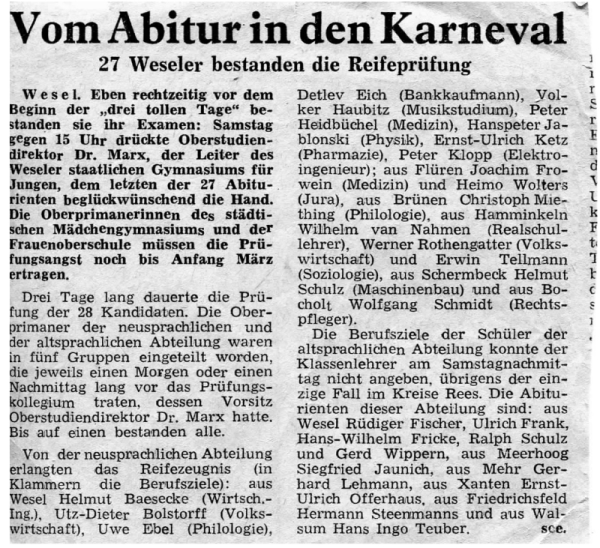
Newspaper Clipping with Names of the Graduates

Newspaper Clipping with Names of the Graduates

It so happened that the graduation exercises had ended exactly at the start of the carnival season. Being together one last time with my friends and classmates, before we would scatter into all directions, I made full use of the golden opportunity to celebrate the great milestone and to lose myself in the relaxed atmosphere of the dance hall, forgetting the trials and tribulations before graduation and not worrying for the time being about the future. When the time of drinking, dancing and attending late night parties was over, I was physically exhausted, but for the moment I felt free as if a heavy burden had been taken off my shoulders.

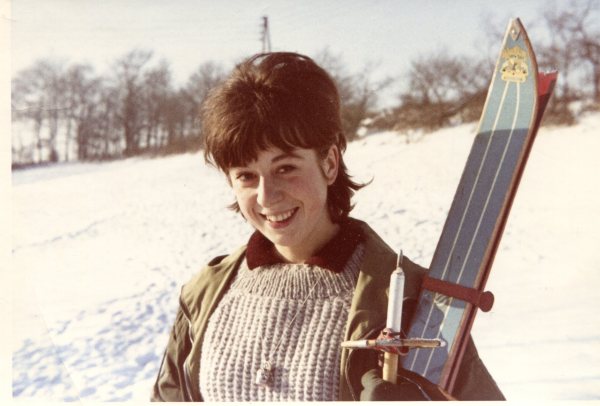
Biene with her first pair of skis - Winter 1963

Biene with her first pair of skis – Winter 1963

I had not forgotten Biene. Now with more time at my disposal I wrote her a letter bringing her up to speed on my success at school and the tumultuous days at the carnival festivities. But what mattered the most I found the courage to express my feelings about what was so special about her in my mind. At the campground in the spring the year before I had discovered in her appearance the natural beauty that needed no cosmetic enhancement with rouge, lipstick or artificial hair color. Biene for me embodied the ideal image of a girl. In the letter I gave her my father’s address hoping that she would reply.

Addition to Post ‘One Drink Too Many’ in German

Guest Contributor: Norbert Werner

Reifferscheid Family Tree – Chart IV – IV

Kommentar zum Post: One Drink Too Many

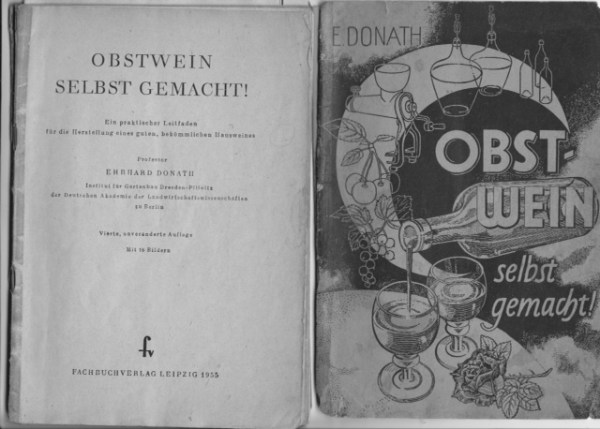
Eine wirklich sehr heitere Geschichte. Dazu möchte auch ich meinen Kommentar abgeben: Bekanntlich lebten wir in der DDR ja in einer “Mangelwirtschaft”, obwohl man das, streng genommen, auf den Alkohol nicht immer beziehen konnte.(Ist ein extra Thema!) Aber bezüglich Wein gab es oft nur übersüßen Weißwein aus Ungarn, der zu heftigem Kopfschmerz führte. Da wir in den Gärten unserer Großfamilie Obst im Überfluss hatten, begannen wir bald mit der eigenen Herstellung von Wein aus den verschiedensten Früchten: Apfel, Sauerkirsche, Hagebutten…

!cid_74D6A3E9-450D-47A7-98EA-36B96403E6E6

Die Äpfel wurden in unserem Waschhaus in Stücke geschnitten und dann mit einer handelsüblichen Küchenmaschine zu Brei verarbeitet. Zum Trennen von Saft und Fruchtfleisch haben wir die Wäscheschleuder benutzt (die damals noch nicht in der Waschmaschine integriert war). Dann kam alles in große 10- und 20-Liter-Ballons, mit Hefe und Zucker versetzt und mit einem Gärröhrchen verschlossen. So standen sie dann wochenlang in Küche, Schlafzimmer,… herum und mussten auch regelmäßig umgefüllt werden. Dazu namen wir einen Kunststoffschlauch (ähnlich der Benzinleitung beim “Trabant”!), saugten mit dem Mund an und ließen es dann im freien Fall laufen. Mein Sohn (damals im Kindergartenalter) machte das viel Spaß und er half seinem Onkel oft dabei. So wunderten wir uns zunächst, dass er auf der Heimfahrt mit dem “Trabant” fröhlich sang und erzählte, was sonst nicht seine Art war. Er hatte sehr lange an dem Schlauch gesogen und es war ein süßer Saft!!

Friedrich Wilhelm Ferdinand Klopp (1879-1952) – Part VI

Ferdinand Withdraws from the Harsh Realities of Postwar Germany

Before the end of WWII, perhaps in 1944, Ferdinand purchased a larger house in Rhinow, Brandenburg, to secure it as a retirement home. The former hotel, which the now 65 year-old Ferdinand remodeled for private residential use, was located at Dorfstraße 58. Here the entire Ferdinand Klopp family experienced the end of war and a new beginning. The family at that time also included their daughters and sons-in-law, who had returned from the war and POW camps.

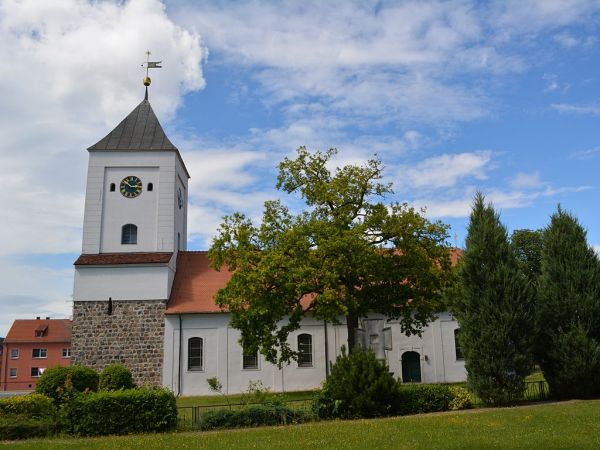
Rhinow Town Church - Photo Credit: wikipedia.org

Rhinow Town Church – Photo Credit: wikipedia.org

The invasion forces of the Red Army declared the building as a Soviet command post. Family documents and photos were permanently lost during the ‘liberation’. The Polish language skills of mother Rosalie, who had been speaking German for the past 50 years and is being described as kind-hearted, hospitable woman, kept her daughters out of harm’s way from the Soviet soldateska notorious for raping girls and women of all ages during and after the end of WWII.

When for property owners life became more and more unbearable in the GDR, embittered Ferdinand began to give away his furniture, farm animals and estates to the people in Rhinow. He transferred title of his house at Dorfstraße 58 to his daughter Margarete Rocke and her two children.

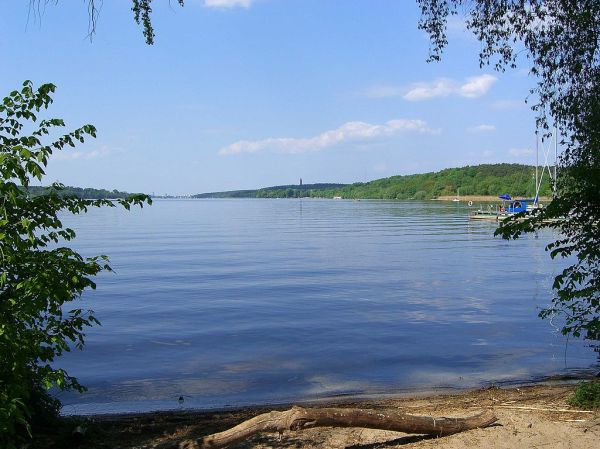
River Havel at Lake Wannsee - Photo Credit: wikipedia.org

River Havel at Lake Wannsee – Photo Credit: wikipedia.org

Given to cynicism, he withdrew from the harsh reality of life under the Communist regime and moved with his wife into a little cottage with a flower garden back into the village Strodehne near Rhinow. There he lived for another year, during which time he indulged in his angling passion at the River Havel. On July 17, 1952 his wife found him dead lying in her flower beds. At the age of 73 he had suffered a fatal heart attack.

Descendants:

  1.  Margarethe
  2. Charlotte
  3. Gertrud
  4. Victoria Luise
  5. Meta
  6. Rosel


Friedrich Wilhelm Ferdinand Klopp (1879-1952) – Part V

Mother Emma and Ferdinand

Klopp Family Tree

Chart I – II

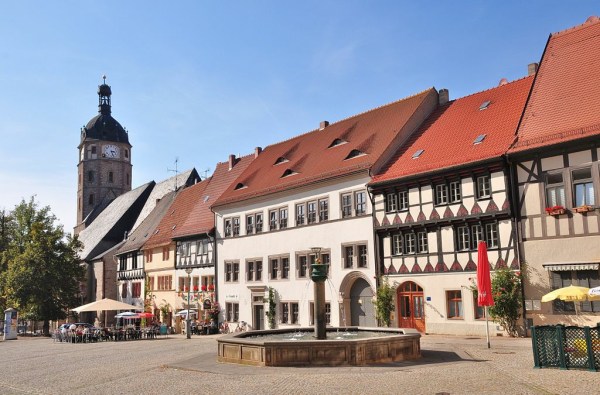
In 1923 Ferdinand acquired the inn “At Recreation” (Zur Erholung) in Hainrode near Sangerhausen. Connected to and supporting operation of the inn was a small farm. Here mother Emma, often traveling from place to place, found a reliable stop-over and return station. She was very thankful to her son for support and encouragement. Ferdinand’s daughters had fond memories of the idyllic hours, when Grandma talked about the olden days and taught them how to dance.

Sangerhausen in the Harz Mountains - Photo Credit: wikipedia.org

Sangerhausen in the Harz Mountains – Photo Credit: wikipedia.org

Ferdinand sent the older daughters for their education to a boarding school in Magdeburg, while the youngest daughters Meta and Rosel to the Berlin Lette-House for their trade diploma. There Ferdinand’s sister Anna had already received her education  around the turn of the century.

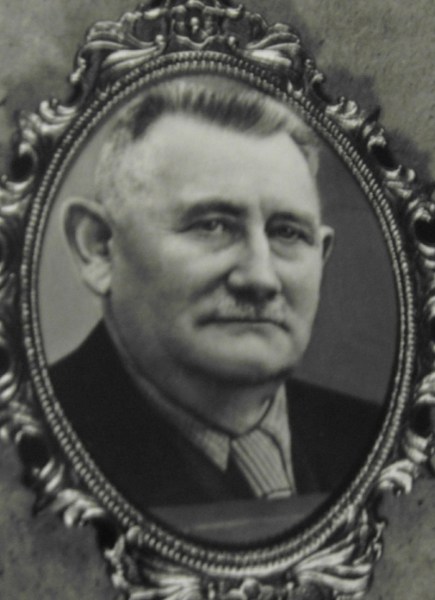
Ferdinand Klopp

Ferdinand Klopp

Ferdinand sold the inn in Hainrode in 1930 and acquired a private house in Bad Saarow-Pieskow at Lake Scharmützel. Perhaps in conjunction with his sister Jula’s auctioning off of her hotel, Ferdinand abandoned his property again in 1930. He moved with his wife Rosalie and his two daughters – the other 4 were already on their own – to St. Andreasberg in the Harz Mountains. There he managed for three years the “Hotel at the City Park” (Hotel zum Stadtpark). The property was destroyed in a bombing raid. Already in 1939 the family had moved to Nordhausen.  The author of the Klopp Family Chronicles, my distant cousin Eberhard, reported that the daughters Meta and Rosel refused to answer questions as to how their father managed to pay for their upkeep and how he had spent the years during the Nazi era.

Walter K. Panknin – Wie ich die USA sehe Part III

Guest Post by Gertrud’s Nephew Norbert Werner

Reifferscheid Family Tree – Chart III – III & IV
 Blog Contribution in German by Norbert Werner

Walter K. Panknin – Wie ich 1989/90 in den USA erlebt habe

(Wie ich die USA sehe – Teil III)

Zusammengestellt von Norbert Werner

Vorwort: Ende 1989 begannen unruhige Zeiten in der DDR. Die Menschen gingen auf die Straße und demonstrierten für einen „besseren Sozialismus“. Mit dem Anschluss an die Bundesrepublik und der Wiedervereinigung im Oktober 1990 kamen viele neue Sorgen und Probleme auf uns bisher recht unmündige Bürger zu. Ich suchte mir in Walter einen Gesprächspartner, der mir manches erklären und vielleicht auch einen Rat geben sollte.

Arlington, 30.9.1989

Ja, meine Lieben, auch ich habe in der Presse verfolgt, was in Deutschland so vor sich geht. Mehr als einmal habe ich an Euch alle gedacht und mich in Eure Situation versetzt… Ich bin ziemlich sicher, dass sich der in der UdSSR begonnene Prozess der Liberalisierung nicht mehr aufhalten lässt und über kurz oder lang auch in der DDR fortsetzen wird. Ein einzelnes Land, so groß oder klein wie die DDR, kann nicht auf Dauer in so verkrusteten Strukturen bestehen, vor allem nicht, wenn ja praktisch alle Nachbarländer, alle Verbündeten, alle Vorbilder von früher einen neuen Kurs einschlagen. Die Menschen sind einfach mündiger geworden. Zu lange hat man ihnen einzureden versucht, dass schwarz=rot ist, das ein Kreis viereckig ist. Lange, allzu lange haben sich die Menschen damit abgefunden, haben sich ihren eigenen Teil gedacht. Doch irgendwann kommt einfach mal der Punkt, wo man offen sagen dürfen will: Schwarz ist schwarz und rot ist rot, und ein Kreis ist rund. Es ist im Grunde die in jedem Menschen verbleibende „Würde“, die sich nicht total unterdrücken lässt. Es ist die Würde und das eigene Streben, ausreichend selbst bestimmen zu können was man tut, wohin man sich entwickelt, was man wird. Ich bin absolut sicher, dass in kurzer Zeit, in wenigen Monaten, maximal 1-2 Jahre, auch in der DDR ein Umdenken und ein drastischer Wandel stattfinden wird. Ich hoffe nur, dass dieser Wandel einigermaßen geordnet, ohne dramatische Vorgänge erfolgen wird. Wie es gehen kann hat man in Russland, Polen, Ungarn gesehen.
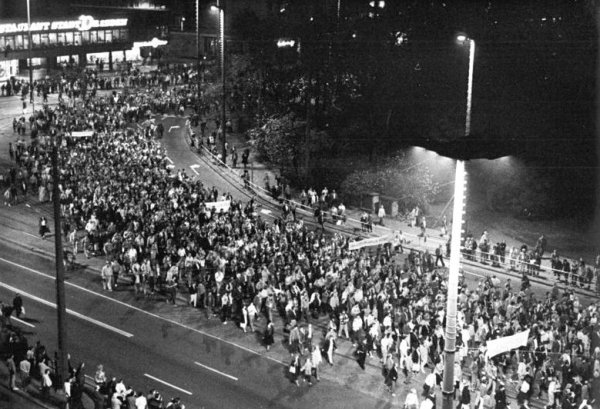
Leipzig,Montagsdemonstration - Photo Credit: wikipedia.org

Leipzig,Montagsdemonstration – Photo Credit: wikipedia.org

Arlington, 23.10.1989

Leber N., liebe Ch., ich war in den letzten Jahren vielleicht nicht so oft bei Euch, aber doch oft genug, um mir ein sehr plastisches Bild von dem machen zu können was Euch in diesen Wochen und Monaten berührt. Auch hat uns unser reger Schriftwechsel im letzten Jahr noch näher zueinander gebracht, als wir ohnehin schon waren. Man braucht nur die Anzahl der Flüchtlinge der letzten Monate durch die Bevölkerungszahl zu dividieren um sofort zu sehen, dass fast ein jeder ganz persönlich betroffen ist. Plötzlich fehlt ein Freund, ein Kollege, ein Bekannter. Auch kann ich Deine Wut und Enttäuschung verstehen, dass gerade diejenigen geflohen sind, denen es noch am besten ging. Mit Deiner trotzdem so besonnenen Haltung scheinst Du gottseidank nicht allein dazustehen. Wie ich in der Zeitung gelesen habe, muss vor allem der große Protestumzug in Leipzig sehr verhalten und besonnen gewesen sein.
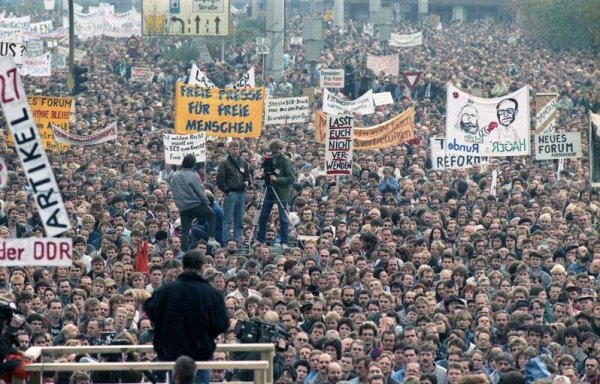
Berlin Demonstration - Photo Credit: wikipedia.org

Berlin Demonstration – Photo Credit: wikipedia.org

Arlington, 9.11.1989

Meine Lieben,

mein Brief von gestern ist noch nicht abgeschickt und die Ereignisse haben sich überschlagen. Heute ist die Mauer gefallen. Mir fehlen die Worte, um Euch meine Empfindungen und Gefühle zu schildern. Was soll ich in diesen Stunden denken und schreiben, die in die Geschichte Deutschlands eingehen und die uns persönlich alle so tiefgreifend beeinflussen werden. Ich wünsche Euch Kraft, Besonnenheit und einen klaren Kopf, um in dieser Zeit weiterhin das richtige zu tun. Ich bin bei Euch allen in meinen Gedanken und bleibe Euer Walter.
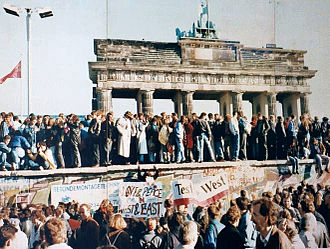
Fall der Mauer - Photo Credit: wikipedia.org

Fall der Mauer – Photo Credit: wikipedia.org

Arlington, 18.12.1989

Meine Lieben, der Versuch, die Ereignisse der letzten Wochen zu beschreiben und zu charakterisieren führt mich hinweg von Eurem und meinem Alltag. Doch eines Tages werden eure Kinder sagen können: „Ich habe es erlebt- ich war dabei!“ Ich hoffe und wünsche, dass die Ereignisse in der DDR sich niemals wieder umkehren werden. Ich weiß, das der Westen sicherlich nicht Sinnbild alles Guten ist, doch ich bin aus tiefstem Herzen überzeugt, dass Ihr alle einen Schritt in die richtige Richtung tut. Es wird Euch alle fordern,- es wird nicht leicht sein,- doch was war leicht in der Vergangenheit? Es wird Euch helfen auf lange Sicht. Und wenn ich sage „lange Sicht“, so meine ich die nächsten 5-10 Jahre.

Arlington, 9.10.1990

Aus der Ferne, doch in Gedanken war ich voll dabei, habe ich die Vereinigung unserer beiden Staaten erlebt und mitverfolgt. Zwei Staaten, wie sie sich gegensätzlicher kaum vorstellen lassen, die aber trotzdem zusammengehören Dies ist, jeder weiß und spürt und erlebt es, kein leichter Prozess. Für beide Seiten. Ich habe vor Kurzem an die Zeit nach 1945 gedacht, als meine Eltern im Alter von 53 bzw. 56 Jahren mit zwei 10jährigen Kindern und zwei Koffern ein neues Leben begannen. Ich glaube, wir haben ca. 4 oder 5 Jahre in einer Einzimmer-„Wohnung“ gelebt, ehe wir die erste Wohnung bekamen. 1961- im Jahr des Mauerbaues- machten wir unsere allererste Urlaubsreise nach Italien an den Gardasee.